The Independent Uganda: You get the Truth we Pay the Price


Mbale, Uganda | NEWS CORRESPONDENT | The Bugisu Cultural Institution has, in partnership with Operation Wealth Creation (OWC) embarked on a rapid assessment of the Arabica coffee situation on the foothills of Mount Elgon. This is aimed at generating baseline data for the preparation of a strategic investment plan for the sub-region’s main traditional cash crop.
The OWC is a government programme led by veteran liberator General Salim Saleh Akandanaho that aims to turn subsistence farmers into commercial producers in order to end poverty.
The Institution, led by Umukuuka wa Bugisu Sir Jude Mike Mudoma, is preparing the plan as part of efforts to attract possible partners into value chain development for an Arabica coffee-led investment into seven strategic products in Bugisu. The other products are bamboo, bogoya (Cavendish banana), cocoa, dairy, ecotourism and Hass avocado.
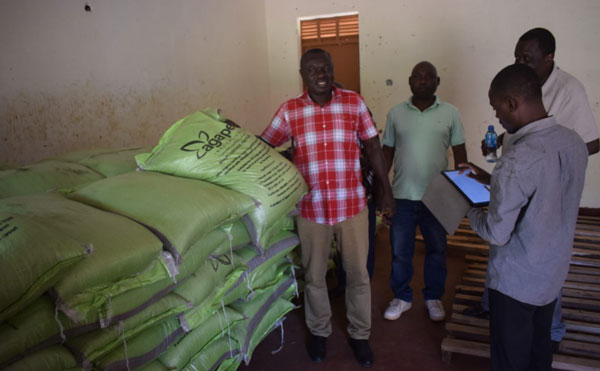
The institution’s Information, Media and Communications Minister, Alfred Geresom Musamali, told The Independent in an exclusive interview recently that under an initiative codenamed the Bugisu Transformational Agenda (BUTRA), Umukuuka Mudoma has deployed data collectors with computer tablets to enable the data collection through KoboCollect, a free Android data entry app.
Early this year the Uganda Bureau of Statistics (UBOS) entered a collaboration agreement with the institution under which the latter would not only collect, analyse and disseminate or use cultural statistics but also feed them into the National Statistics System (NSS) coordinated, monitored and supervised by UBOS.
In turn, UBOS facilitated the institution with 250 table computers and promised to add more tablets as well as desktop computers and basic furniture to equip a fully functional cultural statistics unit, led by a fulltime statistics professional to manage the unit. Under the arrangement, the Umukuuka wa Bugisu was to create a cultural statistics committee comprised of cultural ministers and other agents to oversee the statistics unit at a policy level.
Musamali, also the chairperson of the statistics committee, revealed that some of the computers donated by UBOS had been made in Mbale’s Sino-Uganda Industrial Area and used in the 2024 National Population and Housing Census (NPHC) undertaken by UBOS. He said on one hand the institution was delighted that UBOS had considered it necessary to return the computers to the neighbourhood of their manufacturers in Mbale, adding that on the other hand he hoped that UBOS would be delighted to learn that the computers were not just being used to record and watch unproductive TikTok.
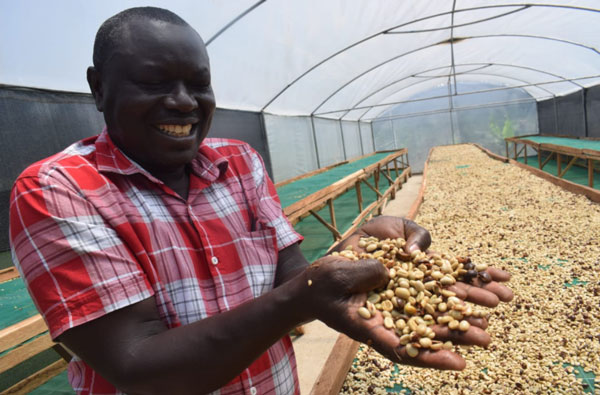
In Bugisu, Arabica coffee has traditionally thrived in a complex circular ecosystem with tree shades, bananas, maize, cover crops such as beans and pasture on which cattle, goats and sheep feed in order to provide urine and dung which fertilise the soil on which the coffee grows. The animals also feed on residues of the bananas and maize, while the shade trees provide wood fuel which eventually converts into wood ash.
“Wood ash, urine and dung can supply a lot of the resources the local farmer needs to propagate a mixed farming garden. But how that local farmer uses the natural, homemade, organic resources such as wood ash and animal urine and dung in the garden may either spell prosperity or doom, so we need to collect information on it. Part of our purpose for carrying out this rapid assessment is, therefore, to determine which statistics indicators BUTRA could most effectively use in the future to track achievements in the implementation of an Arabica coffee-led investment plan,” said Musamali.
“So far by talking to the farmers, agro-processors, middlemen and exporters we have generated a list of 17 possible indicators to be used” he added.
Musamali listed among the possible indicators the percentage of farmers who access seedlings from approved coffee nurseries; the percentage of farmers who apply natural, home-made/organic manure or pesticides (a mix of fermented animal urine, animal dung, wood ash and, in the case of pesticides, plant additives such as bitter leaves or red pepper); the percentage of farmers who rehabilitate their coffee trees (by pruning, stumping and de-suckering); and the percentage of farmers who practice water and soil conservation (by digging trenches, planting grass bands and harvesting rainwater for irrigation).
Other statistical indicators to be considered included the percentage of coffee trees in the gardens covered by canopies/shades of indigenous trees; the ratio of coffee trees to on-farm beehives; the percentage of coffee husks and other farm residue composted into manure, the percentage yield per tree of each grade (AA, AB, PB and TT) of parchment coffee; and the percentage of parchment coffee converted into value-added products (commercial beverage powder, pharmaceuticals, soap or other detergents and beauty products).
“We are grateful to OWC Chief Coordinator General Salim Saleh for extending to us the funding,” said Musamali.
“We are now coming to the end of the rapid assessment and should be in position to present to him the report by the first week of September so that it supports us in getting some investors interested in our proposals,” he added.
Background
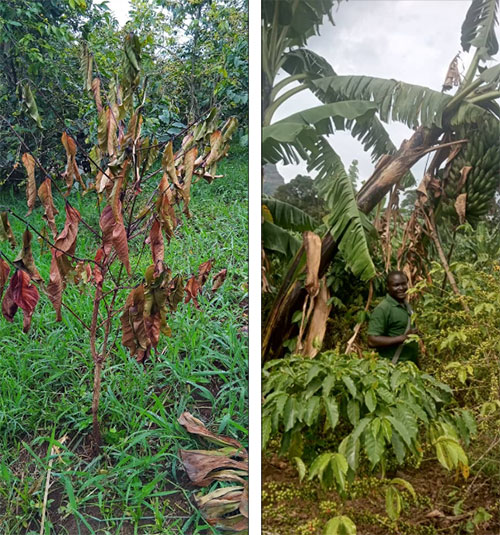
Using local, organic resources like wood ash, dung, and urine can significantly boost a mixed-farming system. However, because improper application can either ruin or revitalize a garden, it is critical to gather data on how farmers utilize these natural materials. Consequently, this rapid assessment aims to identify the most effective statistical indicators for BUTRA to monitor future progress regarding its Arabica coffee investment plan.
Experts say animal urine provides urea, containing a 46 per cent concentration of nitrogen, which promotes vigorous green, leafy vegetative growth and enhances crop yield. But, say the sources, wood ash is comprised of macro-nutrients such as calcium, potassium, phosphorus and magnesium in addition to some essential micronutrients such as Boron and Zinc. Calcium, which comprises 20 to 25 percent of the ash, is a vital secondary macronutrient that builds strong cell walls, improves disease resistance, and supports overall crop health and yield.
Potassium, which comprises 3 to 15 percent of the ash, is a primary macronutrient essential for plant metabolism, water regulation, and overall crop quality. It acts as a catalyst for 60 to 80 plant enzymes required for growth, photosynthesis and respiration. It as well moves sugars, starches and proteins within the plant tissue to fill grains and build strong cell walls.
Phosphorus contributes one to three percent while Magnesium caters for one to four percent of the macronutrients in ash. Phosphorus is responsible for driving plant energy transfer, root growth, and reproductive development while magnesium provides the core of the chlorophyll molecule, making it essential for photosynthesis and health plant growth. Then Phosphorus and Potassium, along with Boron and Zinc, are the primary crop nutrients responsible for supporting and enhancing flowering in plants.