The Independent Uganda: You get the Truth we Pay the Price


Wakiso, Uganda | THE INDEPENDENT | As voters turned up to vote in the sub county, town, and municipal division elections, the use of the Biometric Voter Verification Kits (BVVKs) delivered a mixed picture across the country, marked by improved efficiency and confidence among polling officials in some areas. Some voters, however, complained that the machines seemed to reject their data.
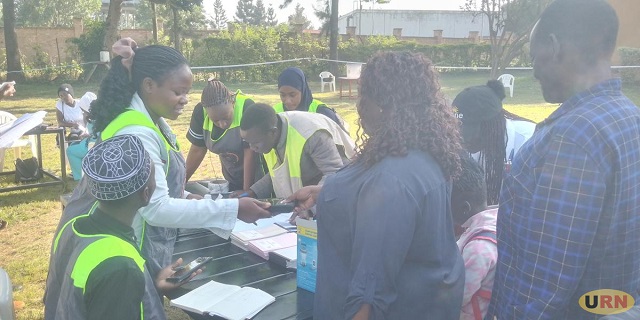
Uganda Radio Network’s Journalists observed significantly improved handling of the devices at several polling stations, particularly in Wakiso District.
The operators appeared more confident and efficient compared to the LCV polls, where staff from the Wakiso Returning Officer’s office were frequently called in to assist.
“We know how to use it,” a polling assistant at Kazo Playground told URN, reflecting a broader trend of smoother operations attributed to training and prior experience.
The BVVK process involves scanning a voter’s National ID or Voter Location Slip, capturing biometric data such as fingerprints or facial recognition, and confirming voter details and polling station eligibility before ballot papers are issued. In some configurations, ballot papers are also scanned to enhance security.
However, the implementation of the technology has not been uniform across polling stations. Although the Electoral Commission has emphasized mandatory biometric verification to uphold the “one person, one vote” principle, URN observed instances where some voters were processed through the BVVK while others were allowed to vote without biometric verification.
Two URN reporters registered as voters in Wakiso District joined queues at separate polling stations. Voters ahead of them were duly verified using the BVVK, with their details confirmed and ballots scanned. However, when one reporter reached the front of the queue, polling officials handed over three ballot papers along with voting guidelines without using the machine.
When asked why the BVVK had been bypassed, the polling assistant did not explain. The voter immediately behind the reporter was also allowed to vote without biometric verification.
At another polling station, the second reporter was verified using the BVVK. His fingerprint was captured, and the ballot papers were scanned using QR codes before he was allowed to vote for the division chairperson, direct councillor, and women’s councillor seats.
These inconsistencies raise questions about adherence to EC guidelines, especially given previous concerns over the reliability of the kits during earlier elections.
By the time of filing this story, URN was still seeking comment from the Wakiso District Returning Officer, Tolbert Musinguzi, regarding the inconsistencies observed. In Mukono District, despite low voter turnout across Mukono Municipality and surrounding sub-counties, the devices were reported to be functioning well.
Presiding officers enlisted five voters as witnesses to open ballot boxes early, allowing voting to begin on time and enabling early voters to cast their ballots before heading to work.
Timothy Wasswa, an independent candidate for Nsuube–Kauga, said his team was mobilising voters by calling and transporting them to polling stations.
“With the low turnout, we’re confident the machines won’t jam, and polling officials can process voters efficiently,” Wasswa said. In Hoima District, URN observed that BVVKs were operating smoothly at polling stations visited.
At Rwamutunga A polling station in Buseruka Sub-county, BVVK operator Sharif Awing said they had not encountered any technical difficulties. Similar reports were recorded at Lyato Church of Uganda polling station and Buhirigi Primary School in Bombo Sub-county.
Hoima District Returning Officer Hassan Takwana said no complaints had been received from any of the district’s 290 polling stations regarding the operation of the kits.
Across the greater Masaka sub-region, polling stations were deployed with functional BVVKs, unlike during previous presidential and parliamentary elections when the devices were largely set aside.
Leopold Ndawula, a voter at Kabukyukyu polling station in Gulama Parish, Kyesiiga Sub-county, welcomed the use of the machines, saying many voters were previously left uncertain about how the digital system operates.
Fred Ddungu, an election supervisor for Bukulula Sub-county in Kalungu District, also said they had not received any reports of BVVK failures. In the greater Luwero area, BVVKs were similarly reported to be functioning well at polling stations, including Luwero SDA Primary School, Kiyenje Junior School, Luwero Hospital, and Kasana Quality Primary School.
Vincent Kinobe, the NRM candidate for the LC3 Chairperson seat, said voter verification was quicker in most polling stations. However, Chris Johns Buwembo, the incumbent LC3 Chairperson of Luwero Town, said all four BVVKs at Orthodox Church Kikubajinja polling station initially failed to function but were promptly replaced.
In Kabarole District, BVVKs were used at Kigarama Primary School polling station in Kiko Town Council, where voting started at 8:00 a.m.
However, at Kichwamba Sub-county headquarters and Kihondo polling stations, voter verification was conducted manually.
In Kamwenge District, voters at Kanyegaramire Playground polling station, whose biometric details failed to register, were asked to wait for guidance from the Electoral Commission returning officer.
In Oyam District, some voters reported that the machines selectively accepted identification documents, rejecting voter slips but accepting National IDs.
At Te-Cuk polling station in Oyam Town Council, however, the process was running smoothly, with more than 50 voters having cast their ballots by 8:00 a.m. In Kabale District, low voter turnout was recorded despite BVVKs functioning properly.
At Central Polling Station in Kabale Stadium, only 21 out of 573 registered voters had voted by 10:06 a.m. Similar trends were observed at the Full Gospel Church polling station.
Kabale District Returning Officer Aisha Nansubuga said the machines were operating effectively across the district. In the Sebei region, BVVKs were reported to be functioning well, marking a sharp contrast with previous elections.
At Amanang Primary School polling station, voters described the verification process as faster and more reliable. “This time the machine is very fast, and there is no disturbance,” said Lydia Chebita, a voter at Amanang Grounds polling station.
Kapchorwa District Returning Officer Sarah Akol confirmed that all BVVKs deployed across the district were in good working condition, expressing optimism about a credible electoral process.
In Yumbe District, URN observed a strong security presence at polling stations, with BVVKs being used to verify voters before ballot papers were issued.
At the Ludara Mosque polling station in Odravu Sub-county, mandatory biometric verification was enforced, with 42 out of 151 registered voters having voted by press time.
However, in Tororo District, some polling stations were forced to conduct voting without BVVKs following technical failures.
At Putir Catholic Church polling station in Mukuju Sub-county, dozens of voters were turned away after the machines failed to detect their details.
One affected voter, Steven Osanja, said he was denied the right to vote despite being registered. “I have voted in all elections before, including the presidential election, but today the machine failed to recognise me,” Osanja said.
He urged the Electoral Commission to reconsider its reliance on the biometric system, warning that continued failures could disenfranchise voters.
At Muduuma Town Council polling centre, which has three polling stations, two were using BVVKs, a situation that slowed the process and caused discomfort among some voters in the queue. One polling station began voting without the machines.
At St Francis Primary School, Ndibulungi in Muduuma, the BVVK was operational, though a voter expressed frustration after both fingerprint and facial recognition failed.
The presiding officer said she would consult the District Returning Officer, noting that the voter’s name appeared in the register.
In Mpigi Town, where voting appeared slower than in Mpigi rural areas, the BVVKs were nevertheless reported to be functioning properly.
****
URN