The Independent Uganda: You get the Truth we Pay the Price


COMMENT | CRISPIN KAHERU | Come to think of it, the problem is not democracy. The problem is the bureaucracy of democracy. It is the forms, the noise, the elbowing, and the sudden appearance of all manner of candidates who discover public service only when a chair is about to fall vacant.
Next week, Uganda’s 12th Parliament settles into one of its first serious assignments: electing the Speaker and Deputy Speaker. In ordinary textbook democracy, this should mean a flood of candidates. Many contestants. Many women. Many youths. Many elders. Many PWDs. Many political shades. Many regions. Many religions. Many promises. After all, we have been taught that democracy thrives on “many” endless options. But if this were a buffet, a wide menu is really not useful if half the food gives people stomach complications.
The problem with “our” modern democratic culture is that it sometimes confuses abundance with quality. We assume that because there are many candidates, there must be wisdom. Yet a ballot paper can be crowded and still be intellectually empty.
For years, our politics has often rewarded the wrong skills. The smartest candidate loses to the richest candidate. The best lobbyist defeats the best legislator. The capable servant loses to the networker who knows someone who knows someone in high places. Our democracy has become less about public wisdom and more about private mathematics.
That is why the coming Speakership contest matters. For the first time in a long time, there is growing public expectation that money may not be the decisive factor. That perhaps competence, temperament, institutional understanding and steadiness may matter again. That the office may go not to the person who desires it most aggressively but to the one most suited for its burdens. And fundamentally, that is what democracy was always supposed to do: place the right people in the right places (at the right time).
This is not an argument against competition. No. Competition is healthy. Processes are healthy. But democracy must protect society from chaos disguised as choice. Must every position become an open-air market?
Guided democracy is therefore not the enemy of democracy. In fact, every functioning society guides its democracy in one form or another. Singapore for instance, built a highly managed democratic system focused heavily on technocratic competence and state stability. Other countries have pursued democracy shaped around national cohesion and developmental priorities rather than perpetual electoral contestation.
So we too should shape democratic systems that reflect our own historical realities, social structures, developmental needs and security concerns. Our democracy should be competitive when competition is necessary. It should be consensual when consensus serves the country better. It must be consultative when wisdom must be gathered. It must be firm when public order is at stake. It can be open, but not reckless. It can be free, but not for sale.
Now, Uganda has arrived at a more pragmatic political season. A season where not everybody who shouts becomes a leader. A season where worthiness seems to matter. A season where maturity, patience, intellect and discipline to carry responsibility seems to be spotted. And yes, this may disappoint those who survive entirely on posture, proximity and disguised ambition. But perhaps that is healthy. Because democracy is not supposed to be a free-for-all. It must be guided by laws, logic, competence and national interest.
And maybe, just maybe, this speakership transition is signalling that the old politics of money, manipulation and midnight meetings is losing steam. That leadership is becoming less about who can purchase influence and more about who can build institutions. If that is true, then this is not merely political transition. It is a fundamental political detoxification.
So, for those still dancing to the old politics, the music may still be playing, but the DJ has changed and so has the dancefloor. This is not democracy ending. It is democracy being guided back to its original purpose: delivering the right leaders, the right decisions and the right results for society.
******
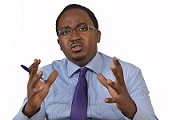
Crispin Kaheru, Member, Uganda Human Rights Commission (UHRC)