The Independent Uganda: You get the Truth we Pay the Price


Kampala, Uganda | URN | Commercial banks in Uganda continue to announce what they call impressive results for the year 2025, boosted by the country’s 6.5 percent growth, but are worried 2026 might be a reverse if the middle east conflict persists.
Absa Bank Uganda is the latest to release its financial results, showing a huge UGX 222 billion net profit, which was up 25.1 percent compared to the 2024 performance.
Last month, Stanbic Holding Uganda Ltd announced a 23.6 percent growth to UGX 591 billion in profit after tax.
Both call this performance surprising considering that the business environment over the year was characterised by uncertainties arising out of the policy shifts in the United States with its spillover to other major economies, leading to structural changes in the global financial flow.
For Uganda, the other downside was the elections cycle coming to its peak, with fears of slowing down investments and inflows. In spite of all these, the economy continued to grow around the earlier government projected rates, which the bankers say saw the industry thrive.
However, the US/Israeli war on Iran spells a different trajectory for the global economies and especially the financial industry, which is in turn threatening to affect Uganda’s banking industry too, this year.
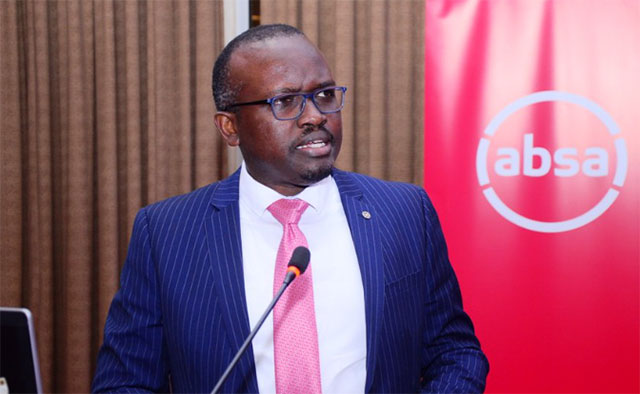
David Wandera, Absa Uganda Managing Director, says that while it is not clear how long the war will last, it has already created a big impact, with most effects yet to be felt by Uganda and the rest of the world.
He says that while Uganda has so far managed to moderately keep the fuel prices and therefore inflation relatively low, the challenges moving the commodity from the middle east to the global market will have far-reaching impacts on transport of different goods.
On what the industry will d to navigate these imminent shocks, Wandera says they have to keep monitoring the impacts of not just the war but the announcements especially by the US which have seen the prices of oil globally, as well as foreign exchange rates fluctuate but generally on the upward. He says their focus is to ensure that affected business like the oil marketing companies have access to cash at any time so as to keep their businesses running.
On the localised risks like the election period, Michael Segawa, the Chief Finance Officer says that there were some uncertainties among the investing community, who did not know how the election and post-election period would be. This somehow affected segments like loans and investments especially in the last quarter of the year, according to Segawa. However, he says that the growth of 7 percent in the loans portfolio was relatively balanced across sectors.
Segawa says that more than 40 percent of lending went to trade, manufacturing, and agriculture, with close to 28 percent supporting households because, “the economy is both enterprise and survival.” The Bank’s total revenues grew to UGX 637 billion, while customer deposits totaled UGX 4.6 trillion.
Board Chairman, Keith Kalyegira, noted that the growing use of digital tools was helping the banking industry in improving efficiency and growing profits through cutting expenses, creating more products and reaching more customers.
However, he warned of the growing threat of cyber insecurity, noting the importance of constantly improving security systems.