The Independent Uganda: You get the Truth we Pay the Price


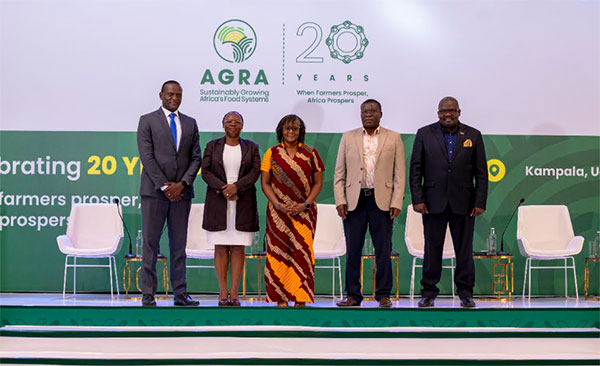
Uganda has spent the past two decades strengthening agricultural research, building seed systems and investing in institutions that support farmers. Yet as scientists, policymakers, agribusiness leaders and development partners gathered in Kampala to celebrate the Alliance for a Green Revolution in Africa – AGRA’s 20th anniversary, one question dominated the conversation: How can the country finally turn agricultural innovation into lasting prosperity for millions of farmers? Ronald Musoke reports.
Uganda is not short of agricultural promise. From the lush banana plantations of Bushenyi and Isingiro in western Uganda to the sprawling rice schemes of eastern Uganda and the maize fields of the north, agriculture remains the backbone of the country’s economy. It employs nearly two-thirds of the labour force, feeds the nation, supplies industries with raw materials and provides livelihoods for millions of households. Across East Africa, Uganda has earned a reputation as one of the region’s food baskets, exporting grain, coffee, beans, dairy products and horticultural produce. Yet beneath that promise lies a persistent paradox.
Over the past two decades, Uganda has invested heavily in agricultural research. Scientists have developed improved crop varieties that mature faster, resist pests and diseases, and withstand increasingly unpredictable weather. The government has strengthened policies, expanded seed certification systems and promoted mechanization, while development partners have invested heavily in improving value chains, expanding access to finance and building stronger markets. Yet, for too many farmers, higher yields have not translated into higher incomes.
That uncomfortable reality hung over every discussion during the AGRA @20 Uganda Country Celebration held in Kampala on July 10. Government officials, researchers, farmer organisations, agribusiness leaders and development partners gathered not merely to commemorate two decades of partnership but to reflect honestly on Uganda’s agricultural journey and the road that still lies ahead.
There were achievements worth celebrating, but little appetite for self-congratulation. Instead, speaker after speaker returned to one stubborn question: If Uganda has developed the technologies, strengthened institutions and improved policies, why are so many farmers still struggling to realise agriculture’s full economic potential? No one captured that dilemma more succinctly than Dr Patience Rwamigisa, the Commissioner for Extension Coordination at the Ministry of Agriculture, Animal Industry and Fisheries.
“We have a strong agricultural research system. However, how do we move those technologies beyond research institutions and into farmers’ fields?” It was a deceptively simple question. By the close of the day’s discussions, it had become clear that almost every issue under consideration; research, extension services, seed systems, markets, finance, standards and climate resilience, was, in one way or another, an attempt to answer it.
20 Years of building the foundations
For Dr David Wozemba, AGRA’s Country Director in Uganda, the anniversary was less about celebrating an institution than reflecting on Africa’s changing agricultural landscape. When AGRA was established in 2006, he recalled, African agriculture faced declining soil fertility, poor-quality seed, weak markets, limited financing and fragile institutions. The global food crisis of 2007-08 exposed just how vulnerable many countries had become to fluctuations in international food markets. The response, he said, could not simply be emergency food imports.
Africa needed to build its own agricultural systems. “Agricultural transformation must be driven by African institutions, African science and African solutions,” he told his guests, stressing that sustainable food systems depend on partnerships linking research, government, the private sector and farming communities. That philosophy has shaped AGRA’s work in Uganda over the past two decades.
Rather than focusing solely on increasing production, the organisation invested in strengthening the foundations of agricultural transformation. Universities trained a new generation of plant breeders and soil scientists. Research institutions developed improved crop varieties. Seed companies expanded, while governments reviewed policies, and financial institutions began viewing agriculture as a viable investment rather than an unacceptable risk.
The results are tangible. AGRA has supported the training of 49 Masters and 20 PhD graduates in plant breeding and soil science. Research supported through these partnerships has contributed to the development of 59 improved crop varieties, 56 of which have been commercialized.
Beyond research, more than 427,000 farmers have benefited from programmes promoting mechanization, crop insurance, market information and climate-smart agriculture. Seven seed companies have been supported, 440 aggregation centres strengthened, US$62.8 million mobilised for agribusiness investment and US$25 million leveraged through agricultural credit guarantees to improve farmers’ access to finance.
The figures tell a compelling story. But throughout the anniversary, participants repeatedly cautioned that statistics alone cannot capture transformation. The true measure of success, they argued, is whether those investments ultimately improve farmers’ lives.

Science has done its part. Has the system?
If there was one recurring message throughout the celebrations, it was that Uganda’s scientists have largely delivered on their mandate. Dr Sadik Kassim, the Deputy Director General of the National Agricultural Research Organisation (NARO), reflected on two decades of investment that have significantly strengthened the country’s research capacity. Scientists supported through AGRA scholarships now lead breeding programmes for strategic crops including rice, maize and cassava. Yet he cautioned against assuming that improved varieties alone can transform agriculture.
“Improved genetics alone cannot transform agriculture. You need healthy soils, effective crop protection, water management and good agronomic practices. Productivity comes when those elements work together.” His remarks underscored a broader truth. Agriculture is an ecosystem. Success depends not on one intervention but on how effectively research, extension, finance, markets and policy reinforce one another. That, many participants argued, is where Uganda’s greatest challenge now lies.
For Dr Patience Rwamigisa, the country’s research institutions have generated an impressive pipeline of innovations. The more difficult task is ensuring those innovations reach millions of smallholder farmers quickly enough to make a meaningful difference. “Research alone is not enough. We must strengthen extension systems that connect innovation to farmers.”
Dr. Rwamigisa’s concern was echoed by Dr Lilian Lihasi, the Chief Executive Officer of the African Forum for Agricultural Advisory Services (AFAAS). Extension services, she argued, remain agriculture’s most undervalued investment. “Research generates knowledge, but extension transforms knowledge into practice.” She pointed to partnerships involving AGRA, AFAAS and One Acre Fund that are using digital technologies to strengthen advisory services and reach farmers at an unprecedented scale.
For years, Uganda’s agricultural debate has focused on research and production. The conversation, it seemed, is now shifting towards ensuring that knowledge completes the last mile; from laboratories to farmers’ fields.
From innovation to impact
If Uganda’s scientists have been busy developing solutions, another question naturally follows: What happens after the research is complete? Releasing a new crop variety is one achievement, but ensuring that it reaches a farmer in Kween, Kiryandongo or Kanungu, is planted correctly; harvested successfully; and sold into a profitable market, is another.
For Dr Mary Teddy Asio, the Assistant Commissioner and Director of Seed Inspection and Certification at the Ministry of Agriculture, Uganda’s agricultural transformation is ultimately about building trust. Farmers invest scarce resources every season believing the seed they purchase will perform as promised. That confidence depends on a regulatory system capable of guaranteeing quality from breeder seed to the final certified product.
Uganda, she said, has made significant progress by decentralizing seed inspection, introducing digital certification and strengthening oversight of the country’s growing seed industry. But she also offered one of the day’s simplest and most powerful observations. “Policies alone do not transform agriculture. Implementation does.”
Uganda has developed sound agricultural policies, she argued. The challenge is ensuring they translate into services that farmers can actually see, access and benefit from. Dr. Asio provided a fitting bridge to the next phase of the discussion. Her argument was that if science has produced the innovations and institutions have strengthened the systems, the ultimate test remains whether farmers can turn those gains into profitable businesses.
The market is waiting. Are farmers ready?
As the discussion shifted from production to commerce, the tone changed. The challenge is no longer how to grow more food; it is how to build an agricultural economy that consistently rewards farmers for producing it.
For Humphrey Mutaasa, the Chief Technical Advisor for Partnerships and Resource Mobilisation at The Grain Council of Uganda, one statistic captured both Uganda’s enormous potential and one of its greatest frustrations. “Our members own storage facilities with a capacity of about 1.2 million metric tonnes. Today, those facilities are operating at only about 30 per cent capacity.”
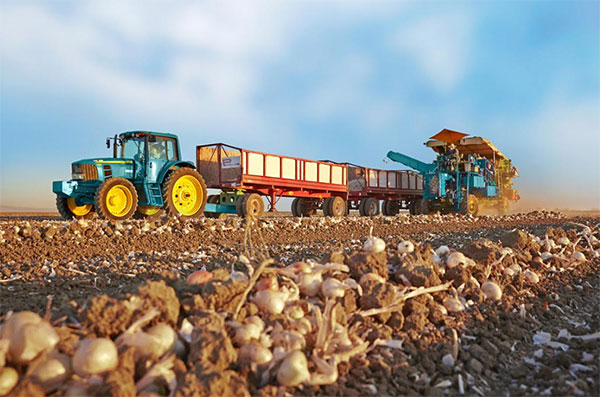
The problem, he explained, is not a shortage of markets. Demand exists across East Africa. The challenge is that production remains fragmented. Farmers often harvest small quantities, produce varying quality and struggle to aggregate sufficient volumes to meet the requirements of institutional buyers and regional traders.
For Uganda to realise its agricultural potential, Mutaasa said, production must become more organised, predictable and market-oriented. That means strengthening farmer organisations, improving post-harvest handling and investing in aggregation systems that enable smallholders to participate in larger commercial markets. The discussion represented an important shift in thinking.
For years, agricultural success has often been measured in tonnes harvested. Increasingly, however, participants argued that success should also be measured in contracts signed, markets accessed, businesses created and incomes earned. That commercial perspective was echoed by Collins Amanya, the Assistant Commissioner for Planning and Budgeting at the Ministry of Agriculture. Agricultural transformation, he suggested, must move beyond the traditional focus on productivity alone. “When one link fails, the entire value chain suffers.”
Farmers, he argued, need reliable access to quality inputs, finance, mechanization, extension services and profitable markets, not as isolated interventions but as parts of an integrated system. The message was clear. Agriculture succeeds not because one institution performs well, but because every actor, from researchers and seed companies to banks, processors and exporters, works in concert.
Quality begins long before the border
If markets reward volume, they reward quality even more. That was the message from Patricia Bageine Ejalu, the Deputy Executive Director and the in-charge of standards at the Uganda National Bureau of Standards (UNBS), whose remarks challenged the common perception that standards become relevant only when products are ready for export.
“Quality doesn’t begin at the border. It begins on the farm.” It was one of the most memorable observations of the day. Every decision a farmer makes, from selecting seed and applying fertiliser to harvesting, drying and storing produce, determines whether that product ultimately meets the standards demanded by domestic, regional and international markets.
As Uganda seeks to expand agricultural exports under the African Continental Free Trade Area, quality assurance can no longer be viewed as the responsibility of inspectors alone. It must become part of the production process itself, she said. Standards, Ejalu argued, should not be seen as barriers to trade but as passports to new markets.
Countries that consistently produce safe, high-quality products attract investment, earn consumer confidence and secure better prices, she said. For Uganda, maintaining that reputation will become increasingly important as regional competition intensifies. Her remarks reinforced an important point raised throughout the day. Markets already exist. Demand already exists. The challenge is ensuring that Uganda consistently supplies the quality, quantity and reliability those markets require.
Financing the next agricultural revolution
Behind every successful agricultural enterprise lies another critical ingredient: capital. For Rachel Ajambo, the Team Leader at Kilimo Trust, a non-profit that works across East Africa to drive sustainable agriculture and rural transformation, agriculture can no longer be viewed through the narrow lens of subsistence farming. It is business. And like every business, it requires investment.
Over the years, AGRA’s partnerships have helped reduce the risks associated with agricultural lending by establishing credit guarantee schemes that encourage financial institutions to lend to farmers and agribusinesses. Those guarantees have unlocked millions of dollars in financing, enabling businesses to expand, invest in equipment and participate more effectively in agricultural value chains.
Yet access to finance remains uneven. Many smallholder farmers still struggle to obtain affordable credit because of limited collateral, high perceived risks and inadequate financial records. Without investment, mechanization stalls. Processing industries cannot grow. Young entrepreneurs struggle to establish agribusinesses capable of creating employment. Finance, participants agreed, is not simply another component of agricultural transformation.
The next 20 years
The discussions eventually shifted from reflection to ambition. The foundations have been laid. Institutions have matured. Scientific capacity has grown. Markets have expanded. But the next phase, participants argued, will require moving beyond projects towards building an agricultural economy that is competitive, resilient and driven by enterprise.
Few people captured that shift better than Prof. Bernard Bashaasha, one of Uganda’s leading agricultural economists, who is based at Makerere University’s Agricultural Policy Research Centre. For decades, he observed, African agriculture has largely been discussed through the language of poverty reduction and food security. While those priorities remain important, they are no longer sufficient.
“We need to stop looking at agriculture simply as a social sector. It is an economic sector. It is an engine for growth.” The distinction is profound. A social-sector approach asks how agriculture can help poor households survive. An economic approach asks how agriculture can create wealth, generate employment, stimulate industry and compete in regional and global markets.
Uganda’s youthful population makes that transition increasingly urgent. Agriculture remains one of the few sectors capable of creating jobs at scale. But doing so will require attracting entrepreneurs, investors, processors, exporters and technology innovators—not simply encouraging people to produce more food. It will also require ensuring that young people see agriculture not as a last resort but as a modern, profitable and innovative career.
From food security to farmer prosperity
If one word surfaced almost as frequently as innovation, it was partnership. Throughout the celebrations, speakers acknowledged that no single institution; the government, research organisations, the private sector or development partners, can transform agriculture alone.
The achievements celebrated over the past two decades were themselves products of collaboration: scientists developed improved technologies; universities trained researchers; government strengthened policy; private companies multiplied seed; financial institutions extended credit; standards agencies safeguarded quality; farmer organisations mobilised producers.
For Vincent Tumusiime, the Director of the Directorate of Socio-Economic Monitoring and Research in the Office of the President, the next chapter of Uganda’s agricultural transformation will depend less on creating new institutions than on strengthening collaboration among those already in place.
Innovation, he said, is no longer the responsibility of scientists alone. It also belongs to entrepreneurs developing digital advisory platforms, financiers designing products for farmers, processors investing in value addition and young innovators applying technology to solve longstanding agricultural challenges.
As the anniversary drew to a close, participants returned to the question that had framed the entire day. How do Uganda’s scientific achievements become farmers’ prosperity? No single speaker claimed to have the answer. Instead, the discussions revealed that transformation lies in connecting the entire agricultural ecosystem.
Research institutions must continue generating innovations. Extension services must take those innovations to farmers. Seed companies must multiply quality planting materials. Financial institutions must expand access to credit. Farmer organisations must aggregate production. Standards agencies must safeguard quality. Markets must reward productivity, while the government provides the policy environment that allows every link in the chain to function. Only then will innovation become transformation.
Dr David Wozemba reminded participants that AGRA’s twentieth anniversary was never intended to mark an end point. It was an opportunity to ask harder questions about the future. Africa’s population will continue growing. Climate pressures will intensify. Regional markets will become more competitive. Meeting those challenges, he argued, will require stronger partnerships, greater investment and an unwavering commitment to keeping smallholder farmers at the centre of agricultural transformation.
Twenty years ago, Uganda’s agricultural ambition was largely measured by the amount of food it could produce. Today, the benchmark is changing. The country’s success will increasingly be measured by whether farmers earn better incomes, whether agribusinesses create jobs, whether young people choose agriculture because it offers opportunity, and whether innovations developed in laboratories translate into thriving farms, competitive businesses and prosperous rural communities. That may well be Uganda’s most important harvest over the next twenty years.