The Independent Uganda: You get the Truth we Pay the Price


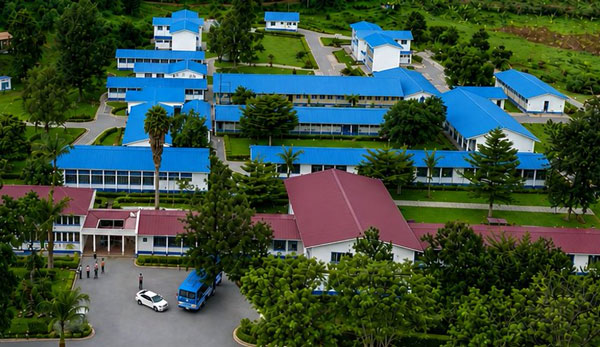
COMMENT | OBED K. KATUREEBE | In the Greater Kigezi subregion of western Uganda, a shared consensus spans generations, uniting Baby Boomers, Generation X, and Millennials alike. When it came to choosing a secondary school, the definitive choice was always Kigezi College Butobere, widely celebrated as “SINIYA”—a Rukiga term that perfectly captures its legacy as a giant institution of learning. From its founding in 1957, right through to the late 2000s, Kigezi College Butobere produced doctors, engineers, lawyers, journalists, soldiers, policemen and civil servants of repute, who have made significant contributions to the socio-economic transformation of Uganda.
One does not need to labour to explain this simple fact, but just look at the list of her alumni. Talk of the Minister of Finance, Planning and Economic Development, Henry Musasizi; the former Governor of the Bank of Uganda, Tumusiime Mutebile (RIP); former Prime Minister, Amama Mbabazi; Prof. George Mondo Kagonyera, retired Justice John Bosco Katutsi; retired Justice Edgar Tabaaro; former Chief of Defence Forces, Gen. David Muhoozi; former Solicitor General, Peter Kabatsi; former Voice of America celebrated journalist, Shaka Ssali (RIP), Minister of Gender, Labour and Social Development, Lt. Gen. Henry Tumukunde and yours truly. The list is endless.
Butobere, located in Kabale Municipality (originally opened as Butobere Senior Secondary School), was established and built by the British Colonial Government in 1957 as a non-faith-based public school to offer secular education. The pioneer headmaster was Mr. C. C. Bowman. It was renamed Kigezi College Butobere around 1964–1965 by Headmaster Graham.
This academic giant of a school fell from grace to grass in the late 1990s, up to 2022. Like it has happened in some of the traditional schools across the country, Kigezi College Butobere didn’t suffer the decline in isolation. Some other traditional schools also collapsed. Talk of schools like Sir Samuel Baker in Gulu, Bukedi College Kachonga in Butaleja, Makobore High School in Rukungiri, St Aloysius College Nyapea in Zombo district etc, also suffered severe decline, and they are equally struggling to regain their former glory.
The demise of Kigezi College Butobere began in the early 2000s. It is said that the outbreak of the COVID-19 pandemic, which led to school closures, pushed it off the cliff. Such that by the time schools reopened in January 2022, the student enrolment had plummeted from over 1,500 students in its peak years down to 100 students by January 2022.
Funding challenges in the education sector persisted, as the Government of Uganda initially concentrated on tackling insecurity and investing in heavy infrastructural projects. SINIYA faced severe decline and near-collapse due to a combination of crumbling infrastructure, financial distress, administrative challenges and intense competition from newer private institutions. Buildings, electrical systems and sanitation facilities (such as toilets) have aged poorly and suffered severe vandalism—particularly during prolonged closures like the COVID-19 lockdown.
Poor physical conditions and declining academic performance drove parents to send their children elsewhere. Mismanagement, a heavy debt burden, and recurrent student indiscipline also severely compromised learning environments and public trust. For these challenges to be resolved, all hands have to be on deck: parents, students, school administrators, and most importantly, the alumni.
However, the current management and the commitment of the Old Boys (OBs) and Old Girls (OGs) have seen the school resurrect.
Enrolment is steadily growing, parents have regained trust in the school and they are bringing their boys in large numbers. The teaching staff are now embarking on sharpening the academics, and of course, discipline is very emphasised. With this level of commitment from all the stakeholders, there is no doubt that SINIYA will rise and shine again.
This has happened elsewhere where similar schools were going under, and courtesy of the resilience of OBs and OGs, plus the government of Uganda through financial bailouts, they are back and roaring. Schools like Teso College Aloet, Busoga College Mwiri, Ntare School, Nyakasura, St Peter’s College Tororo, etc., survived the collapse largely due to the resilience of their OBs. They rolled up their sleeves and pooled the necessary resources to keep these schools competitive.
With Minister Musasizi keeping a keen eye on the resurrection of SINIYA, all OBs seem to be energised to commit all their energy to fully resurrect SINIYA back to its glory days. Uganda is investing significant allocations to reviving traditional Kigezi College Butobere and other traditional schools that are distressed, simply because contributions from well-wishers and parents cannot do the massive reconstruction that is required. Kigezi College Butobere is a massive architecture development that requires sufficient funding to rebuild. It’s good to know that the funds have been allocated and this will go on until the school is fully reconstructed.
The support now required, especially from the OBs, doesn’t need to be money alone; it can be in the form of supervision and regular follow-ups to whatever is taking place at SINIYA. A watchdog of sorts. Now that Balaam Barugahara, the minister for local government, is unsettling thieves who were stealing money meant for development in the districts, we hope that the Shs. 3 billion that the government earmarked for the continued rehabilitation of Kigezi College Butobere will be properly utilised. Like I said, we have Minister Henry Musasazi watching over them, but others also should join him.
***

The writer works with Uganda Media Centre