The Independent Uganda: You get the Truth we Pay the Price


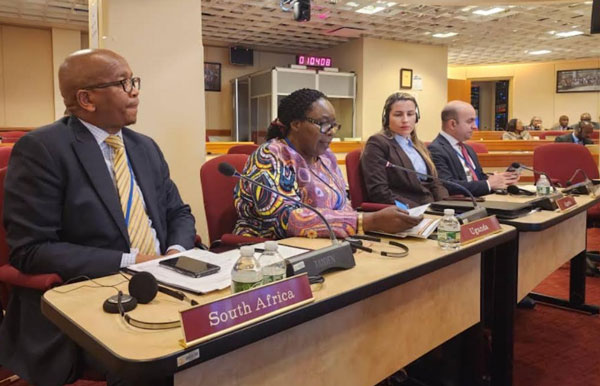
New York, US | THE INDEPENDENT | Uganda has called for enhanced regional collaboration, coordinated border governance, and sustainable support for African-led peace and security initiatives to address terrorism and violent extremism across Africa.
The East African country made the call at a pivotal meeting held on September 23, 2026, in New York on the sidelines of the the 81st session of the UN General Assembly, under the theme “Good Neighbourliness and Regional Responses to Security and Terrorism Challenges in Africa.”
The event took place at the UN Observer Mission Offices and provided a platform for African Union Member States to discuss how stronger ties among neighboring countries can help tackle emerging security threats on the continent.
Representing Uganda at the 1369th Ministerial Meeting of the African Union Peace and Security Council (PSC), Rebecca Amuge Otengo, Uganda’s Permanent Representative to the African Union and the United Nations Economic Commission for Africa, stressed that terrorism and violent extremism are transnational threats that demand collective action beyond national borders.
“Terrorism and violent extremism do not respect borders,” said Otengo. “Terrorist groups exploit ungoverned spaces, local grievances, weak border controls, illicit financial flows, and transnational criminal networks. No Member State can defeat a cross-border threat through national action alone.”
Uganda emphasized the importance of good neighbourliness as a security imperative, rooted in respect for sovereignty, territorial integrity, and non-interference, while promoting dialogue, mutual confidence, early warning systems, and coordinated actions.
Ambassador Otengo urged for enhanced intelligence-sharing, joint threat assessments, and cooperation among security and law enforcement agencies. She also proposed adequate resourcing of the African Union Counter-Terrorism Centre to strengthen coordination between national and regional centers, support intelligence fusion, and build institutional capacity.
The delegation highlighted the need to strengthen integrated border governance through the African Union Border Programme and the implementation of the Niamey Convention. Otengo emphasized involving border communities in preventing insecurity and linking security with development by investing in public services, livelihoods, and legitimate cross-border trade to transform borderlands into corridors of peace and prosperity.
Uganda further called for the African Standby Force and its regional components to become fully operational with timely deployment capabilities, sustainable logistics, and predictable financing, consistent with Member States’ sovereignty and international law.
Addressing root causes, Uganda identified exclusion, youth unemployment, radicalization, disinformation, arms trafficking, and terrorism financing as critical drivers of terrorism. The delegation stressed the role of women, youth, traditional leaders, civil society, and the private sector as key partners in prevention and community resilience.
Uganda also advocated for stronger coordination between the African Union, Regional Economic Communities, and Regional Mechanisms to clarify responsibilities and reduce duplication. Ambassador Otengo highlighted the importance of sustainable financing for African-led peace and security initiatives, including the effective implementation of United Nations Security Council Resolution 2719, which supports financing African Union peace support operations and deepening UN-AU cooperation.
Concluding Uganda’s intervention, Amb. Otengo said “Africa’s borders should unite rather than divide security efforts. She called for trust, shared responsibility, and decisive regional action to deny terrorist groups operating space, protect communities, and advance the goals of Agenda 2063 for a peaceful and secure Africa. Africa’s borders must not divide our security efforts”.
Uganda’s contribution to the Ministerial Meeting placed good neighbourliness, regional cooperation, effective continental institutions, and sustainable financing at the heart of Africa’s collective response to terrorism and violent extremism, while connecting security efforts with development, community resilience, and regional integration.