The Independent Uganda: You get the Truth we Pay the Price


MPs, civial society, cultural and religious leaders pledge to use local structures to mobilise parents as government launches nationwide catch-up campaign, October 1–5
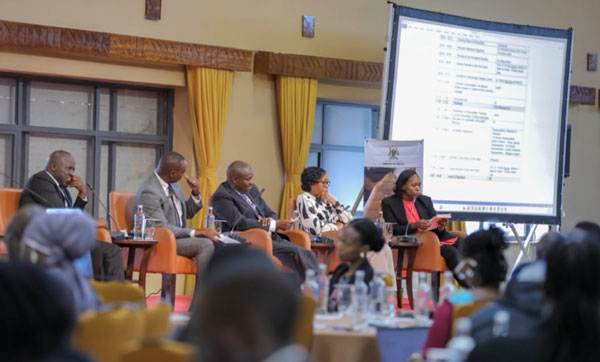
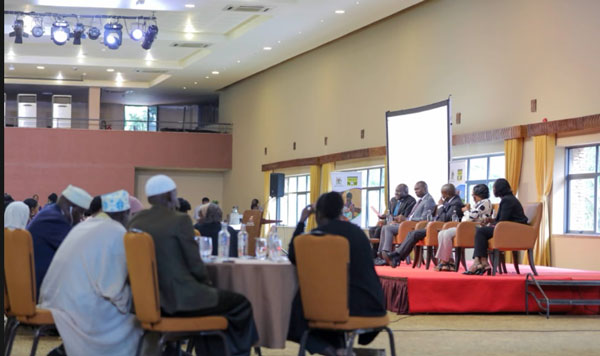
Kampala, Uganda | THE INDEPENDENT & URN | Members of Parliament, cultural leaders led by the Buganda Kingdom, civil society organisations and religious leaders have committed to using their local structures to mobilise communities for the upcoming national measles-rubella vaccination campaign, as the Ministry of Health races to close a dangerous immunization gap.
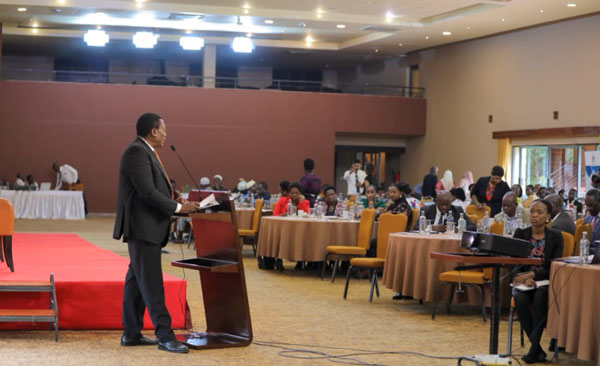
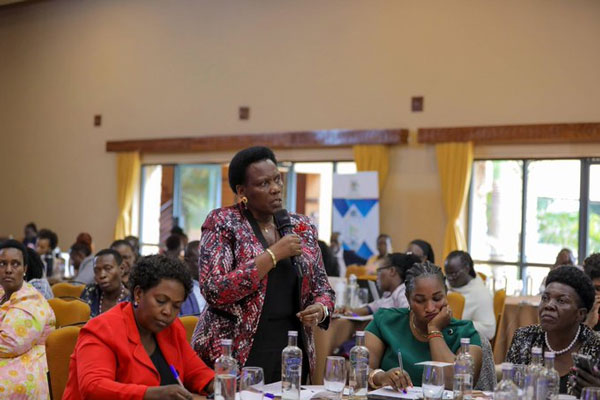
The commitments were made at a high-level stakeholder sensitization meeting at Speke Resort Hotel, Munyonyo, on Wednesday, where the Ministry of Health officially launched the campaign that will see more than 7.4 million children aged one to five years vaccinated from October 1 to 5, 2026.
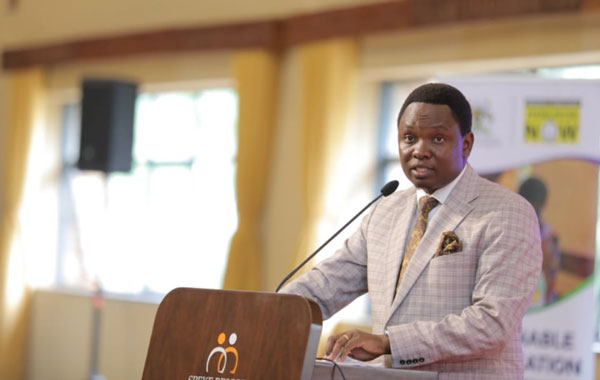
Minister of State for Health in charge of Primary Health Care, Dr. Charles Ayume, who was represented by Prof. Charles Olaro, the Director General of Health Services, welcomed the stakeholders’ pledge in his speech, and called for collective action to protect Uganda’s children.
“Let us work together to ensure that every eligible child receives the Measles-Rubella vaccine and is protected against this preventable disease,” Ayume told the gathering of parliamentarians, cultural leaders, religious leaders, development partners, and health officials.
The minister emphasized that the campaign is not merely a short-term intervention but an opportunity to strengthen Uganda’s broader immunization system.
“The forthcoming Measles-Rubella Vaccination Campaign provides us not only with an opportunity to protect children against a highly infectious and potentially deadly disease, but also to reflect on the long-term sustainability of Uganda’s immunisation programme,” he said.
Ayume called for a sustainable immunization financing roadmap, warning that financial constraints must never become a barrier to protecting children.
“Sustaining high immunisation coverage requires predictable, adequate and sustainable financing,” he said. “Vaccines, cold chain infrastructure, logistics systems, surveillance activities, health worker training and community mobilisation all depend on continued investment.”
The minister urged stakeholders to support innovative financing mechanisms, improve efficiency in resource utilization, and advocate for increased domestic investment in health.
“Every shilling invested in vaccines saves future costs associated with disease treatment, outbreaks and lost productivity,” he noted.
Uganda’s Alarming Statistics
The Ministry of Health has held several sensitisation campaigns nationwide already ahead of the stakeholders summit.
The campaign comes amid a troubling surge in measles cases. According to Ministry of Health data, suspected measles cases have been rising since 2022, with 2,365 suspected cases reported by 2025 and a case fatality rate of approximately 2.5 per cent. In Karamoja, the fatality rate is significantly higher at 6 percent, where children are dying from the double burden of measles and malnutrition.
Dr. Ritah Atugonza, Deputy Manager of the Uganda National Expanded Programme on Immunization (UNEPI), in August talked to URN and revealed that 68 of Uganda’s 146 districts reported outbreaks in 2025. She attributed the surge to low vaccination coverage, cross-border importation from neighboring countries experiencing instability, and complacency among communities.
“The majority of the measles cases that have led to outbreaks in several districts have been imported from neighbouring countries currently experiencing security instability,” Atugonza said. “While Uganda had previously had such imported cases without much effect, the country has been compromised, where communities have become more complacent about taking their children to complete their vaccine doses.”
The statistics paint a stark picture: only 64 percent of eligible children nationwide have received the second dose of the Measles-Rubella vaccine. In the Buganda region, where access challenges are minimal, coverage stands at just 79 percent for the first dose and 50 percent for the second.
“For protection to be guaranteed, 95 percent of all eligible children should be immunized,” Atugonza emphasized.
Stockouts Blamed
At one of the meetings held across the country earlier, Dr. Michael Baganizi, the UNEPI programme manager, argued that while the campaign will bridge the immunity gap, local governments must improve routine immunization. He pointed out that districts with governance issues, where District Health Officers conflict with political leaders, have badly affected immunization programmes.
Members of Parliament blamed stockouts for low coverage. Moyo district MP Chandia Bernadette reported that mothers do not return for second doses because vaccines are unavailable.
“Mothers and their babies are often sent back home without the vaccine, and in the end, they lose interest,” she said.
MPs from border districts blamed the influx of refugees for poor performance, saying locals compete with refugees for vaccines, leading to some nationals missing out.
At Wednesday’s meeting, Dr. Ayume acknowledged these challenges, calling for the establishment of vaccine static points at convenient locations outside health facilities to guarantee 95 percent coverage across all antigens.
Vaccine Dosage
The Measles-Rubella vaccine is offered in two doses, at nine months and 18 months of age. During the October campaign, however, all children aged nine months to five years will receive the vaccine regardless of their previous immunization status. The vaccine will be administered by injection on the left upper arm by qualified health workers at designated fixed points within communities.
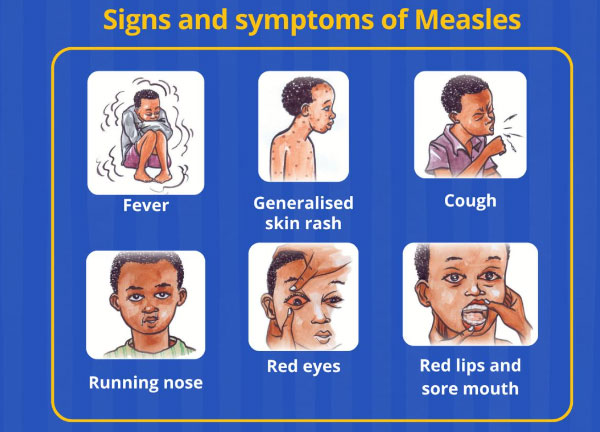
The Ministry of Health has assured the public that the vaccine is safe, effective, and free, approved by the National Drug Authority. Side effects are usually mild and include low fever and a generalised skin rash.
After the campaign, the ministry will continue offering vaccines through the October Child Health Days.
At Wednesday’s meeting, Dr Annet Kisakye from World Health Organisation reassured MPs who feared the country was developing vaccine fatigure. She said in advanced countries are given up to 25 vaccines compared to Uganda’s 6.
Government to step in as Gavi Limits Support
The push for sustainable immunization financing comes against the backdrop of sweeping changes at Gavi, the Vaccine Alliance, which is introducing fixed vaccine budget envelopes as part of its reform programme for 2026–2030.
Under the arrangement, Gavi support to countries like Uganda will have a defined funding limit. Jimmy Ameny, the Gavi funds coordinator at the Ministry of Health, revealed that Uganda has been granted a limit of spending 51 million dollars on vaccines annually, yet the country has previously been spending up to 67 million dollars annually.
Ameny told URN that Uganda might have to rethink such programmes in the future with the increase in vaccine prices and pressures such as the high influx of refugees.
He said Gavi is providing 93 percent of the funds needed for the upcoming campaign and said such could become impossible in the future with looming grant cuts. He added that Uganda needs to put aside more money in the next five years to be able to co-finance vaccine doses going to refugee communities, with the country already having refugees in excess of two million and others expected to come.
Uganda already contributes to Gavi’s co-financing arrangement, offering the donor organization nine million dollars per year. This money, according to Ameny, only caters for 20 percent of the country’s annual vaccine needs.
Statistics by UNEPI show that Uganda fully funds six vaccine antigens catering for the traditional six killer diseases, including polio, measles, diphtheria, TB, whooping cough and tetanus. The eight other diseases currently targeted and on the government’s free immunization schedule are mainly funded by Gavi.
The new developments in the vaccine programme worried Maracha Constituency MP Uhuru Nelson, who, while attending the upcountry Ministry of Health meeting, revealed that they are likely to see more stockouts. He reported that the host community in Maracha is already struggling to share a few doses with refugees and South Sudanese who cross the border to access health services in Uganda.
Dr. Michael Baganizi, the UNEPI Program Manager, said that currently vaccine doses supplied to districts are not predetermined and are based on demands by the districts. He explained that usually refugee-hosting districts place orders with a clear picture of their contexts, expecting refugees to also benefit.
With fixed vaccine budget envelopes, experts worry that such arrangements as described by Baganizi may become problematic.
Nationwide Mobilization Underway
Across the country, preparations for the campaign are in high gear, with local leaders, health officials, and security committees mobilizing communities.
In the Busoga Sub-region, the Ministry of Health has challenged local government leaders to intensify community mobilization. Dr. Allan Muruta, Commissioner in charge of Epidemics and Disease Surveillance, urged leaders to use community meetings, religious gatherings, and other platforms to educate parents.
“Immunisation is the safest means of safeguarding our children from endless measles outbreaks,” Muruta said in Jinja City. He warned that Uganda has experienced a resurgence of measles outbreaks in several districts over the past three years, with many affected children having missed earlier vaccination opportunities.
However, Mayuge District Chairperson David Zijja identified misinformation as a major barrier. He cited the “Njiri Nkalu” cult, which discourages followers from participating in government programmes, including vaccination, with some believing vaccines expose them to the “evil number 666.” Zijja warned that individuals who deliberately spread misinformation and obstruct the campaign could face arrest and prosecution.
In Luwero District, the District Health Department and District Security Committee have issued a stern warning to headteachers against frustrating the vaccination exercise. Dr. Innocent Nkonwa, the District Health Officer, said 36 health workers have been trained to oversee the exercise, while 400 others have been deployed to conduct vaccinations. The district targets 124,000 children.
Mariam Nalubega, the Luwero Resident District Commissioner, warned that any headteacher who blocks health workers from vaccinating eligible children will be arrested and charged with sabotaging a government programme and breaching the Public Health Act, 2017.
In April this year, the Ministry of Health attributed the measles outbreak to failure to receive the required two doses of the Measles-Rubella vaccine, delays in seeking care, and underlying conditions like malnutrition. Seventy-five percent of those affected were children under five. Twelve measles-related deaths were reported in Kagadi, Kikuube, Adjumani, Bulambuli, and Karenga. Other badly affected districts included Kassanda, Amolatar, Kibaale, Nwoya, Amuru, Agago, Kiboga, Kyegegwa, Kaabong, Kotido, Kween, Lira, Sembabule, Gulu, Kazo, Mubende, and Adjumani.
Olaro Calls for Coordination
Prof. Charles Olaro, the Director General of Health Services, emphasized that the campaign’s success requires more than vaccine availability.
“Achieving this requires strong planning and coordination, adequate vaccines and supplies, functional cold-chain and logistics systems, trained health workers, effective surveillance and data systems, and well-mobilised communities,” he said.
Olaro called upon local leaders, health workers, schools, civil society, religious and cultural leaders, the media, and community structures to support mobilization.
“Our measure of success should not simply be the number of vaccines administered, but whether we have successfully reached the children who need protection,” he said.
As Uganda prepares for the five-day campaign, the message from health officials is clear: every eligible child must be vaccinated. With 70 percent of districts reporting measles re-emergence and only 64 percent of children fully protected, the stakes could not be higher.
****
For more information, the public can visit the nearest health facility or call the Ministry of Health toll-free line on 0800 100066.