The Independent Uganda: You get the Truth we Pay the Price


Addis Ababa, Ethiopia | THE INDEPENDENT | The African Union (AU) Peace and Security Council (PSC) will on Monday convene its 1321st session at the ministerial level to discuss the situation in eastern Democratic Republic of Congo (DRC).The session is expected to commence with opening remarks by Kacou Houadja Léon Adom, Minister of Foreign Affairs of Côte d’Ivoire and Chairperson of the PSC for December.
The session was not envisaged in the PSC’s programme of work but comes amid a dramatic escalation of violence in South Kivu, eastern DRC, just days after the diplomatic breakthrough of 4 December—the Washington DC Accord signed by the leaders of the DRC and Rwanda—brokered by the United States.
Earlier, on 15 November, the Government of the DRC and the Alliance Fleuve Congo/Mouvement du 23 mars (AFC/M23) had also signed the Doha Framework for a Comprehensive Peace Agreement. The session also came soon after the UN Security Council (UNSC) unanimously adopted a resolution renewing the mandate of the United Nations Organisation Stabilisation Mission in the Democratic Republic of the Congo (MONUSCO) until December 2026.
Mahmoud Ali Youssouf, Chairperson of the AU Commission will brief the PSC, drawing on his visit to Kinshasa on 19 December. The Ministers of Foreign Affairs of the DRC and Rwanda, as countries concerned, are scheduled to deliver statements during the open segment of the session. In addition, Tete António, Minister of External Relations of Angola and Chairperson of the AU Executive Council, as well as Chair of the International Conference on the Great Lakes Region (ICGLR), and Robert Dussey, Minister of Foreign Affairs, Cooperation and African Integration of Togo and Representative of the AU Mediator for the conflict in eastern DRC, are expected to make statements.
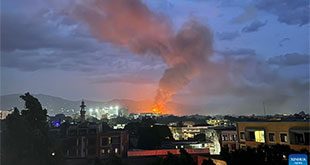
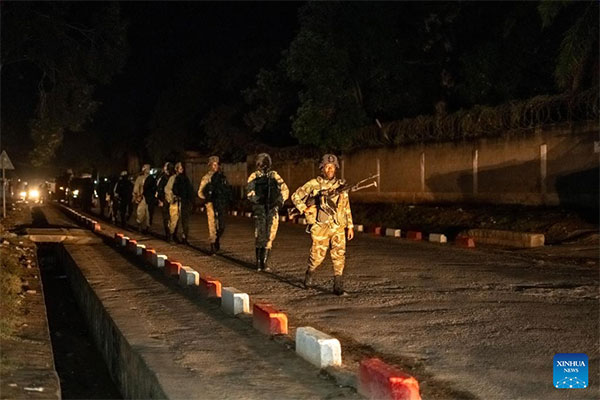
Despite the diplomatic advances registered in Washington, DC and Doha, a new offensive by the AFC/M23 in South Kivu has significantly altered the situation on the ground. On 10 December, the group seized the strategic town of Uvira along the border with Burundi, further expanding the territory under its control. This year has been particularly volatile for eastern DRC, with a renewed wave of fighting between the Congolese armed forces, local militias, and the M23 intensifying earlier in the year and culminating in the fall of major towns, including Goma of North Kivu and Bukavu of South Kivu. The M23 has also entrenched parallel administrative structures in areas under its control, raising serious concerns for the DRC’s territorial integrity and constitutional administration.
The latest offensive has further exacerbated the humanitarian crisis in eastern DRC, with more than 200,000 people displaced since early December, reports of widespread human rights violations, including sexual violence, and a rapidly collapsing health system. In a statement issued on 11 December, the Deputy Spokesperson for the UN Secretary-General warned that the escalation risks seriously undermining efforts to achieve a sustainable resolution to the crisis and increasing the risk of a broader regional conflagration.
The offensive also heightens the risk of regional tension, as it brings Burundi’s capital city, Bujumbura, under a very close target of attack. During the UN Security Council briefing on eastern DRC on 12 December, the representative of Burundi expressed concern over cross-border attacks, some of which he said violated Burundi’s sovereignty. He further described the 4 December attacks in Cibitoke as ‘a grave provocation,’ warning that if such attacks were to continue, ‘it would become difficult to avoid direct escalation between the two countries [Burundi and Rwanda].’
DRC and Rwanda have continued to trade accusations over the latest violence, which both sides claim constitutes a breach of the Washington Accord.
On 10 December, Kigali, in a statement issued by the Ministry of Foreign Affairs and International Cooperation, accused the DRC and Burundian armed forces of violating the ceasefire, alleging systematic bombardment of civilian villages near the Rwandan border using fighter jets and attack drones. During the 12 December Security Council briefing, Rwanda also raised concerns over what it described as atrocity indicators affecting the Banyamulenge community in South Kivu. The DRC, for its part, criticised what it described as a Rwanda Defence Forces–M23 offensive launched less than a day after the signing of the Washington Accord. It warned that continued attacks, mass displacement, and cross-border risks pose a serious threat to regional stability.
One of the issues expected to feature in tomorrow’s discussion is how the AU can reinvigorate its role in addressing the protracted conflict and decades of suffering in eastern DRC. While the AU played a critical role in facilitating dialogue between the DRC and Rwanda under the Luanda Process—including the declaration of a ceasefire in August 2024, the adoption of the Harmonized Plan for the Neutralization of the FDLR and the Disengagement of Forces/Lifting of Defensive Security Measures by Rwanda, and the adoption of the Concept of Operations (CONOPS), which also served as the basis for the US facilitated Peace Agreements— continental peace efforts have since faced setbacks, with mediation momentum shifting to Washington and Doha. At the same time, attempts to reorganise African-led efforts have so far made limited progress.
****
SOURCE: AMANI AFRICA