The Independent Uganda: You get the Truth we Pay the Price


The common historical outcome of such government programmes is usually tyranny and coercion.
COMMENT | NNANDA KIZITO SSERUWAGI | On Saturday, 25th July, I was woken up by the terrifying fracas of dozens of men banging my gate, almost breaking it and hurling insults at whoever might be inside the house. I gathered courage to glimpse through the window and saw some of the men trying to climb and jump over the fence. I panicked. On consulting with my neighbours, I was told they were the people doing a drive for the national cleaning day exercise (Bulungi Bwansi). I was alarmed at the anger with which these people banged the gate. On close inspection, I could not recognise anyone’s face. These were total strangers I had never seen in my life who were now somehow entitled to jump into my compound because the Prime Minister had read a document a few days earlier vaguely declaring July 25 to be a national cleaning day.
States usually lay claim to higher ideals before demanding that citizens sacrifice their liberty for something. The Ugandan state has often besought citizens to be patriotic, even introducing compulsory patriotism classes nationwide, to no success. I was therefore surprised by the seeming popularity absorbed by the mandatory National Cleaning Day initiative. Whereas it conveys the impression of a collective benefit that’s impossible to argue against in the abstract, I wish to contend that in practice, the initiative will breed criminality, especially mob violence. In fact, it has already instigated this.
Nobody denies the palpable fact that Kampala is drowning in uncollected waste. This poor sanitation is linked to the diseases killing our children, yet it’s preventable. This challenge is distributed across several other urban centres around the country. Such concerns informed Article 39 of the 1995 Constitution, which accords every Ugandan the fundamental right to a clean and healthy environment. Therefore, I doubt that anybody, let alone this article, is against cleaning our communities. My contention here is with the method the government has chosen to enforce public health and sanitation.
I also wish to interpret for unsuspecting folks what lies behind the impulse of a government that has dressed its political mobilisation in the costume of care for the social good.
Firstly, the legal architecture used to justify this initiative is problematic. The government declared the mandatory national cleaning day based on three grounds: Article 39 as highlighted above, Cabinet Circular No. 1 of 2026, and the general sanitation powers granted to local authorities under the Public Health Act and the Local Governments Act.
The kind of right and corresponding civic duty established by Article 39 belongs to the category of aspirational constitutional provisions rather than self-executing criminal obligations enforced by police and abused by local mobs on a fixed Saturday morning. Aspirational constitutional provisions usually take the form of guiding ideals which provide a moral compass for the state or its citizens to follow. They do NOT exist as strictly enforceable legal commands.
A cabinet circular may legally bind accounting officers, town clerks and heads of public institutions whose responsibility it is to implement a particular government policy. However, a Cabinet Circular cannot legally create an offence or suspend my freedom of movement or authorise a police officer or a village drunkard to forcefully compel a private citizen to public labour. Any government policy seeking to limit my fundamental constitutional rights must come from an Act of Parliament and must be tested against the proportionality standard Ugandan courts have long applied to limitations on fundamental rights. No such statute exists for Bulungi Bwansi. It is therefore illegal for the police and community mobs to take the law into their hands to suspend public transport and movement, close down commerce, and infringe on personal autonomy and privacy by harassing people out of their homes every last Saturday of the month.
The relevant international framework for the mandatory national cleaning day is the ratified International Labour Organisation’s Forced Labour Convention. By making this exercise mandatory and nationwide, Uganda is already out of step with the provision of Article 2, paragraph 2(e) of the ILO Forced Labour Convention, 1930 (No. 29), which provides that “minor communal services of a kind which, being performed by the members of the community in the direct interest of the said community, can therefore be considered as normal civic obligations incumbent upon the members of the community, provided that the members of the community or their direct representatives shall have the right to be consulted regarding the need for such services. ” Uganda’s nationwide cabinet instruction did not observe any form of community consultation, and its mandatory nature makes it coercive, yet it should be arrived at through consultation and consensus.
I am not discrediting this exercise because its underlying goal is ignoble but because it corrodes whatever legitimacy it would have if applied in its rightful context. Even Rwanda’s umuganda, a model community-cleaning initiative worldwide, was shaped by actual statutory legislation rather than a random cabinet circular. Rwanda also does not arbitrarily suspend movement, business operations and personal liberty using a blanket approach, as we saw on Saturday, when tourist vehicles were road-blocked, and Seventh-day Adventists were compelled to work against the doctrine of their faith. The Rwandan government formally granted the Adventist church religious exemption from working on Saturday and instead shifted their community service to the first Sunday of the following month.
Besides its defective legal basis, this initiative also rhymes with negative historical outcomes of programmes that claimed to pursue the collective good. Intentions must be carefully differentiated from their likely effect. The common historical outcome of government programmes that compulsorily mobilised, monitored and forced everyone to conform to a fixed activity under the pretext of a common good was usually tyranny and coercion.
Ugandans who are excited about this initiative are naively empowering the government and augmenting its ability to permeate society to the village level. The mandatory national cleaning day has such penetration into the privacy of everybody’s home that it is a goldmine for the state if it wished to design an architecture of mass surveillance. There are very few quasi-legal reasons a government can have to knock on your door and demand your participation or cooperation on something. Bulungi Bwansi is now one of those reasons. The opportunity for government overreach comes from the ambiguity of the exercise.
Besides the government, even the village thief has now been empowered and justified to stick their nose into your compound under the guise of mobilising you for public responsibility. The whole exercise is blunt and ambiguous enough to let a lot of things happen. It does not distinguish the negligent from the sick, the defiant from the merely unaware. It traps everyone as a potential criminal evading a public duty. Its enforcement is even more absurd. Anybody can appoint themselves an accuser, investigator and punisher for the crime of refusing to clean. You’re compelled to obey whoever in the community is most willing to inflict force or threats against you. Your involvement is likely to be enforced through apprehension of harm rather than self-conviction.
It is hardly likely that the people vigilant about this exercise are the most reasonable in the village. It is a territory for the loudest, most resentful, most intrusive, or the most eager person trying to settle an old score under cover of civic virtue. I doubt that when the Cabinet passed this circular, they were introspective enough to perceive that it could become a vehicle for private vengeance.
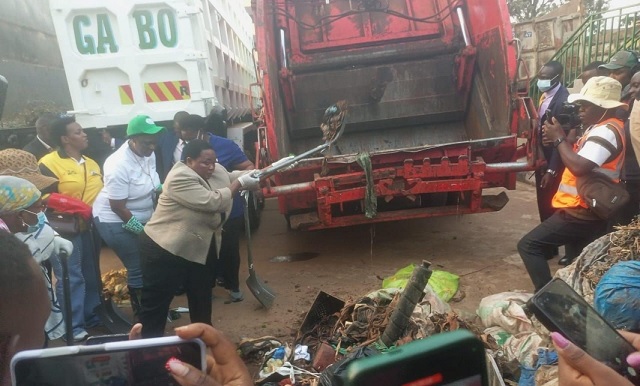
Already, incidents have emerged of what this exercise could turn into. A woman’s home was besieged and ransacked by a village mob in Natete’s Kigaga zone. They accused her of witchcraft and introversion. Footage circulated of a young man being whipped violently by policemen for simply walking in town while the cleaning exercise was going on. Tourists, who have no civic duty whatsoever to clean Uganda’s dirty streets, were seen being forced to do so. Why should a Norwegian couple travelling to Uganda’s game parks for their honeymoon have to be forced to clean the trench at Bwaise? Why should a Kenyan truck driver be picking up rubbish in your home?
This is all happening because we are forcing Bulungi Bwansi to be what it never was. This exercise traditionally happened in close-knit communities where villagers who are known to each other, often an extended family sharing a generation of relatives, sharing values and norms, and acting voluntarily, came together to do maintenance work around their village. The legitimacy of the practice depended on the intimacy of the community. The enforcement of the exercise lay in social sanctions, rather than physical punishment. People who evaded Bulungi Bwansi were confronted with a raised eyebrow, not a raised gun or stick.
The texture of our communities has since evolved. We are diverse people living in urban environments. We hardly share cultural norms, values, attitudes or habits. We are suspicious of each other. This is not the kind of environment where you freely meet with dozens of strangers. Now, when strangers are armed with a government instruction to forcefully knock on your door or pull you out of your car, that’s a cause for serious concern.
I have seen videos circulating everywhere of mostly men, who are notorious for rejecting domestic work like cooking their own food, washing neither their cups nor their undies, and never doing any simple cleaning tasks at home, but are now the patriarchal overlords supervising and harassing everyone else to clean. As soon as cleaning became political, men grabbed at it to wrestle power and social status. This hypocrisy should fool no one. The other hypocrisy is with the government, which has failed to enforce laws against pollution and protect the environment from encroachers. The country’s carbon footprint is worsened by some irresponsible capitalists dumping tonnes of industrial waste in swamps and cutting down forests. If you cannot touch those, harassing a villager who consumes less than $2 a day is simply hypocritical bullying.
Lastly, the best way forward with this initiative is to make it completely and absolutely voluntary.
***
 The writer is a Ugandan thinking about Uganda.