 The Independent Uganda: You get the Truth we Pay the Price



NEWS ANALYSIS | URN | The brutal killing of Uganda Cranes rugby player Sydney Gongodyo has once again forced the country to confront an uncomfortable question: Why does mob violence continue to thrive in Uganda, often in the presence of dozens of witnesses, without anyone stepping in to stop it?
As tributes continue to pour in for the 27-year-old athlete, lawyers, police officials, and civil society leaders are grappling with a deeper issue beyond the tragedy itself.
Why are ordinary citizens increasingly willing to watch, record, cheer, or even participate as suspected offenders are beaten to death?
Their answers point to a troubling mix of distrust in institutions, historical attitudes toward punishment, crowd psychology, and a growing erosion of empathy.
Assistant Inspector General of Police Donald Muhwezi, while appearing at Uganda Law Society’s weekly press briefing on Thursday, said that society must first stop describing such incidents as “mob justice.”
“What people call mob justice is not justice because it defeats the principles of justice,” Muhwezi said.
“We should drop the word justice and put their mob action or mob violence. I don’t think Sydney got justice. Groups of people acting out of hearsay, jealousy, fear, or suspicion take matters into their own hands, kill, assault, embarrass, and destroy property in a way they think is quicker and better. That is not justice.”
Muhwezi, the Metropolitan Police Community Liaison Officer, described mob violence as a situation where strangers suddenly become complainants, witnesses, judges, and executioners.
“You have uncoordinated people, people you have not invited, people just passing by. They claim to have witnessed something, they become witnesses, they become complainants, they sit in a jungle court, sentence the victim, and execute the punishment. Total madness in a very short period of time.”
Muhwezi warned that nobody is immune to becoming a victim of mob action.
“You may assume this is none of your business. You may say, ‘I am a businessman, I am a woman, I am not involved in crime.’ But you are a candidate for this. Last year alone, we registered 950 cases across the country, and those are only the cases that were reported or recorded.”
The victims, he noted, have ranged from lawyers and university workers to drivers and athletes.
Videos are recorded; no one intervenes
One of the most disturbing aspects of mob violence is that it rarely happens in secret. Crowds gather. People watch. Phones are raised. Videos are recorded. Yet few people intervene.
Lawyer Edwin Buluma says this collective silence is what should worry Ugandans most.
Quoting a famous song lyric during a public discussion organized by the Uganda Law Society’s Radical New Bar, Buluma asked: “How long shall they kill our prophets while we stand aside and look?”
The question resonates because Sydney Gongodyo was not merely a suspect in an allegation. “He was a son, father, friend, student, and national athlete,” said Buluma.
Buluma drew parallels between Gongodyo’s death and the 2019 killing of advocate Peter Kibirango, who was beaten to death after mistakenly picking up the wrong phone from a charging station.
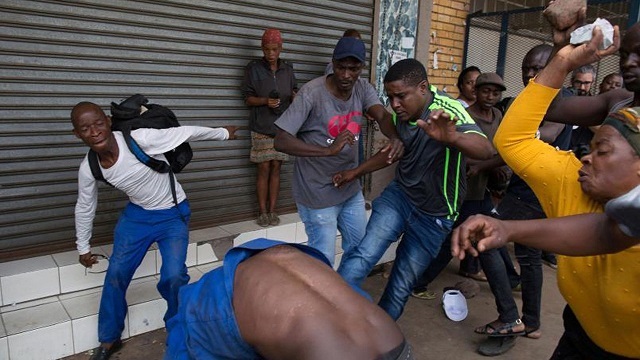
“In both cases, fundamental constitutional protections disappeared,” Buluma said. “The right to life, the right to a fair hearing, and the presumption of innocence were completely ignored. These people took it upon themselves to impose their own form of justice. They killed these people. And that is not justice.”
For Buluma, the fact that victims come from different professions and social classes demonstrates that mob violence threatens everyone.
“If we have an advocate in 2019 passing away in those circumstances and we have a rugby player years later passing away in those circumstances, then each one of us in this room could be a victim. It could be anyone. The law is clear that these actions amount to murder, but somehow people continue to justify them.”
Sometimes, such criminality has been blamed on the public’s growing frustration with formal justice institutions.
According to the 2015 Afrobarometer survey in Uganda, one in six Ugandan adults said they took part in mob justice during the preceding year or would do so if they “had the chance.” This suggests that mob justice is not just a fringe problem in Uganda but commands attention and requires collective action. Why would a substantial number of Ugandans resort to taking the law into their own hands as an alternative form of “justice”?
Analysts have pointed to a number of factors that might contribute to a willingness to engage in mob justice. One is a lack of trust in the formal criminal justice system to administer fair and timely justice.
A 2005 study in Uganda showed that mob actions were often motivated by widespread suspicion or misunderstanding of the justice system, especially concerning the procedure of police bail, under which suspected culprits can be temporarily released before the court process.
Research has also shown that personal victimization by crime can have a lasting impact on attitudes toward the police, the courts, and the criminal justice system overall, as can negative personal experiences with the courts.
Lack of trust in police
Afrobarmeter said statistical analyses show that a lack of trust in the police is associated with a willingness to engage in mob justice, while perceived corruption undermines trust and thus indirectly contributes to a willingness to join others in mob actions. It said its analysis found ds that being a victim of crime (physical assault), encountering problems in the court system, finding it hard to obtain police assistance, and having to pay a bribe to police or court officials are factors that make people more likely to say they would take part in mob action against suspected criminals.
Muhwezi acknowledged that perceptions of delayed justice, corruption, and weak law enforcement continue to fuel public anger.
“The perceived justice delays, corruption, lack of transparency, slow response or no response at all lead to a lack of trust in the known justice systems,” he said. He pointed to severe staffing shortages across the criminal justice chain.
“You have one police officer investigating 54 cases versus the international standard of one officer handling four cases. Definitely, there will be a case backlog. If I have 54 files to handle, there will be delays in justice. In the long run, people lose trust in the system.”
According to Muhwezi, many Ugandans still struggle to understand the principle that suspects remain innocent until proven guilty.
“People find somebody in their plantation with a panga or inside their house, and then they are told this person is innocent until proven guilty. Many simply do not understand that concept and therefore prefer immediate punishment.”
For Anthony Asiimwe, Vice President of the Uganda Law Society, public mistrust is not always imagined.
Sometimes it is reinforced by the conduct of those entrusted with enforcing the law.
Asiimwe recalled witnessing a mob attack about a month ago while driving near the Northern Bypass.
“I encountered a mob justice incident where boda boda riders had rounded up someone and started beating him,” he said.
“I realized this needed intervention from security, from the police.”
Determined to help, Asiimwe drove to a nearby police patrol vehicle parked beneath a flyover and informed an officer about the ongoing attack.
“I stopped and told the gentleman in charge that there was an issue and that they needed to rush there because there was mob violence taking place,” Asiimwe recalled.
“He simply told me, ‘Okay,’ went back, sat down, and continued on his TikTok.” The experience left him deeply frustrated.
“I was so annoyed because I had taken my time as a citizen to stop and report to the nearest police officers I could find. As much as the public needs to continue being sensitized, it is also important that we engage our men and women in uniform to take their responsibilities seriously.”
Asiimwe warned that repeated experiences of institutional indifference can discourage citizens from reporting future incidents.
“If it happened again, I would hesitate to even report because I would not be sure whether any action would be taken. That is how trust and confidence are lost.”
His experience illustrates a vicious cycle. When authorities fail to respond, public confidence declines. As confidence declines, people become more willing to tolerate or participate in mob violence.
Muhwezi also traced mob violence to Uganda’s history. He said many communities traditionally relied on local leaders and elders to administer immediate punishment to wrongdoers.
While modern courts eventually replaced those systems, the culture of instant retribution never entirely disappeared.
“Some communities believed in practicing corrective punitive measures where leaders would punish wrongdoers on the spot to send a message to others,” he said.
“When the colonial government introduced modern courts, many communities did not fully understand or trust the process. Up to today, some people still struggle to understand what it means for a suspect to be innocent until proven guilty.”
Years of political instability and armed conflict further strengthened tendencies toward self-help justice and vigilante action in some parts of the country.
For both lawyers and law enforcement officers, the lesson from Sydney Gongodyo’s death is that mob violence is no longer a problem affecting only suspected criminals.
It has become a threat to every citizen. The victim could be a lawyer who picked up the wrong phone, a student caught in a misunderstanding, a driver involved in a minor accident, or a national athlete accused of an offence he never committed.
As Buluma observed, the tragedy is not simply that individuals are being killed. It is that society increasingly appears willing to stand aside and watch.
Breaking that cycle will require more than arrests after the fact. It will require faster justice, more responsive policing, stronger public trust in institutions, and a renewed commitment to the constitutional principle that every person deserves a fair hearing.
Until then, Uganda risks remaining a society where crowds act as judges and executioners while everyone else watches.

Even the word “mob” must be dropped because it suggests anonymity and therefore a collective lack of responsibility and accountability.
But each person involved is, in that moment, a hooligan. And these days anonymity is not guaranteed because we have CCTV cameras of private homes and businesses, those of government, and most people are keen to record such incidents – which should not be discouraged, as it provides a means of identifying the hooligans involved and bringing them to account for their hooliganism.
Thanks to technology we now have very helpful eyes and ears everywhere in the form of smartphones and social media, the use of which are now already serving as both a deterrent and a tool for justice.
It’s not “mob justice”, it’s not even “mob violence”… it’s actually hooliganism.
We need stiff penalties for those who engage in acts of hooliganism, and strong protection for those who use the technology of smartphones and social media as our most formidable tools in stamping out hooliganism.
Once people realize that they are being watched and recorded by multiple witnesses using smartphones, and that they will he held to account within days thanks to the technology of smartphones and social media… this issue of hooliganism will permanently disappear very soon.