The Independent Uganda: You get the Truth we Pay the Price



Inside the 2026/27 revenue push, public pushback, and the battle over fairness
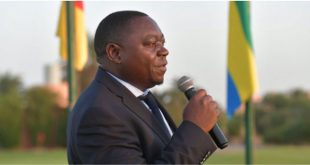
NEWS ANALYSIS | RONALD MUSOKE | On April 2, Henry Musasizi, the Minister of State for Finance (General Duties), presented a raft of tax proposals to Parliament to finance a proposed Shs 84 trillion budget for the 2026/27 financial year, up from Shs 72 trillion in the current financial year, signalling a clear shift towards funding the budget through domestic resources.
The tax bills presented to the Finance Committee include the Income Tax (Amendment) Bill, 2026; the Excise Duty (Amendment) Bill, 2026; the Value Added Tax (Amendment) Bill, 2026; the Tax Procedures Code (Amendment) Bill, 2026; the Stamp Duty (Amendment) Bill, 2026; the External Trade (Amendment) Bill, 2026; the Lotteries and Gaming (Amendment) Bill, 2026; and the Traffic and Road Safety (Amendment) Bill, 2026.
“These Bills are meant to raise revenue, foster compliance and assist the Uganda Revenue Authority in its work,” said Musasizi. He told legislators that revenue mobilisation plays a critical role in financing government priorities for socio-economic transformation.
Musasizi noted that the proposed amendments are complemented by improvements in tax compliance, adding that these strategies are designed to expand the tax base by bringing on board persons currently outside the tax net.
The new tax proposals come at a time when external financing is tightening, geopolitical tensions are reshaping global financial flows, and public debt is swelling, leaving the government to bet heavily on domestic resource mobilisation.
The proposed tax measures, according to the technocrats, are expected to generate Shs 1.741 trillion directly, with an additional Shs 3.164 trillion from improved tax administration, pushing Uganda’s revenue-to-GDP ratio to 15.5%.
But beyond the numbers lies a deeper national debate—one that pits fiscal urgency against equity, growth, and survival. At the centre of this debate is a fundamental question: who should carry the burden of Uganda’s economic future?
A fiscal squeeze meets a global storm
Uganda’s economic context is anything but ordinary. Public debt has climbed to Shs 126 trillion as of December 2025, while domestic revenue targets continue to rise sharply. The government aims to collect Shs 44 trillion in the coming financial year, a 19.3% increase.
On Good Friday, a day after Musasizi presented his proposals to Parliament, a coalition of about 60 civil society organisations under the Tax Justice Alliance-Uganda gathered at the Southern and Eastern Africa Trade Information and Negotiations Institute (SEATINI-Uganda) headquarters in Kampala to challenge the direction of Uganda’s tax policy.

Jane Nalunga, the Executive Director of SEATINI-Uganda, said the government must recognise that Uganda is operating within a turbulent global system. “We don’t operate in a vacuum; we are part of a broader global economy, and the economy is in turmoil. There are geopolitical tensions. We first had the Ukraine-Russia war, now we have the US, Israel-Iran war,” she said. “As the saying goes, when giants fight, the grass suffers—and you have seen the impact on our economy.”
“We have seen aid going down and each country is on its own. The US is saying America first; Europe also has its own challenges, so we need to recognise that… As Uganda, nobody owes us a living. We need to look inwards and we need to grow our economy.”
However, she quickly added that as Uganda looks inward to mobilise its own resources, it must do so carefully. Nalunga noted that taxation is not just about revenue, but about governance itself. It must serve four core functions: revenue generation, redistribution, repricing harmful behaviour, and strengthening representation. “Taxation is at the heart of economic development,” she said. “But it must be fair, equitable, and accountable.”
The government’s strategy: Broadening or burdening?
The proposed tax bills span nearly every major revenue instrument—income tax, VAT, excise duty, stamp duty, and external trade. Some measures are designed to widen the tax base. For instance, the proposal to raise the VAT threshold from Shs 150 million to Shs 250 million is expected to reduce compliance burdens for small businesses while allowing the taxman to focus on higher-yield taxpayers.
Others target compliance gaps. A 0.5% minimum tax on companies that declare losses beyond seven years seeks to curb tax avoidance, while withholding taxes on digital distribution agents and entertainers aim to capture income in largely informal sectors.
According to Aloysius Kittengo, the Programme Coordinator for the Financing for Development programme at SEATINI, these are necessary steps. “We appreciate the effort taken by the government to broaden the tax base,” he said, pointing to improved mechanisms such as requiring event promoters to withhold taxes from entertainers.
“It has been in place… but there was a loophole in getting to know how they (URA) can collect that withholding tax from the entertainers… It is an opportunity for us that they were able to identify who can work hand-in-hand with URA.”
“The other measure which is good for us in terms of revenue mobilisation is to request companies and financial institutions in Uganda that are paying interest on debt acquired from foreign financial institutions to withhold a percentage so that Uganda retains money locally, but also does not lose out on the revenue it needs as a country,” Kittengo said. But even as some reforms aim to widen the net, critics argue that others deepen the burden, especially through indirect taxes.

The “carrot and stick” problem
One of the most contested aspects of the proposals is what analysts like Kittengo describe as a “carrot and stick” approach.
On one hand, the government proposes raising the PAYE threshold to increase disposable income for low earners. On the other, it significantly increases excise duties on essential goods; fuel, sugar, cooking oil, and cement. “You are increasing disposable income on one side, but reclaiming it through indirect taxes on goods people rely on daily,” Kittengo said.
Fuel prices, in particular, have emerged as a flashpoint. The proposed Shs 200 increase per litre on petrol is expected to ripple across the entire economy, raising transport costs, production expenses, and ultimately the cost of living.
For Emmanuel Kashaija, the Programme Manager for Gender and Economic Justice at the Forum for Women in Democracy (FOWODE), the impact is deeply gendered. “Fuel has a multiplier effect on everything,” he said. “Women in rural areas rely on public transport for healthcare. If transport costs rise, some may miss critical services like antenatal care because our government doesn’t have a public ambulance system covering the entire country.”
“So, at some point, when you think you are generating more income, some women may not be able to make it to the hospital when they need care because the boda boda has become too expensive,” Kashaija said, adding: “Instead of taking the four (mandatory) antenatal visits, they might end up taking two… and you end up doing more harm than good.”
“Our recommendation is that the government should cap excise duty on fuel at inflation levels… Revenue can grow naturally as more people own cars and boda bodas. You don’t have to increase excise duty every single year to generate more revenue.”

The cost of living crisis
Nowhere is the tension between revenue and welfare more visible than in the taxation of basic commodities. The proposed increase in excise duty on sugar, from Shs 100 to Shs 300 per kilogram, has drawn sharp criticism, particularly from informal sector advocates.
Maureen Wagubi, the Chief Executive Officer of the Institute for Social Transformation, warned that the move could devastate livelihoods. “Sugar is not a luxury,” she said. “It is a daily necessity. From households to small businesses such as juice vendors and bakeries, this tax will hurt everyone.”
“How many of us, at the start of the week, haven’t received a call from the village asking for money for sugar? … If you increase this price, how many people are going to afford it? How many are going to afford cooking oil?” She argued that such measures risk pushing vulnerable populations further into poverty, especially women who dominate small-scale trade.
“We are killing the economy, we are killing our people and we are going to go back to the begging hand—and this is not where we want to go,” she said.
Yet, in a counterpoint, health advocates see the tax differently. Moses Talibita, the Legal Compliance Officer at the Uganda National Health Users/Consumers Organisation, argued that higher taxes on sugar could yield long-term benefits.
“Tax is one of the most effective tools for reducing disease,” he said. “When you make unhealthy products expensive, you reduce consumption.” He linked rising sugar consumption to increased cases of dental disease, heart conditions, and other non-communicable diseases, placing long-term strain on households and the health system.
Talibita added that frequent dental issues among Ugandan children are linked to high sugar consumption, though he did not provide supporting evidence.
Construction, housing, and the risk of exclusion
The proposed doubling of excise duty on cement from Shs 500 to Shs 1,000 per 50kg bag has also raised alarm in a country already facing a housing deficit of 2.6 million units.
Analysts warn that higher cement costs, combined with increased stamp duty on land transfers, could make home ownership even more unattainable for low-income households. Imelda Namagga, an economist and Board member at the Civil Society Budget Advocacy Group (CSBAG), highlighted the social implications.
“This will disproportionately affect the poor, especially widows and orphans who inherit land,” she said. “It risks making land ownership a privilege of the wealthy.” Namagga expressed concern over the proposal to increase stamp duty on land transfers from 1.5% to 3%. “If they are going to subject the value of that land to 3%, it will make it hard for orphans and widows to transfer land… and land will largely remain the preserve of the rich,” she said. “This move… is really not for the poor.”
She added: “Women don’t have access to land… and now when you bring this kind of tax, it means that women and many more other people are not going to afford land.”
Wagubi suggested that government should instead invest in formalisation and asset access for women, including subsidised and digitalised land registration.

Second-hand clothes: A tax on survival?
Interestingly, few proposals have sparked as much debate as the planned 30% environmental levy on second-hand clothing, commonly known as “Mivumba.” Baker Bahasha, the Research, Policy and Advocacy Officer at the Kampala City Traders Association (KACITA), was unequivocal: “Out of every 10 Ugandans, about eight are wearing second-hand clothes,” he said. “If you impose this levy, where do you expect people to go?”
“As much as we take in the concern of the environment… government should think deeper before implementing this proposal.” Bahasha argued that local textile industries are not yet capable of meeting demand and called for a more nuanced approach, including classification and gradual reforms.
However, not all proposals have been rejected. There is broad support for higher taxes on alcohol, plastics, and gambling as tools to curb harmful behaviour. The planned rise in gambling tax from 20% to 30% has been welcomed by social advocates.
“Betting is affecting families, education, and mental health,” said Kennedy Oluma, the Coordinator of the Uganda Parliamentary Network on Illicit Financial Flows and Tax Justice. “This is not just about revenue; it’s about protecting society.”
Meanwhile, some analysts argue Uganda is overlooking untapped revenue potential, particularly in mining. Oscord Mark Otile, a researcher at the Advocates Coalition for Development and Environment (ACODE), noted that the sector contributes less than 2% to GDP despite its historical significance. “This sector has the potential to relieve citizens of the tax burden,” he said. “But it must be properly structured.”
Trust, accountability, and the path ahead
But underlying the debate is a deeper issue: public trust. With 42% of domestic revenue going toward debt servicing, many citizens question whether increased taxation will translate into improved services.
Nalunga framed it as a matter of accountability: “We are not saying people should not pay taxes… But taxes must be fair—and government must use them prudently.” She also criticised the limited time for public consultation, arguing that meaningful participation is essential. “If citizens see their views reflected, they are more likely to comply,” she noted.
As such, Uganda’s 2026/27 tax proposals reflect a country at a crossroads; caught between fiscal necessity and social reality. On one hand, the need for revenue is undeniable. On the other, the method of raising it remains contested. What is clear is that taxation is no longer just a technical issue; it is deeply political and social.
As Uganda moves toward the next financial year, the challenge will not simply be raising revenue, but doing so in a way that is fair, sustainable, and trusted; because in the end, the success of any tax system depends not just on how much it collects, but on whether citizens believe it is worth paying.
****
AT A GLANCE
New Tax Bills for FY 2026/27
*The Income Tax (Amendment) Bill, 2026
*The Excise Duty (Amendment) Bill, 2026
*The Value Added Tax (Amendment) Bill, 2026
* The Tax Procedures Code (Amendment) Bill, 2026
*The Stamp Duty (Amendment) Bill, 2026
*The External Trade (Amendment) Bill, 2026
*The Lotteries and Gaming (Amendment) Bill, 2026
* The Traffic and Road Safety (Amendment) Bill, 2026
==============
New Tax Proposals
VAT Threshold: Shs 150 million to Shs 250 million
Fuel price (petrol and diesel): rise by Shs 200 per litre
Motor spirits price: rise by Shs 200/litre
Sugar cost rise: Shs 100 to Shs 300/kg
Cement cost rise: Shs 500 to Shs 1000/50kg bag
Plastics: 25% tax or US$ 1500 per tonne
Excise duty on motorcycles 1 st registration rise: From Shs 200,000-500,000
Betting & Gaming: 20% to 30% of total amount staked
Tax on Mivumba/ Worn clothing: 30% of the CIF value
=============
Civil Society Proposal for fair taxation on personal income
Threshold (UGX) Percentage taxed
0-335,000 0%
335,000- 500,000 20%
500,000-1,000,000 25%
15,000,000 and above 40%