The Independent Uganda: You get the Truth we Pay the Price


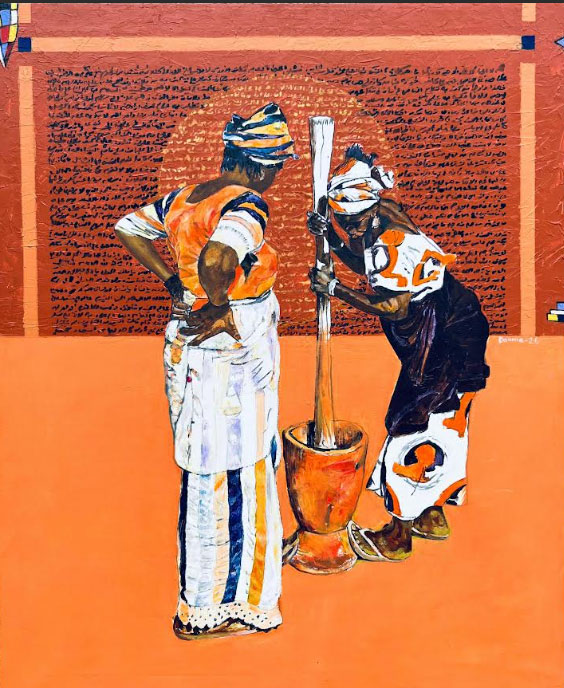
The exhibition Tales of Kush offers an exploration of the artists’ artistic superiority and an impertinent plea for artists to use their art to connect with their cultural heritage
ARTS | DOMINIC MUWANGUZI | Everywhere Sudanese artists have exhibited, they have caused a storm of excitement, respect and admiration, notably because of their distinctive style that is rooted in the rich culture and tradition of their country. Sudan is a mixture of different cultures, traditions and customs, and its geographical location, situated between the Mediterranean world and sub-Saharan Africa, profoundly influences the way of life of its people. Historically, the Sudan was known as a birthplace for two important civilisations: the Nubian and Kushite civilisations. It is these historical realities that continue to impact the artistic life of Sudanese artists and, unsurprisingly, are the springboard to most of the works in the group exhibition Tales of Kush showing now at Umoja Art Gallery.
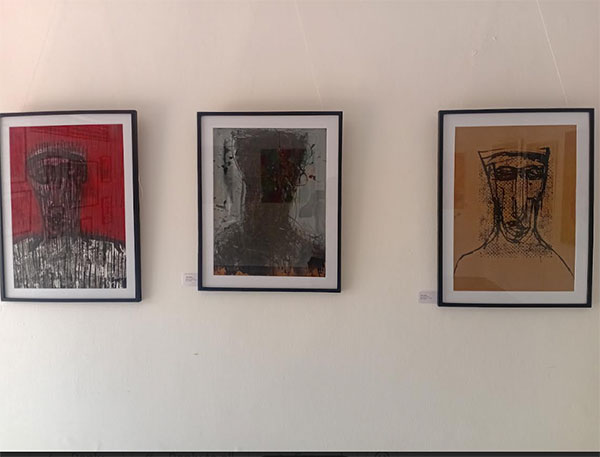
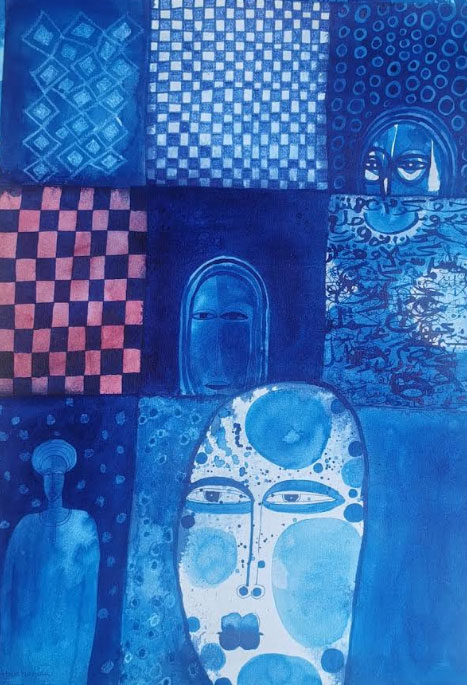
The work of the artists traversing different stylistic approaches in the form of media, technique and subject matter is evocative of their wide-ranging life experiences inspired by their specific homeland, community, religion, conflict, travel or migration. Here, artists like Eltayeb draw inspiration from the concept of memory, where he creates semi-abstract portraits of faces to relive the places he has lived in from childhood to the present: the past and present.
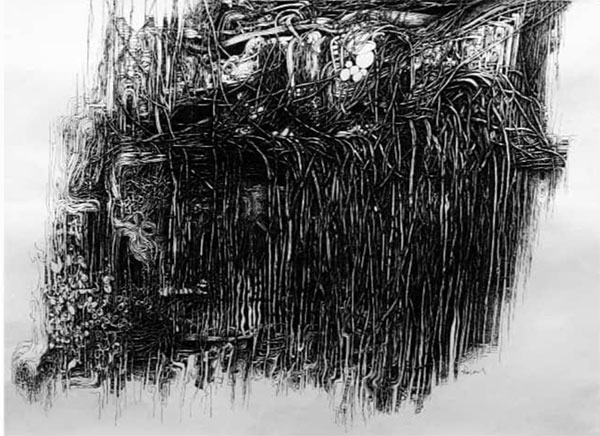
His portraits, a continuation of his iconic series Spirit of Faces 2020, evoke a sense of solemnity that comes with one living in different places and finally accepting who they are. Eltayeb grew up in Sudan but left the country as a political refugee in the 1980s and lived in Nairobi but also had a stint in Kampala and later returned to Nairobi, where he still lives today. Similarly, his long-time friend, a much more familiar figure on the Kampala contemporary art scene, Abushariaa, is very much inspired by his hometown, Omdurman, and its culture and tradition. As such, his ink drawings, imbued with ornamental and patterned symbols of his Nubian culture and sometimes Arabic calligraphy, carry a heavy nostalgic atmosphere that undeniably connects the viewer to the rich cultural heritage of this historical city that lies on the west bank of the Nile River.
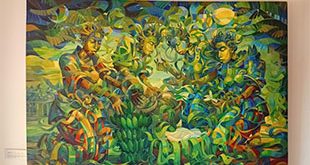
This theme of cultural heritage is also visible in the works of Ameer Yousif, Galal Yousif, Mohammed Rassoul and Nusreldin E. Adam, who form the younger generation of the six exhibiting artists. For example, Nursreldin’s paintings are inspired by his extensive knowledge of Sudanese folklore, where he focuses on the rich cultures and features of the Baobab belt that spans from the Niger to the Nile River.
“As an artist deeply rooted in Sudanese folklore, my work strives to capture the essence of our traditions and the beauty of the Baobab belt, reflecting the richness and diversity of my homeland,” he writes in his artist statement. His realistic drawings of women dressed in saris and heavily ornamented or of an elderly man seated on his camel evoke this narrative in his work. Likewise, Ameer Yousif paintings are awash with symbolism that denotes Sudanese culture and other surrounding societies. His affinity to colour exploring its variation and depth in his work, transcends the aesthetic appeal it injects in his art but is a metaphor to the Sudanese multiculturalism, traditions and customs that are known to be colourful and vibrant.
By drawing inspiration from their homeland, these artists are able to instigate important conversations around our cultural identity in a fast globalised world where tensions surrounding unique or localized cultures and homogenized global cultures often emerge. In the context of Sudanese culture, its ability to shake off interference from other cultures in the midst of a rapid wave of cultural imperialism is uniquely exemplary and should be emulated by several African communities. This is visible in the artistic expression of these artists who, despite living in a different land and having access to a multiplicity of cultural influences, are able to retain their identity as Sudanese and are firmly proud of it.
Hence, Tales of Kush is more than a reaffirmation of the artistic mastery of these six artists but is also an imploration to communities across the continent to connect with their cultural heritage and preserve it. Like the saying goes, “If you want to know if a society is moving forward, look at the art its artists are making.” Artists have a big role to perform in this plea as they stand at the forefront of society and are its mirror. The Sudanese artists have been able to ably perform this role as reflected in their work in this exhibition.
****
Tales of Kush is showing at Umoja Art gallery located on Plot 1800, Bukoto, Moyo Close, Mukalazi Road, behind Princess Kevina Apartments. The six exhibiting artists are, Eltayeb Dawelbait, Ahmed Abushariaa, Nusreldin Adam, Gala Yousif, Ameer Yousif and Mohamed Abdel Rasoul. All images are courtesy of Umoja Art gallery.