The Independent Uganda: You get the Truth we Pay the Price


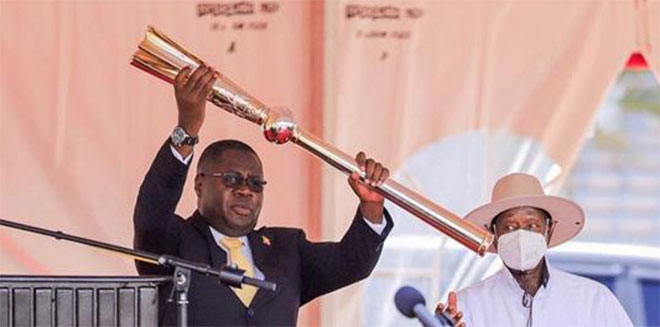
Oboth Oboth and the illusion of choice
COVER STORY | IAN KATUSIIME | Parliamentary elections are usually defined by late-night lobbying and shifting alliances, but the race to elect a new Speaker was effectively ended when Jacob Oboth Oboth secured an early endorsement from Chief of Defence Forces, Gen. Muhoozi Kainerugaba, President Yoweri Museveni’s son and presidential hopeful.
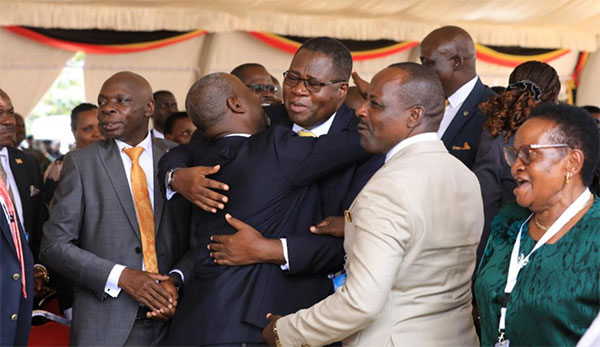
By the time MPs gathered at Kololo Ceremonial Grounds on the morning of May 25 to elect their new leader, it was a formality no different from Arsenal’s final game as they awaited to be crowned English Premier League champions.
Gen. Muhoozi’s endorsement of the West Budama MP for the Speakership effectively closed the ranks of the ruling establishment. An NRM caucus meeting chaired by President Museveni at State House Entebbe a day before the election of the Speaker and Deputy Speaker of Parliament served the same purpose.
NRM MPs who harboured interest in the two positions were urged to stand down in favour of the party’s two fronted candidates; Oboth and Thomas Tayebwa—the latter secured a second term through Muhoozi’s blessing too, through a tweet.
The election of the Speaker at Kololo was attended by President Museveni and presided over by the Chief Justice Flavian Zeija. Observers flayed Zeija for his disregard for parliament procedure as he barked orders at MPs and appeared to rush through everything.
Oboth garnered 441 votes, becoming Uganda’s third Speaker in four years. He was congratulated by former Speaker Rebecca Kadaga who said that his “professional and legislative experience will stand him in good stead.”
Oboth’s promise
“I pledge a corruption-free parliament. We will cultivate a culture of absolute integrity and zero tolerance to corruption under my leadership,” Oboth declared in his victory speech.
“The Speaker’s chair is not a throne. It’s a servant’s post. My role now is to work with you all to ensure that the voices of over 48 million Ugandans are represented and respected,” he said.
Oboth’s words after the election signal the weight that lies on his shoulders. Uganda has 528 MPs—one of the largest parliaments in Africa—and the House is perennially plagued with corruption and absenteeism.
The 12th parliament is also haunted by its former Speaker Anita Among who is under house arrest and could be arraigned on corruption charges anytime. Many MPs were said to be beholden to her largesse, which some analysts attribute to the hundreds of legislators who missed their first sitting.
Oboth also remarked that the budgeting promise will be devoid of “financial engineering” a jibe that was directed at the former steward of parliament where billions were appropriated in unclear circumstances.
The new Speaker also faces the immense task of reforming the Parliament Commission, the administrative arm of the legislature, that became a subject of abuse of office, illicit enrichment and money laundering by the previous Speaker.
Leaked documents showed how various amounts of money were funnelled through the body unrelated to parliament’s work and ended up in private accounts and funding ostentatious lifestyles of leaders entrusted with public office. The Parliamentary Commission is headed by the Speaker, comprising the Deputy Speaker, Clerk to Parliament, four commissioners and Leader of Opposition( LOP).
One of the most controversial acts of the Commission was giving out service awards to former LOP Mathias Mpuuga and other commissioners to the tune of Shs1.7 billion. The immediate former LOP Joel Ssenyonyi said he was sidelined in the commission as he was left out of the loop during commission sittings.
Now former commissioners have reportedly been summoned by the Inspector General of Government (IGG) in investigations regarding misappropriation.
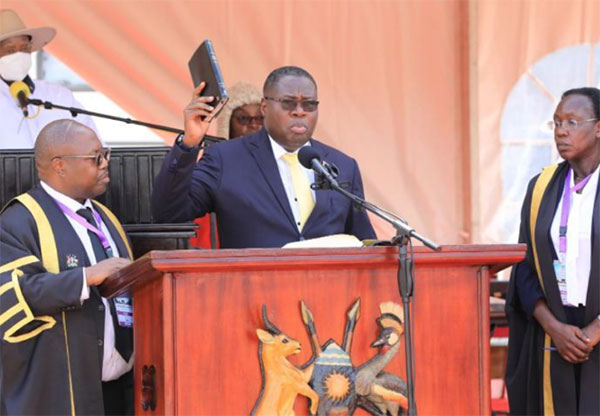
Analysts say reforming the powerful body for administrative efficiency will be one of Oboth’s biggest headaches because of the varying interests the parliament represents.
Oboth was nominated by Vice President and Katakwi Woman MP Jessica Alupo,, and seconded by Frank Tumwebaze, Kibale East MP and Minister for Agriculture.
Oboth defeated Norbert Mao, Laro-Pece MP and president general of the Democratic Party and Paul Mwiru, Jinja South East MP the candidate of National Unity Platform (NUP), the largest opposition party.
Mwiru polled 60 votes while Mao got a measly 15. Even though Mao got negligible votes, his impact on the race was unmistakable. It was evident as the veteran politician swaggered to accept his nomination from Peter Okot, Tochi County MP, turning heads in the congregation. In his trademark eloquence, he declared, “I consent to my nomination to take the chair as the Speaker.”
The entry of Mao in the speakership months ago threw former Speaker Anita Among off balance to a point where she said Mao had entered her “bedroom” during an NRM retreat in Kyankwanzi.
Mao retorted by calling Among an “adopted child” in reference to her newcomer status in the NRM. Mao, whose party struck a cooperation agreement with the ruling party, said the then Speaker was degrading the third highest office in the country.
NUP and its candidate Mwiru were overshadowed by the dramatic events leading to the election of Oboth Oboth. NUP party president Robert Kyagulanyi aka Bobi Wine fled to exile in the U.S. leaving an apparent vacuum in the opposition among other issues that have relegated the party to the back burner.
After Oboth was elected Speaker, he presided over the election of the Deputy Speaker, a position retained by Tayebwa. He defeated a number of candidates.
“They should stick to the doctrine of separation of powers, they should not be arm-twisted by the Executive because it is an arm of the government,” said John Baptist Nambeshe, Manjiya County MP when asked by journalists about his advice for the new Speaker and Deputy. Nambeshe is a leader of the NUP.
In reality, no one expects Oboth and Tayebwa to heed such advice considering how they landed in their positions. Commentators say the Executive had a firm grip on the 11th parliament and its grip can only be firmer in the new House.
Former Speaker Among was said to be the best gift for the NRM for how much she did the Executive’s bidding, but she was ousted for what many perceived as wielding too much power in a country where the centres of powers are clearly defined. Among exponentially grew Parliament’s budget and, as a result, built a power base whose reach extended far and beyond parliament’s precincts.
Tayebwa’s case
However there was a feeling of discontent surrounding the position of Tayebwa who was implicated in the financial impropriety that brought down his former boss.
“When they increased per diem, his was also increased from $850 to $3,500, when they decided to give themselves money to furnish their homes, Tayebwa got UGX 890M, when they gave themselves generators for their residences,” activist Agather Atuhaire said during the Parliament Exhibition, an anti-corruption exposé of Parliament.
Atuhaire, Team Leader at Agora Discourse, an accountability NGO, stated that Tayebwa was in on it when then Speaker and Deputy Among awarded themselves annual vacations with their spouses, paid for by tax payers.
“Tayebwa also got, when they increased their office budgets, donations and entertainment..When they were sharing the budget through reallocations, Mitooma was also a beneficiary each FY,” Atuhaire added.
During the NRM caucus, Tayebwa offered an apology but many observers termed it as a face-saving clean up having survived the fangs that targeted Among.
“I think there is where we had a lapse as leaders and I wanted to take this opportunity to apologise to the nation on behalf of the leadership of parliament.”
Former Speaker Among is under house arrest pending a criminal investigation and was unable to turn up for the first session of the 12th parliament—a place where she was so confident that she would wield the gavel—only to fall in a highly orchestrated crackdown owing to her alleged abuse of taxpayers money.
The general consensus was that Tayebwa should not have been spared if it was a genuine occupation probe with critics arguing that the Ruhinda North MP was a beneficiary of Among’s reign at Parliament which was plagued by extravagance and gross mismanagement of public funds.