The Independent Uganda: You get the Truth we Pay the Price


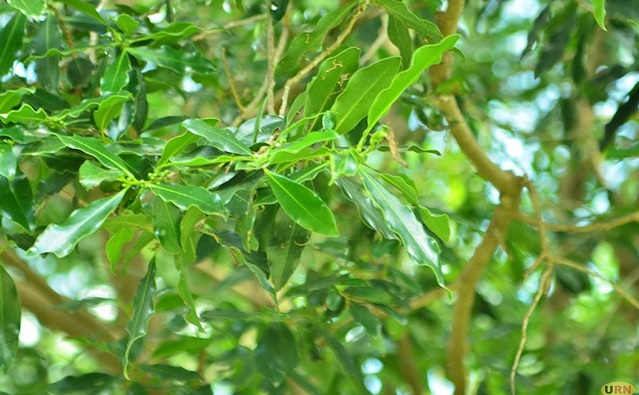
COMMENT | MICHAEL WAMBI | Medicinal plants rarely receive the same attention as iconic wildlife species. Yet they form part of the same ecosystems, and they are disappearing under pressure from overharvesting, habitat loss, and limited regulation.
It is emerging that conversations about conservation should be extended beyond elephants and mountain gorillas to a quieter but equally threatened resource, medicinal plants hidden in the country’s forests.
The research presented makes one thing clear: Uganda’s forests do not just contain biodiversity; they contain pharmacological potential, cultural heritage, and economic opportunity.
But without sustained local investment, coordinated databases, and intellectual property systems that protect communities rather than dispossess them, the country risks celebrating its natural wealth while losing control over it.
Inside lecture halls and research institutions, scientists are racing to document their healing properties. But in protected areas like Bwindi and the Rwenzoris, many of those same species are being stripped, ring-barked, and harvested illegally.
Two researchers, Dr. Godwin Anywar of Makerere University and Upton Nuwagira, are examining the issue from different angles. Together, their work paints a more complicated picture of Uganda’s medicinal plant ecosystem: powerful, vulnerable, and structurally under-supported.
Dr. Anywar’s research has documented over 240 plant species used across Uganda to treat opportunistic infections among people living with HIV/AIDS. “Many of the plant species these herbalists give people living with HIV/AIDS have multiple mechanisms of action,” he explained.
“They do not only target the virus. Some boost the immune system. Others improve appetite. Others slow down replication. So you find that the person is treated more holistically.” He explained.
Asked about combining multiple herbs and whether proportions are scientifically sound, Dr. Anwyar responded carefully, “Throughout the country, many traditional healers combine different herbs. Scientifically, it has been proven that when some plants combine, you get a greater result. We call it synergy. The therapeutic effect becomes greater than that of the individual plants.”
He added, “In some cases, they combine plants to minimize toxicity. In other cases, to improve palatability. These practices are based on generations of observation. Now science is beginning to explain what they have been doing.” Laboratory testing has backed some of this knowledge.
“In Bwindi, we tested plant species used by local communities for ringworm. They were more effective than modern drugs at healing ringworm,” he said. “That tells you there is serious pharmacological potential in our forests.”
If Dr. Anywar’s presentation revealed what these plants can do for human health, Dr. Upton Nuwagira’s presentation revealed what is happening to the plants themselves.
“I will be summarizing how we can plant these trees outside their natural environment,” Dr. Upton Nuwagira began, signalling that conservation had become urgent. He noted that during fieldwork in protected areas, he observed alarming patterns.
“Even in highly protected forests, people enter at night and harvest medicinal plants,” he said. “They use poor methods, ring debarking, which kills the tree completely. You find standing dead trees. You find stumps.”
He did not present it as criminality alone. “There are natural calamities, wildfires, landslides, but there are also socioeconomic pressures. Poverty pushes people to harvest unsustainably.
These plants are valuable, and demand is growing.” Among the most heavily targeted species are Prunus africana, Warburgia ugandensis, Maesa, Albizia coriaria, and mountain bamboo (Arundinaria alpina). “These are not just trees,” he emphasized.
“They are medicinal resources. But if we continue harvesting without replanting or managing properly, we will lose them.” He warned. Dr. Nuwagira’s response is technological and strategic.
“We used climate data from satellites, elevation data, slope, soil physical and chemical properties,” he explained. “Then we created land suitability maps to identify where these species can thrive outside their natural habitats.”
A participant, working with Batwa communities near Bwindi, raised a sensitive issue: illegal harvesting may be linked not only to poverty, but to bureaucratic delays.
“You talked about illegal harvesting,” the participant said, “but sometimes it is because licenses expire and take long to be renewed. People depend on these resources for survival. When permits delay, they go into the forest and harvest more than they should.”
The comment reframed the problem. Is illegal harvesting purely criminal, or partly administrative?
Dr. Nuwagira acknowledged the complexity, noting that “Sustainable use requires clear systems,” he said. “If communities are to plant these species and benefit from them, we need mechanisms that allow legal cultivation and marketing without pushing them back into protected areas.”
His research argues for ex-situ conservation or planting medicinal species in areas where they can grow successfully without pressuring wild populations. Ex situ or ‘off-site’ conservation means the conservation of components of biological diversity outside their natural habitats. “Our results show that western Uganda, especially the Rwenzori and southwestern highlands, is highly suitable for many of these species,” he said.
“Northern Uganda, however, is less suitable. If you plant in the wrong place, the plant may grow, but it may not develop the same medicinal properties.”
The research connects wildlife conservation directly to public health. If forests are degraded, medicinal supply chains collapse. If medicinal demand rises, forest pressure increases. Without planning, both health and biodiversity suffer.
For Dr. Nuwagira, the issue is not purely academic. “My father developed prostate cancer,” he revealed. “Using the knowledge I gained at Makerere, I went into the forest and got Prunus africana.
He started taking it. Within a short time, his disorder stopped.” That experience shaped his research direction.
“That is why I know these plants are important. But if they disappear from our forests, what happens to families like mine?”
On World Wildlife Day, that question carries weight. Back in the workshop held ahead of World Wildlife Day, the conversation shifted from ecology to systems.
Asked about the biggest challenge facing Uganda’s traditional medicine ecosystem, Dr. Anywar answered bluntly: “We are not doing enough research on our plants.” He explained how foreign funding shapes ownership.
“My PhD was funded by the Germans. The traditional medicine project is funded by the Swiss government. When they fund this research, you sign agreements. They become the owners of the information because they funded it.”
He contrasted this with countries that invest internally. “The Chinese are doing well because they have invested in their research. They support their scientists. They develop products. We need much more internal support.”
Wildlife conservation conversations in Uganda often focus on charismatic megafauna. But medicinal plants form part of the same ecosystems. They are harvested from the same forests. They depend on the same climate stability. They face the same threats from encroachment and poverty. Yet, as the researchers revealed, Uganda lacks a unified national database linking medicinal plants and conservation status, a strong, locally funded research ecosystem, and an intellectual property system designed for collective knowledge.
“It is not going to be magical,” Dr. Anywar said. “Someone has to fund it. Someone has to coordinate it.”
What World Wildlife Day exposed is not just ecological fragility. It exposed a dual crisis: Ecological vulnerability, species being overharvested and poorly managed, and knowledge vulnerability, research owned externally and underfunded locally.
Dr. Nuwagira is mapping where medicinal trees can survive. Dr. Anywar is proving why they matter medically. But without structural investment, Uganda risks losing both the plants and control over the science built around them.
As Dr. Nuwagira noted, “These plants are literally saving lives.” And as Dr. Anywar warned, “If we do not invest in researching and protecting them ourselves, we will not control their future.” On World Wildlife Day, that may be the most urgent conservation message of all.
****
URN