The Independent Uganda: You get the Truth we Pay the Price



Enrolment has surged across Uganda’s education system, but thousands of schools are struggling with shortages of teachers, classrooms and basic facilities
NEWS ANALYSIS | JULIUS BUSINGE | Uganda’s education sector has made progress in expanding access to learning opportunities over the last three decades, but the newly released Baseline Education Census (BEC) 2025 shows that major challenges remain in school infrastructure, teacher deployment, sanitation, and access to secondary education.
The census, carried out jointly by UBOS and the Ministry of Education and Sports, covered pre-primary, primary, secondary and non-tertiary institutions across the country.
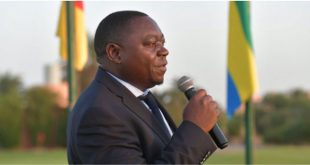
The report, launched by UBOS Board Chairperson Albert Byamugisha, alongside UBOS Executive Director Chris Mukiza and Ministry of Education and Sports Permanent Secretary Kedrace Turyagyenda, provides critical information on enrolment, teacher availability, school infrastructure, sanitation, ICT access, attendance and completion rates that will support planning, resource allocation and policy formulation across the education sector.
“The introduction of Universal Primary Education in 1997 and Universal Secondary Education in 2007 remains one of the most transformative social policies in Uganda’s history,” Byamugisha said, noting that the reforms opened education opportunities to millions of children from vulnerable households.
Access gains
The census findings underscore the extent to which Uganda’s education system has expanded over the years.
At the pre-primary level, Uganda now has 38,347 schools, of which 35,154 are privately owned while 3,193 are attached to public schools. The census counted 2.37 million learners in pre-primary education, comprising 1.21 million boys and 1.17 million girls. Females account for 49 percent of all pre-primary learners.
The report also found that 22.5 percent of children enrolled in pre-primary education are above the official age bracket for that level, suggesting persistent delays in school enrolment among some households.
Secondary education has also experienced significant growth. Uganda now has 5,498 secondary schools, including 4,014 private institutions and 1,484 public schools. Total enrolment at this level stands at 2,008,133 learners, of whom 1,069,855 are female and 938,278 are male.
The census further identified 830 non-tertiary institutions across the country, enrolling 74,024 learners. Of these institutions, 693 are privately owned while 137 are public. Male learners account for 38,906 students compared to 35,118 females.
These figures demonstrate sustained growth in education participation and reflect the impact of government policies aimed at increasing access to learning opportunities.
Infrastructure deficit
Despite these gains, the report paints a worrying picture of infrastructure pressures facing the education system.
At the pre-primary level, the national pupil-teacher ratio stands at 29:1, while the pupil-classroom ratio is 20:1 and the pupil-stance ratio is 23:1. Conditions become more strained at the secondary level.
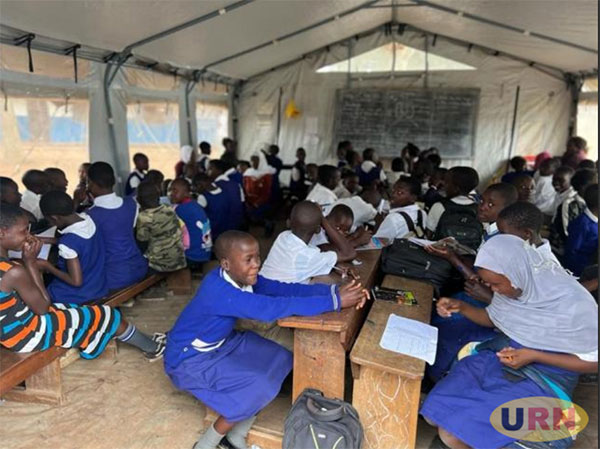
The census found that Uganda’s secondary schools have a national student-teacher ratio of 40:1, meaning each teacher is responsible for an average of 40 learners. The national student-classroom ratio stands at 45:1, while the student-stance ratio is also 40:1.
The situation is more pronounced in public schools. Public secondary schools have an average of 60 students per classroom compared to 37 in private institutions. Public schools also record a student-stance ratio of 58:1 compared to 31:1 in private schools.
The findings suggest that while enrolment has expanded considerably, infrastructure development has not always kept pace with growing learner populations.
One of the most striking findings is the uneven distribution of secondary schools across the country. The census found that 1,007 sub-counties still do not have a public secondary school.
This means thousands of learners, particularly in rural areas, continue to travel long distances or depend on private institutions to access secondary education.
The report concludes that there is a need to enforce government policy on ensuring a public primary school in every parish and a public secondary school in every sub-county.
Skills challenge
Another major finding from the census is the growing importance of technical and vocational education as Uganda seeks to build a more skilled workforce.
Kedrace Turyagyenda said the census findings will support implementation of the Ministry of Education and Sports Strategic Plan for 2025/26–2030/31.
“The data and insights generated from the Baseline Education Census will support implementation of the Ministry’s Strategic Plan 2025/26–2030/31, including ongoing efforts to strengthen TVET and expand access to skills development opportunities across the country,” she said.
The census identified 830 non-tertiary institutions, highlighting the growing role of vocational and technical training in supporting Uganda’s industrialisation agenda.
The report also revealed broader system management challenges. During validation exercises, UBOS found cases where some schools shared Education Management Information System (EMIS) numbers, while some learners had multiple Learner Identification Numbers (LINs) and others had none at all.
The census further confirmed the existence of pre-primary learners being reported within Primary One classes in some public schools, potentially distorting planning and resource allocation.
As a result, UBOS recommends that all learners be assigned unique identification numbers, preferably linked to the National Identification Number (NIN), while all schools should be fully registered under the Education Management Information System.
Mukiza recognized Ugandans for their growing appreciation and use of statistics in public discourse and urged policymakers to use the findings to improve service delivery and accelerate socio-economic transformation.
The Baseline Education Census 2025 marks the culmination of UBOS’ statistical release calendar for the financial year and provides a critical evidence base for education planning.
The report suggests that while Uganda has largely succeeded in expanding access to education, the next phase of reform must focus on quality, infrastructure, teacher deployment, technology adoption and equitable distribution of schools if the country is to fully harness its demographic potential.