The Independent Uganda: You get the Truth we Pay the Price


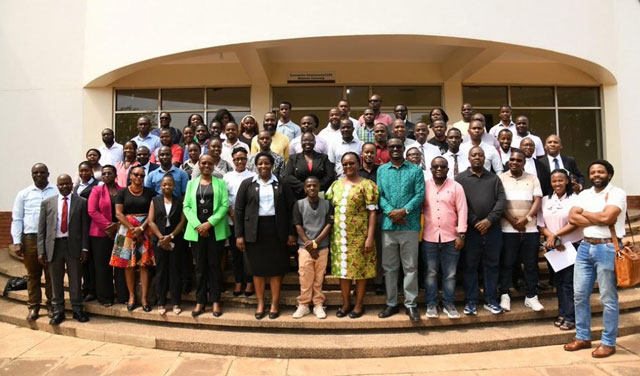
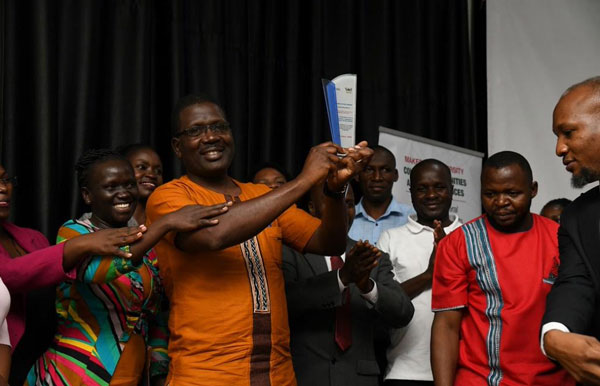
SPECIAL REPORT | For three weeks, 52 participants from different professions and backgrounds were enrolled into a course that sought to interrogate assumptions, test evidence, recognise manipulation and rethink how they engage with people around them. At their graduation on Aug.7, the first cohort of Makerere University’s Critical Thinking and Social Intelligence course left with more than certificates: they left with the uncomfortable habit of asking why, reports Ronald Musoke.
By the time Ronald Wafula returned to his everyday life after three weeks at Makerere University, something had changed. The social scientist and political analyst, who also serves as Secretary of the Parish Development Model Board in Busia District, said the course had given him the confidence to take a position without automatically yielding to the majority. “I no longer feel ashamed to take my side even if I am one out of many,” Wafula told The Independent, shortly after the course.
That may sound like a modest outcome for a university course. It is not. In a society where popularity can sometimes substitute for evidence, where social-media arguments move faster than verification, and where people can be persuaded by the confidence with which something is said rather than the strength of the argument behind it, the ability to stand alone and explain why, can be an important intellectual skill.
Wafula said the course had also changed the way he conducts research. He now feels freer to question claims, seek arguments and demand justification. His peers, he said, have even nicknamed him “professor.” He is now looking towards a PhD, partly because he sees research and critical inquiry as tools for addressing some of the social barriers confronting society.
Wafula was one of 52 participants who completed Makerere University’s inaugural Critical Thinking and Social Intelligence course, a three-week programme organised by the Department of Philosophy under the School of Liberal and Performing Arts, College of Humanities and Social Sciences. The course ran from July 20 to August 7.
But describing it simply as a short academic course would miss what the organisers were attempting. For three weeks, participants were asked not simply to learn what to think, but to examine how they think.
They interrogated arguments, tested evidence, identified assumptions and explored fallacious reasoning. They discussed propaganda, manipulation and disinformation. They examined social relationships, empathy, emotional and moral intelligence, difficult conversations, criticism and trust.
They were also taught how to recognise subtle cues and unspoken social norms, navigate differences and understand how their own behaviour and motivations affect others. And then there was social media: the place where impression management, rage bait, misinformation and confident nonsense can coexist within the same few minutes.
The course sought to equip participants to navigate all of it. Its unusual combination appears to have been part of its appeal. When the Department of Philosophy initially sought applicants, organisers expected about 75 people. More than 350 applied. Eventually, 52 were admitted.
The applicants included lawyers, journalists, medical professionals, accountants, teachers, architects, Local Government and public administrators, students and politicians. That diversity was deliberate. Dr Jimmy Spire Ssentongo, the course coordinator and one of its principal architects, believes critical thinking cannot be reduced to an academic exercise. It has to encounter the world in which people actually make decisions.
The genesis of the course
The origins of the course go back about three years. Following a training at Uganda Prisons, Dr Ssentongo and his colleague in the Department of Philosophy, Dr Nixon Wamamela, discussed creating a short course initially focused on human rights and ethics.
But the idea evolved, and critical thinking became the centre. Still, the organisers realised that thinking clearly was not enough. People also needed to understand other people. Thus came the second half of the equation: social intelligence.
Dr Ssentongo describes the course as a search for truth through an open mind; one willing to question, doubt and reflect, but not simply to question for entertainment. The purpose of questioning is understanding, he said.
He illustrated the point with an old philosophical story about 16th-century French philosopher René Descartes. When a friend found Descartes still in bed late in the morning and asked what he was doing, the philosopher’s answer was that he was “working”. His work was thinking.
For Dr. Ssentongo, that is precisely the point that philosophy continues to make. Thinking is work, and sometimes it is hard work, because it requires people to interrogate assumptions that have become comfortable.
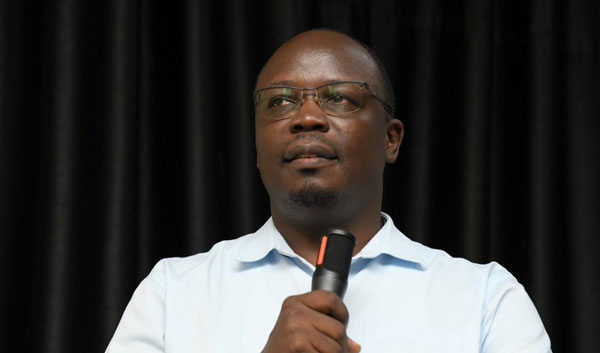
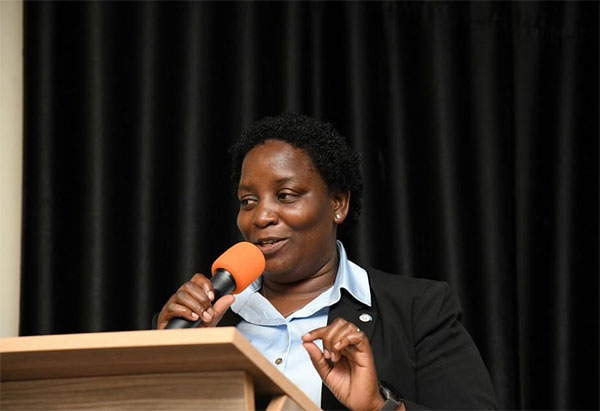
The course was therefore deliberately designed around lectures, guided discussions, group debates and practical exercises rather than conventional classroom instruction alone. Participants were expected to apply ideas to real situations from their professions and daily lives. That distinction mattered to course participant Swalleh Kisubika, a Business Administration student at Makerere University’s College of Business and Management Sciences.
When he entered the course, his expectations were straightforward. He wanted to learn how to approach new ideas, think carefully and improve his decision-making. He got considerably more. The course moved into arguments, relevant questions, strong and weak evidence and the assumptions hidden underneath claims.
But what impressed him most was the use of current affairs and real-life examples. His experience is important because it captures one of the programme’s central ideas: critical thinking becomes meaningful when it is taken out of the textbook and applied to the information people encounter every day.
Learning to question without becoming cynical
Proscovia Mahoro, a media and communications consultant, arrived at a similar conclusion, but from a different direction. Her biggest takeaway was not simply a particular method for evaluating an argument. It was a realization about herself.
“My biggest takeaway is, how we think is just as important as what we think,” Mahoro told The Independent. That sentence could almost serve as the course’s unofficial motto. The programme was concerned with the content of people’s beliefs, but perhaps even more with the machinery behind those beliefs.
Why do we believe something? What evidence supports it? What assumptions are we making? What biases might be influencing our judgement? What happens when emotion becomes stronger than evidence? And what happens when another person sees the same situation differently?
Mahoro said she found the connection between critical thinking and social intelligence particularly powerful because it encouraged her to question more deeply while becoming more intentional about how she understands and engages with other people.
That second part is crucial. A critical thinker who cannot listen is not necessarily socially intelligent. Someone who can dismantle an argument but cannot understand the person making it may simply become better at winning arguments. The course wanted something more constructive.
The social experiment inside the classroom
Dr Ssentongo said he was struck by what happened when participants with different professions, ideologies and world views were placed together. There were participants from politics, religion, law, human medicine, veterinary medicine, agriculture and accounting. There were people with differing political views. Yet they were able to debate, joke and learn together without hostility.
For Dr Ssentongo, that was not merely pleasant classroom chemistry. It was a lesson with implications for the wider society. Differences in ideas, he argued, do not have to prevent people from living and working together. He wished, in fact, that contemporary politics could operate with some of the same tolerance. This is where the course’s two halves—critical thinking and social intelligence—meet.
The first asks whether an argument makes sense. The second asks what happens to the human relationship when that argument is made. Together, they encourage a more difficult form of disagreement: one in which people can challenge ideas without treating the person who holds them as an enemy.
Building a critical mass of critical thinkers
Dr Dickson Kanakulya, the Head of the Department of Philosophy, sees the programme against a larger global shift in the skills demanded from education and work. He referred to the OECD and World Economic Forum discussions on 21st-century skills, pointing to critical thinking and creative collaboration among the abilities increasingly required in contemporary society.
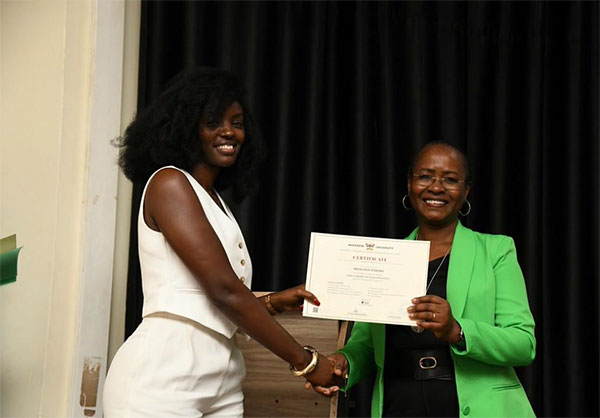
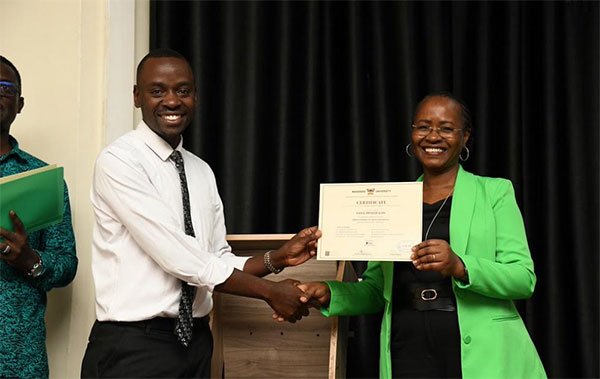
The department’s ambition, he said, is to create “a critical mass of critical thinkers”. That ambition extends beyond the university. Dr Kanakulya argued that critical thinking is becoming increasingly indispensable in a world saturated with competing claims, misinformation and pressure to conform to popular opinion without adequate reflection. The course therefore introduced participants to questions of law, human rights and ethics alongside the practical mechanics of reasoning.
The graduate, in Dr Kanakulya’s conception, should not merely be someone who can identify a flawed argument. They should be someone capable of thinking critically about human rights, moral choices and the consequences of decisions.
The philosophy of thinking
Prof. Sarah Nabwire Ssali, Makerere University’s Deputy Vice Chancellor in charge of Academic Affairs and the chief guest at the Aug. 7 certificate-awarding ceremony, placed the experiment within the long history of philosophy. “Philosophy is the mother discipline (of academia),” she said.
Her point was that today’s specialised disciplines emerged as different forms of knowledge and inquiry differentiated themselves. That history matters because society now finds itself concerned about a shortage of critical thinkers while often treating philosophy as though it were an academic luxury.
Prof. Ssali’s response was essentially, ‘Perhaps we should reconsider.’ The course’s content, she noted, went far beyond abstract philosophical questions. It covered problem-solving, relationships, fallacious reasoning, manipulation, propaganda, and disinformation.
Critical thinking also had to enter the places where people make intensely personal decisions. Relationships. Health. Identity. Professional practice. Public life. Prof. Ssali challenged participants to examine even the assumptions embedded in their own professional knowledge.
A medical doctor, for example, possesses specialised expertise, but that should not mean the patient’s experience is automatically dismissed. ‘Professional authority does not make questioning unnecessary, but it can make questioning more important,’ she said. For Prof. Ssali, critical thinking is not something one completes. It is a continuing practice. The certificate therefore cannot be the end, she said.
The graduate has to keep identifying assumptions, examining biases and considering how professional identity shapes participation in public life. The objective is not to turn everyone into philosophers. It is to make philosophical thinking part of how people live.
What should Africa borrow?
Prof Edward Wamala of Kabale University, who paid an impromptu courtesy visit and addressed the course participants one week into the course, brought another question: originality. Africa, he argued, suffers from a shortage of original thinking and a tendency to borrow ideas without sufficiently interrogating their usefulness. His challenge was deliberately provocative. If ideas are going to be borrowed from elsewhere, why not first ask which ones deserve to be borrowed? “What should be borrowed from elsewhere, and why?” became, in effect, another exercise in critical thinking. It is an important distinction. Critical thinking is not the reflex to reject everything. Nor is it the habit of accepting everything. It is the ability to discriminate, to examine, and to choose.
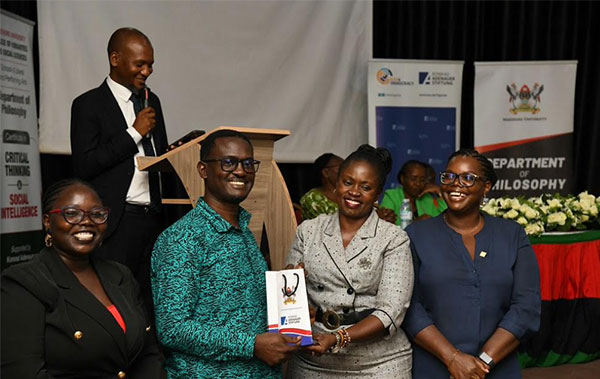
The course also gave Makerere’s College of Humanities and Social Sciences an opportunity to make a practical case for the relevance of the humanities. Prof Helen Nambalirwa Nkabala, the college principal, argued that the humanities should not have to defend themselves through rhetoric. Their work should demonstrate their value.
She referred to the college’s description of itself as the “mine of excellent minds” and saw the course as evidence of that mission. The divide between the humanities and sciences, she argued, is also artificial.
Scientific and technological innovation still needs communication, social understanding and people capable of helping societies interpret and adopt change, she said. The course was therefore not a retreat into the humanities. It was an attempt to take humanities-based thinking into other professions. Prof. Nkabala urged graduates to become ambassadors of the programme and demonstrate its usefulness outside the university.
She also supported exploring blended or online delivery, given that many people interested in the course could not commit to three weeks of full-time attendance. That demand was already visible in the numbers. The course had expected roughly 75 enthusiasts. More than 350 applied.
The Dean who wanted to take the course
Dr Pamela Khanakwa, the Dean of the School of Liberal and Performing Arts, provided an unusual endorsement. She had actually applied to take the course herself. She simply could not attend because of competing commitments. Dr. Khanakwa described the programme as special partly because it broke down the conventional boundaries between STEM and the humanities. Participants were not being asked to choose between science and philosophy.
They were being reminded that both require human beings capable of reasoning, communicating, interpreting evidence and understanding one another. She also offered one of the course’s most important warnings. Critical thinking must not become an excuse for inaction.
There is a point at which questioning must lead to judgment and judgment to action. Otherwise, a person can become so absorbed in analysing every possibility that they never actually decide anything. The value of critical thought, Dr Khanakwa suggested, is ultimately practical: it should help people respond more intelligently to real problems.
When the student begins questioning democracy
Claver Boniface Lukwago’s experience illustrates what that can look like. The student representative, a practicing lawyer, said the course changed the way participants approached questions they had previously accepted without much reflection. Democracy and voting became objects of interrogation. The facilitators, he said, created an environment in which participants were treated as equals and encouraged to contribute. The classroom became a place where the facilitator could teach but also listen. The students could challenge one another, and they discovered that questioning does not necessarily destroy a relationship. It can strengthen it if done respectfully.
Lukwago believes the course should be made available much more widely, potentially even as part of mandatory education. His conclusion is based less on theory than on what happened to him. The course made him ask more questions. That is perhaps the most authentic testimony a course in critical thinking could receive.
From critical thinking to citizenship
Peter Koch, the interim Country Director of the Konrad-Adenauer-Stiftung Foundation Office Uganda and South Sudan, the organisation that supported the course, saw it in similarly broad terms. Speaking to participants during the training, he described the combination of critical thinking and social intelligence as exceptional, saying he had not encountered the same combination in his organisation’s work in other countries. Koch argued that the course was particularly relevant in East Africa, where citizens cannot always assume that media accounts provide critical analysis of political and economic developments.
Citizens need the capacity to examine information themselves. Bernard Mukhone, Konrad-Adenauer-Stiftung Foundation’s Programme Manager in Uganda, pushed the argument into democratic citizenship. Democracy, he said, is not simply elections. It also requires citizens who can reason together, disagree without hostility, distinguish an argument from an insult and listen before judging.
Social intelligence then adds the capacity to understand other people, build trust and navigate differences. That combination, he argued, turns knowledge into wisdom and wisdom into action.
Learning, unlearning and relearning
Dr Pauline Achola, the Assistant Commissioner at the Uganda National Commission for UNESCO, offered another way of understanding the course. “It is not finished; the graduation ceremony is not the conclusion of the learning process,” she said.
Dr Achola encouraged participants to embrace “learning, unlearning and relearning”—a particularly apt description for a programme designed to expose assumptions and replace weak habits of reasoning with stronger ones. She urged graduates to carry the knowledge into their communities.
UNESCO, she noted, is interested in lifelong learning and in the wider contribution of social and human sciences. She also disclosed that the Department of Philosophy is interested in establishing a UNESCO Chair on Philosophy, potentially opening another avenue for the university to deepen its engagement with philosophical thinking.
For course participant Mwebaze Enock Kato, an economist and academic, the timing of the course could hardly have been better. He described it as “really timely”, arriving when societies need critical thinkers to shape conversations ranging from public policy to social-media interactions. He told The Independent that his professional plans for the knowledge are concrete.
As an economist, he intends to use the skills to analyse economic policies more effectively. As an academic, he wants to evaluate his learners’ arguments better during classes, research and project presentations. And beyond his professional responsibilities, he wants to become a voice against misinformation and disinformation in his community.
He also intends to improve how he presents ideas, using argumentation and moral intelligence more deliberately. Kato’s response perhaps captures the course’s intended movement from classroom to society. The knowledge should not stay in the notes. It should alter practice.
The experiment is not over
The Department of Philosophy now faces a more interesting problem than whether the inaugural course worked. It has to decide what happens next. Participants have already asked about an advanced level. Dr Ssentongo has floated the possibility of graduates forming an association and becoming ambassadors for critical thinking and social intelligence.
The Nnabageleka Development Foundation has expressed interest in adapting the course for younger people. Other institutions have shown interest in versions suited to their own audiences. The Konrad-Adenauer-Stiftung Foundation has indicated willingness to support another edition. The possibility of blended or online delivery is being considered. And the demand is there.
But expansion will not, by itself, prove the course’s success. The real test will be whether the 52 people who completed the inaugural programme carry its habits into their workplaces, families, institutions and communities. That is why the words of Mahoro, Kisubika, Kato and Wafula matter as much as those of the academics.
Mahoro discovered that “how we think is just as important as what we think.” Kisubika found his expectations exceeded when theoretical concepts were tested against current events. Kato wants to use the skills to interrogate policy, improve teaching and confront misinformation. Wafula says he can now stand by an argument even when he is “one out of many.” And Lukwago discovered that after three weeks, questions about democracy and everyday decisions could no longer simply be accepted at face value. These are not necessarily spectacular transformations. They are subtler than that. They are habits. And habits, if sustained, can become culture.
Still, the harder assignment will continue outside Makerere University. Will the course participants continue disagreeing without hostility? Will they distinguish evidence from hearsay? Will they recognise manipulation before becoming its victims? Will they question their own assumptions with the same energy they use to question other people’s? Will they listen? Will they change their minds? Will they think independently without becoming dismissive of everyone else? Will they turn questioning into responsible action? Those questions may ultimately determine whether Makerere’s first Critical Thinking and Social Intelligence cohort was merely the first group to complete an unusual short course, or the beginning of something larger.