The Independent Uganda: You get the Truth we Pay the Price


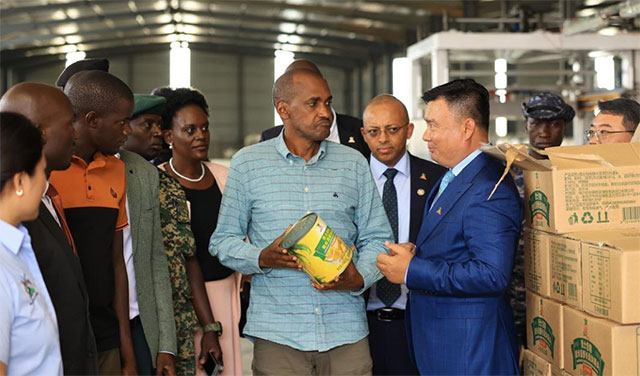
Kampala, Uganda | PATRICIA AKANKWATSA | Uganda’s first commercial export of canned pineapple to China is being presented as more than a ceremonial trade breakthrough. Government officials, investors, and development agencies say the shipment reflects a wider attempt to reposition Uganda from an exporter of raw agricultural commodities to a supplier of processed food products capable of competing in global markets.
The inaugural consignment of four containers carrying 104 metric tonnes of canned pineapple was flagged off on May 14 from the China-Uganda Agricultural Cooperation Industrial Park in Luweero District. The products were processed by Deshiburg Fruits International Co. Ltd, Uganda’s first dedicated pineapple-canning factory.
For years, pineapple farmers in districts such as Luweero, Nakasongola, Nakaseke, and Kayunga have struggled with unstable prices, weak market access, and post-harvest losses due to the fruit’s highly perishable nature. The arrival of an industrial-scale processor is now being framed as a potential solution to one of Uganda’s persistent agricultural problems: producing raw commodities without sufficient domestic value addition.
The minister of Agriculture Frank Tumwebaze said the factory’s scale changes the market equation for farmers.
“With a factory capacity of 500 tonnes of pineapples per day, we no longer have a market problem; we have a production challenge. I appeal to our farmers to produce more and meet the required standards to supply both domestic and international markets,” he said.
The statement captures the government’s broader agro-industrialisation strategy, which seeks to use processing facilities to absorb agricultural output, reduce waste, and increase export earnings. Uganda has long exported unprocessed crops including coffee, maize, and fruits, limiting the country’s share of value within global supply chains.
The Deshiburg facility represents one of several attempts to reverse that trend through foreign-backed agro-processing investments linked to export markets.
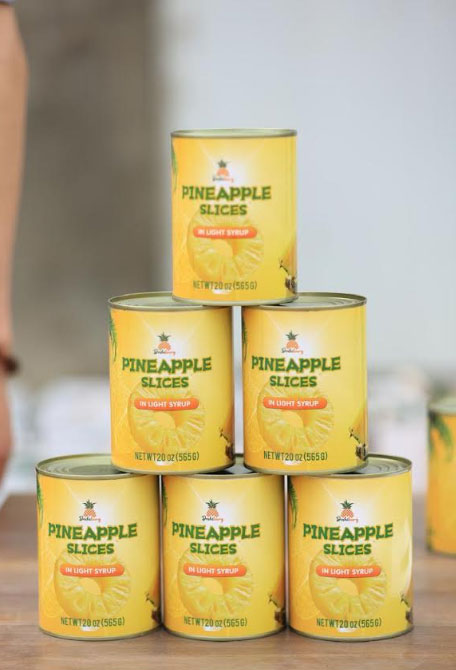
The company says the factory operates entirely on locally sourced Smooth Cayenne pineapples and currently runs at full capacity.
“Our factory is operating at full capacity using locally sourced Smooth Cayenne pineapples, processed without artificial preservatives,” said Deshiburg chairman Owen Yin.
He described the investment as part of a longer-term strategy to establish a broader agro-industrial ecosystem in Uganda. The company plans to expand into pineapple juice, quick-frozen pineapple, mango juice, avocado oil, canned maize, and dried tropical fruits.
The factory itself is the product of Chinese-Ugandan cooperation under the FAO-supported South-South Cooperation framework, which has focused on technology transfer, agro-industrial park development, and technical support for farmers and processors.
According to the UN Food and Agriculture Organization (FAO) the significance of the export lies less in the shipment volume itself and more in what it represents for Uganda’s food systems transformation agenda.
Speaking at the launch, FAO Country Representative Ezana Kassa said, “This milestone is a practical demonstration of what South-South cooperation can achieve, linking farmers to technology, investment, and markets. It shows how partnership can transform agriculture into a driver of jobs, incomes, and economic growth.”
Kassa argued that value addition is increasingly central to modern agricultural competitiveness, particularly as export markets demand higher standards, traceability, and processed products rather than raw produce.
“This occasion marks not only the dispatch of Uganda’s first commercial shipment of canned pineapple but also a clear demonstration of the country’s transition from exporting raw agricultural commodities to exporting value-added products – a central pillar of food systems transformation,” he said.
Development agencies view agro-processing as a way to tackle several structural weaknesses simultaneously: reducing post-harvest losses, creating off-farm employment, stabilising farmer incomes, and improving export resilience.
The United Nations Resident Coordinator in Uganda, Leonard Zulu, described the export as more than an export milestone, arguing that its real impact lies in its potential effect on rural livelihoods.
“Behind these containers are thousands of Ugandan farmers and families whose livelihoods are beginning to change through access to reliable markets and value addition,” Zulu said.

He noted that for many years farmers in the region faced significant post-harvest losses and price instability, often forcing them to sell produce cheaply or watch it spoil before reaching markets.
The emphasis on out-grower participation is particularly important in Uganda’s agricultural policy debates. Large-scale agro-processing projects have frequently been criticised for failing to integrate smallholder farmers into commercial value chains. In the Deshiburg model, more than 1,500 farmers are reportedly linked to the factory through supply arrangements.
For farmers such as Jane Nakandi, the new processing plant offers a degree of predictability that has often been absent in fruit farming.
“We now have a ready market for our pineapples. They are booked before they ripen, so we are assured of the market,” she said.
Analysts say such arrangements could help address one of the key bottlenecks in Uganda’s agricultural sector: fragmented production systems that struggle to meet export consistency and quality requirements.
Yet the project also highlights the scale of the challenge ahead. Export readiness depends not only on production volumes but also on logistics systems, quality certification, cold-chain infrastructure, financing, and compliance with international food safety standards.
FAO officials acknowledged that sustaining Uganda’s value-addition ambitions will require continued investment in processing infrastructure, farmer training, and standards enforcement.
The launch also reflects deepening economic ties between Uganda and China within agriculture and industrial development. The Deshiburg investment emerged from collaboration between Chinese investors, agro-industrial park developers, and international development agencies.
Yin said the company selected Uganda because of its rich resources, stable investment environment, and enormous development potential, adding that the firm intends to develop a 1,500-acre agricultural science and technology industrial park integrating processing, warehousing, logistics, and research.
The canned pineapple shipment follows Uganda’s first export of dried chilli to China in December 2025 under the same cooperation framework, suggesting a broader push to diversify Uganda’s agricultural exports beyond traditional commodities.
China’s vast consumer market presents a significant opportunity for Uganda’s processed food sector, particularly as African countries seek to move beyond raw commodity dependence. However, economists caution that scaling such exports will require consistent production volumes, competitive pricing, and sustained quality assurance.
Still, officials see symbolic importance in the first shipment.
“What leaves this facility today is not just processed pineapple,” Zulu said.
“It is a clear signal that Uganda is ready to add value, Ready to compete globally, and ready to take its place in modern agro-industrial markets”.