The Independent Uganda: You get the Truth we Pay the Price


The Ugandan who helped shape the UN’s succession game now wants to win it
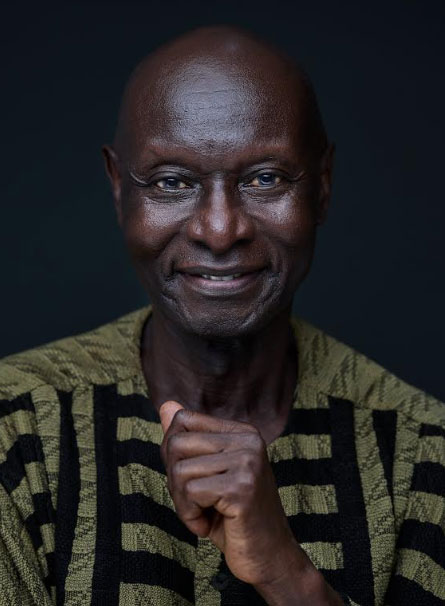
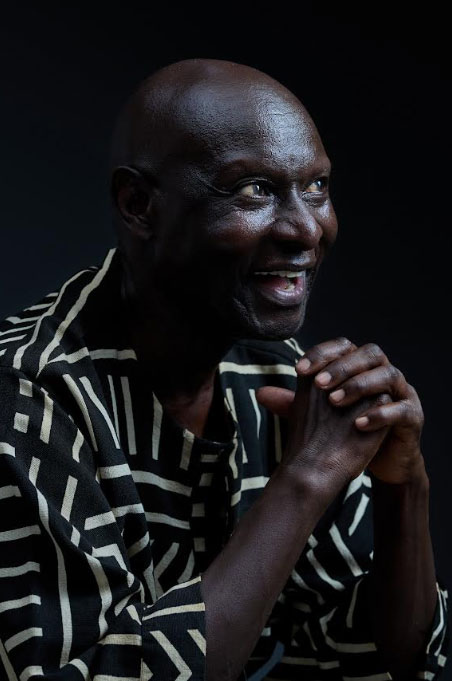
Kampala, Uganda | RONALD MUSOKE | There is a delicious piece of irony in Olara Otunnu’s surprising bid to become the next Secretary-General of the United Nations. The Ugandan diplomat is now preparing to campaign inside a selection process whose mechanics he helped shape more than four decades ago.
In December 1981, Otunnu was Uganda’s Permanent Representative to the United Nations and president of the Security Council. It was during that tenure that he introduced an informal straw-balloting procedure for testing the strength of candidates for Secretary-General.
The method subsequently became known as the “Otunnu Formula” and has been used in every Secretary-General selection since. Now, at 76, Otunnu is himself one of the candidates being subjected to the logic of that system.
It is a remarkable full circle: the diplomat who helped devise one of the UN’s most consequential pieces of electoral choreography is now trying to persuade the diplomats behind the ballot that he should be the one to occupy the office they are helping to fill. And his first encounter with his own creation has not been particularly kind.
The test he helped create
The Security Council’s straw poll is not a formal election. The Secretary-General is formally appointed by the General Assembly on the recommendation of the Security Council. But the confidential straw polls are designed to give Security Council members an informal way of testing the viability of candidates before the Council eventually settles on a name.
The procedure is deliberately discreet. Council members indicate whether they are “encouraged,” “discouraged” or have “no opinion expressed” about each candidate. No official record is kept, and the ballots are expected to be destroyed after the exercise.
It is a diplomatic device suited to an institution where public declarations can make compromise difficult. The system allows governments to signal enthusiasm, reservations or uncertainty without immediately locking themselves into a position. That is precisely why the mechanism matters.
The Secretary-General is not chosen through the simple arithmetic of a public election. The candidate has to survive the private calculations of the Security Council, including the five permanent members with veto power. Otunnu knew that world long before he became its candidate.
From architect to contestant
His experience with the UN was not merely ceremonial. He served as Uganda’s Permanent Representative from 1980 to 1985 and became president of the Security Council in December 1981. Later, he served as Uganda’s Foreign Affairs Minister, president of the International Peace Academy and, from 1997, the UN’s first Special Representative for Children and Armed Conflict at the rank of Under-Secretary-General. His years at the UN Secretariat produced one of the most substantial legacies of his career.
He helped put the protection of children affected by armed conflict on the Security Council’s agenda and played a central role in developing the monitoring and reporting system for grave violations against children. Security Council Resolution 1612, adopted in 2005, established the compliance regime that continues to inform the UN’s work on children and armed conflict. In other words, Otunnu was not merely a participant in the UN system. At important moments, he helped build it.
That history now forms a central part of Uganda’s argument for his candidature. The government’s July 24 nomination letter describes his record as spanning more than four decades of leadership in the UN system and international community. It specifically points to his work on children and armed conflict and his role in developing mechanisms that remain in use today.
Yet the irony of the current campaign is that the institution he helped navigate has changed substantially since his most influential years. The diplomatic landscape is more fractured. Great-power competition is sharper. The UN faces wars in Ukraine, Gaza, Sudan and the Democratic Republic of Congo, while simultaneously confronting climate change, development financing, migration and artificial intelligence. The question for Otunnu is therefore not simply whether he knows the UN. It is whether the UN he knows can still be led by the methods that served it when he was at the height of his career.
The first ballot
The first answer came in late July. Otunnu entered the race only on July 24, when Uganda formally submitted his nomination. By then, six other candidates had already been participating in the process for months. Most had already taken part in General Assembly interactive dialogues and informal engagements with Security Council members. Otunnu had not.
The unusual circumstances prompted concern inside the UN system. The President of the General Assembly stressed the importance of candidates being given opportunities to present themselves to the wider membership before the Council’s selection process advanced. Civil-society groups also raised concerns that allowing Otunnu into the straw poll before those engagements could create unequal conditions between candidates. Nevertheless, the Security Council decided to include him. Then came the result. Otunnu received only two votes.
His campaign rejected the idea that the result amounted to a verdict on his chances. He had, he argued, barely entered the race. “We have not been able to engage the electors,” Otunnu said on Aug. 5, explaining that rival candidates had been campaigning “for a year and a half.”
Uganda’s Permanent Representative, Amb. Adonia Ayebare, offered a similar defence, arguing that late candidates can still become serious contenders and citing outgoing UN Secretary General, António Guterres, as a precedent. The implication is important. The straw poll may tell Uganda where Otunnu stands today. It does not necessarily tell Uganda where he will stand after weeks of direct lobbying.
Back to the corridors
That lobbying began in earnest with Otunnu’s departure for the United States on Aug. 8. Ayebare announced that Otunnu and former Prime Minister, Ruhakana Rugunda, who is leading the campaign, were travelling to New York to meet delegations and engage the General Assembly on Aug. 19 and the Security Council on Aug. 20.
There is something almost cinematic about that return. Otunnu is going back to the same diplomatic ecosystem in which he once operated at the highest level. But the hierarchy has changed. He is no longer the Ugandan ambassador presiding over the Council. He is no longer the senior UN official able to shape an agenda. He is now the person asking those diplomats for something. And the irony of the “Otunnu Formula” becomes even sharper. He knows what a straw poll is designed to reveal. He knows that a candidate can be praised publicly while quietly losing support. He knows that “no opinion” can be as meaningful as encouragement. He knows that the permanent members matter enormously. And he knows that diplomacy at this level is often less about public speeches than about private reassurance: what a candidate represents, whom they can work with, how they will respond to crises and whether powerful states believe they can live with them. That knowledge may be one of his greatest assets. But it may also be his burden. Because the diplomats considering his candidacy know that he understands the game too.
The man who knows the game
This is perhaps what makes Otunnu’s campaign more interesting than a conventional late-entry candidacy. He is not learning the rules. He helped write them. He understands that the UN Secretary-General possesses limited conventional power but considerable convening and moral authority. His current campaign agenda repeatedly emphasises consensus-building, dialogue and engagement with member states. His approach to the world’s major conflicts reflects that philosophy.
On Ukraine, Gaza, Sudan and the Democratic Republic of Congo, he argues for active diplomatic engagement rather than passive observation. His formulation of the Secretary-General’s role is to engage major powers, listen, probe for openings and offer solutions that governments can accept without believing their core interests have been compromised. That is precisely the kind of political realism required in the corridors where the straw polls are conducted.
But it also raises a larger question. Does knowing the machinery make a candidate better equipped to lead the organisation, or simply better equipped to navigate its politics? The distinction could become important as the campaign progresses.
An old formula in a new UN
There is another irony. The UN that Otunnu helped navigate in the 1980s and 1990s was already wrestling with questions of legitimacy, conflict, human rights and institutional reform. But today’s UN is confronting a particularly complicated combination of old and new problems. The wars are familiar. The geopolitical divisions are familiar. The argument over the influence of powerful states is familiar.
But artificial intelligence, cyber technology, climate change and a rapidly changing global economy have added challenges that did not exist in their current form when Otunnu was creating the straw-balloting formula. His campaign therefore tries to combine his old diplomatic instincts with a newer policy vocabulary.
His vision calls for UN institutional reform, stronger development financing, climate action and international cooperation on AI. He argues that technological transformation could create enormous opportunities but could also intensify economic and security instability if it is not governed collectively. It is an attempt to demonstrate that experience need not mean being trapped in the past. That may be one of the central arguments of his campaign.
The ultimate irony
There is something fitting about Otunnu having to confront the very mechanism he helped establish. The straw poll was designed to strip away some of the theatre of the Secretary-General contest and expose the candidates’ underlying acceptability to the Security Council. Now it is doing precisely that to him. His résumé is formidable. His UN legacy is substantial. His understanding of diplomacy is unquestionable.
But the first ballot showed that none of those things automatically translates into votes. He must now persuade governments that his experience is not merely a record of past achievement but an argument for future leadership. And he has to do it quickly.
Uganda’s campaign is attempting to compress into weeks what its rivals have had months — in some cases more than a year — to accomplish. That makes the coming weeks particularly significant. If Otunnu begins gaining support in subsequent straw polls, the first ballot may come to look like little more than the inevitable consequence of a late start. If he does not, the two votes will look less like a starting point and more like an early warning. Either way, there is an unmistakable symmetry to the contest.
In 1981, a young Ugandan diplomat helped create a way for the Security Council to quietly test who could become Secretary-General. In 2026, an older Ugandan diplomat is asking that same institution to test him. The “Otunnu Formula” has come full circle. The man who once helped design the test now has to pass it.