The Independent Uganda: You get the Truth we Pay the Price


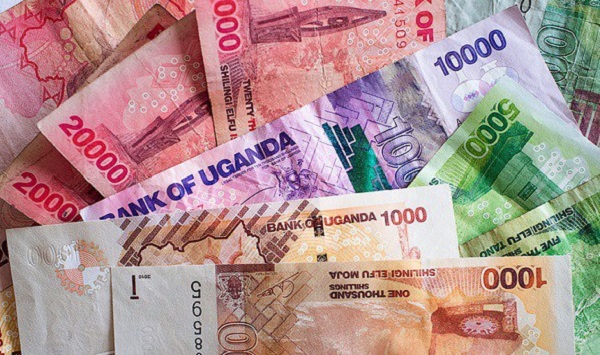
Kampala, Uganda | URN | The Uganda Shilling has continued to weaken against the US Dollar, with the official Bank of Uganda (BoU) exchange rate reaching new highs on Tuesday. The dollar was quoted at 3,919 Shillings on the official market, while commercial banks were selling it for as much as 4,040 Shillings.
The sharp depreciation in recent months has sparked concern among businesses and the public, with questions being raised about the Central Bank’s efforts to support the local currency. Since March, the Shilling has fallen from about 3,604 to the dollar to 3,919, losing 315 Shillings in value.
However, the Bank of Uganda says the depreciation does not currently warrant direct intervention because the movement has been smooth and not volatile. Central Bank Governor Michael Atingi-Ego said the Central Bank intervenes in the foreign exchange market primarily to smooth excessive volatility, rather than to prevent every episode of depreciation.
“Intervention is based on smoothing out excessive volatility in the shilling exchange movements,” he said. Asked whether the current depreciation required intervention, Atingi-Ego said: “Not to the best of my knowledge. If it has depreciated, it has depreciated in a smooth way; it’s not been erratic, it’s not been very volatile. So, I think it has not warranted my intervention.”
When the Central Bank intervenes to support the Shilling, it can buy excess local currency from the market in exchange for foreign currency. This reduces the supply of Shillings and increases the availability of Dollars, helping to ease pressure on the exchange rate.
The latest weakening of the Shilling is occurring against a backdrop of rising global oil prices and reduced Dollar inflows from some of Uganda’s traditional sources of foreign exchange. The surge in oil prices has been linked to escalating tensions in the Middle East, particularly the conflict involving Israel, the United States and Iran, as well as disruptions along key oil and shipping routes.
The growing influence of Houthi fighters in Yemen has added to uncertainty over the movement of oil through the Red Sea and Bab al-Mandab Strait, while attacks on alternative oil infrastructure have further tightened global supplies. Crude oil prices have since risen to about USD 107 a barrel, putting additional pressure on fuel prices worldwide and exposing oil-importing economies, including Uganda, to higher import costs.
Tony Otoa, the Chief Corporate Affairs Officer at Uganda National Oil Company (UNOC), said the situation could worsen unless the conflict de-escalates.
“Oil prices are shooting upwards. Shipping routes are getting more constrained. The Middle East conflict is escalating at the worst time possible for the global economy,” Otoa said, adding that for Africa, this is going to impact our fuel supply to the continent. Longer and alternative routes will impact shipping and insurance costs. What we need is a de-escalation of the conflict.
For Uganda, higher oil prices mean more dollars are required to pay for fuel imports at a time when the supply of foreign currency is already under pressure.
Tourism, one of Uganda’s major sources of foreign exchange, has also been affected by disruptions linked to the Ebola outbreak in the region. Although the full economic impact of the outbreak has not yet been clearly quantified, tourism operators reported cancellations after several countries issued travel advisories and some airlines temporarily suspended flights.
The United States has also maintained a high-level travel advisory, further affecting the sector’s recovery.
Tourism earned Uganda about USD 1.7 billion in the previous year, up from USD 1.28 billion, while international visitor arrivals increased to 1.64 million. Any sustained reduction in tourism receipts therefore puts additional pressure on the foreign exchange market.
Dollar inflows from the non-governmental organisation sector have also declined sharply following cuts in donor funding. The situation worsened after the cancellation of several USAID-funded programmes and the closure of many local NGOs. This came on top of earlier shocks, including the collapse of the European-funded Democratic Governance Facility in 2021 and declining HIV/AIDS funding.
According to NGO Bureau Secretary Stephen Okello, the number of NGOs has fallen from about 14,000 in 2019 to roughly 5,000 active organisations.
Sarah Bireete, the Executive Director of the Centre for Constitutional Governance, said the decline in NGO funding had removed an important source of foreign currency from the economy.
“The dollar exchange rate in Uganda is soon hitting 4,000 Shillings because the dirty politics closed the tried and tested avenues of NGO inflows that have always helped Uganda’s currency stay strong and stable,” Biteete said.
Henry Bazira of the Water Governance Institute also argued that NGOs contribute significantly to the economy through foreign-funded programmes.
“The trouble is that guys in government thought NGOs were doing nothing for the economy, yet they were bringing in much-needed FDI . NGOs in effect are serious investors in the economy and should be treated as such,” Bazira said in a post on X.
Despite the pressure on the Shilling, Uganda is not currently facing an immediate foreign exchange shortage, according to the International Monetary Fund (IMF). The country’s foreign exchange reserves stood at $6.62 billion in July 2026, slightly down from $6.68 billion at the end of June, but significantly higher than the $3.6 billion recorded a year earlier.
The IMF estimates that the reserves can cover about 3.1 months of imports, while the Bank of Uganda puts the import cover at about four months. The reserves provide the country with a buffer to continue financing essential imports even if foreign exchange earnings come under further pressure.
The Bank of Uganda has also sought to diversify the country’s reserves through its domestic gold-buying programme, under which it purchases locally produced gold to strengthen the country’s asset base and provide protection against external economic shocks.
For now, the Central Bank expects pressure on the Shilling to ease as new sources of foreign exchange come on stream. In the latest monetary policy statement, Atingi-Ego said the exchange rate could stabilise in the near term as Uganda begins receiving increased inflows from expected oil exports.
The country is also expected to benefit from increased foreign exchange earnings associated with the African Cup of Nations (AfCON), which Uganda will partially host next year. Until then, Uganda remains exposed to global oil prices, disruptions in foreign exchange inflows and the continued strength of the US dollar.