The Independent Uganda: You get the Truth we Pay the Price



Why Is PAU Changing Course on the Eve of First Oil?
COMMENT | CHIMPREPORTS | With Uganda approaching the most commercially consequential moment in its petroleum history, there is a seemingly mad-dash for the apex position of Executive Director and the Petroleum Authority (PAU), pitting 12 candidates.
After two decades of exploration, negotiations, investment and Infrastructure development, the country is finally approaching its first oil with billions of dollars already staked against a sustained international smear and spoil campaign that sought to exacerbate matters and squander Uganda’s oil opportunity.
Alas, it is in the light of the above cocktail of developments that the country has to shuffle the leadership of its petroleum regulator, folding a curtain on the regime of pioneer Executive Director Ernest Rubondo but facing an agonising dilemma of such a pick landing on one of the men who steered the Extractives Division at the African Development Bank (AfDB) – Fred Kabanda. The Extractives Division covers oil, gas and mining.
Kabanda, finds himself at the top of the pecking order according to sources which could logically be a suitable bookmark, especially that this is his second time of asking, having been surplus requirement to the race that ushered in Rubondo.
Little wonder, Kabanda is not the only one with the hat in the ring, reports have named a wider field including, petroleum geoscientist Abdul Bazaara Byakagaba, Energy Ministry Permanent Secretary Eng. Irene Batebe, and senior PAU executives Ali Ssekatawa, Peninah Aheebwa and Clovice Bright Irumba.
The questions begs whether Kabanda’s qualification is what comes to the table or his postings elsewhere are what goes off it.
Indeed, those familiar with the answers to this question aver that following his failure to obtain the position of PAE ED and another slot in UNOC, Kabanda went sulking, landing at AfDB, a major international institution that publicly declined to commit financing to EACOP, into the regulator responsible for protecting Uganda’s interests in the very petroleum industry that feeds the pipeline.
Hence, in the fundamental argument that divided Museveni and Bobi Wine over EACOP, where does Uganda’s reported next petroleum regulator stand? Does Kabanda share Museveni’s conviction that Uganda should press ahead aggressively with petroleum development despite external pressure? Or would a Kabanda-led PAU be more receptive to the concerns that have driven opposition to EACOP internationally?
Museveni defended proceeding with EACOP; Bobi Wine backed the EU intervention seeking a delay; AfDB declined to finance EACOP; Kabanda comes from AfDB. Where does Kabanda stand?
While at it, Kabanda’s absence coincides with arguably the most demanding transition of Uganda’s Oil; from exploration and appraisal into field development, construction of production infrastructure, EACOP development and regulatory preparation for First Oil.
During the same years, PAU officials were scrutinising field development plans and petroleum expenditure, overseeing infrastructure development, managing relationships with international oil companies and preparing to regulate actual production.
His alleged competition on the other hand consequently represented markedly different experience. Irumba exploration and geoscience; while other contenders brought engineering, petroleum and senior public-sector leadership; Aheebwa petroleum economics, commercial oversight and national content; Nyombi development and production and Ssekatawa brought legal and regulatory knowledge.
This all places a significant experience deficiency gap between the said cluster and Kabanda, making it illogical to change the course and drive into the tide of Kabanda’s misgivings.
However, where in all this is Rubondo, whose decade long grip at the helm is incapable of producing a successor smoothly?
For building PAU into one Uganda’s most important economic regulators, Rubongo deserves so much credit, but his failure to transition it internally leaves a smack on his face.
During debate over his continued tenure, an argument emerged that the PAU Executive Director’s job should not be narrowly confined to a geoscience or conventionally scientific background.
That argument is persuasive, but it settles little.
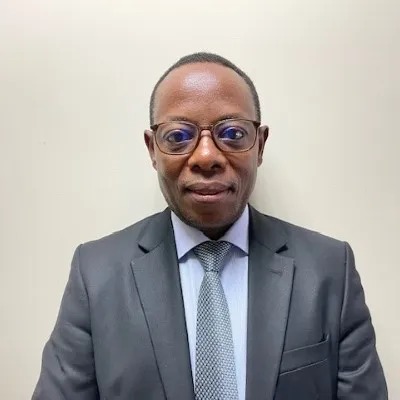
Uganda’s Petroleum Act already allows qualifications spanning petroleum geosciences, engineering, management, law, taxation and finance. Among the serious contenders, the qualification question appears to disqualify nobody.
The statutory threshold establishes who can compete. It does not determine who should win.
PAU is also a regulator, not an oil company conducting exploration and production itself. It contains specialist geoscientists, engineers, economists and lawyers beneath the Executive Director.
The argument can be reduced to an analogy: you do not necessarily need a pilot to regulate an airport. PAU was not choosing between a technically qualified candidate and unqualified alternatives. It was choosing among competing forms of petroleum expertise: law and regulation, economics and commercial oversight, exploration, development and production, engineering, institutional knowledge and international finance.
The relevant question is therefore what capability Kabanda offered that outweighed the alternatives.
And there is a deeper succession issue. If, after a decade under Rubondo, PAU’s senior executives are not capable of succeeding him, that raises questions about leadership development.
Ssekatawa and Aheebwa illustrate the point. Ssekatawa leads Legal and Corporate Affairs; Aheebwa leads Economic and National Content Monitoring. Both remained as Uganda’s petroleum programme moved through development towards production.
Ssekatawa also became one of PAU’s most visible defenders of EACOP as international campaigners targeted banks, insurers and investors.
Aheebwa’s responsibilities go directly to the economics of First Oil: cost-efficient petroleum operations, project economics, national content and ensuring Uganda captures greater value from its resources.
If executives who accumulated such experience are bypassed by someone returning from outside, what message does that send to high-performing public servants considering whether to build long careers inside Uganda’s institutions?
Talent management is partly about appointments. It is also about the incentives appointments create.
Uganda has spent two decades getting its petroleum industry to the starting line. Changing leadership just as the commercial race begins may prove inspired. Or it may prove an unnecessary gamble at precisely the wrong time.
****
SOURCE: Chimpreports