 The Independent Uganda: You get the Truth we Pay the Price


COMMENT | ANGELA NALWEYISO SEMAKULA | As Warren Buffett aptly noted, “Price is what you pay. Value is what you get.” This principle underpins the Government of Uganda’s approach to developing the country’s oil and gas resources, balancing the need to attract serious investment with robust cost management to ensure maximum national benefit.
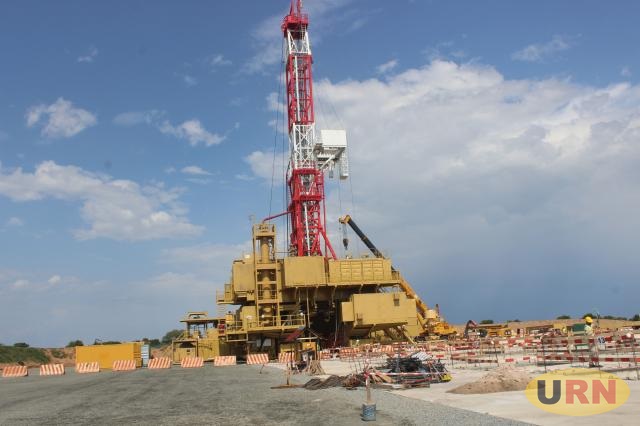
By the end of 2025, Uganda’s oil and gas sector had attracted more than US$12 billion in cumulative investment. Of this total, more than US$8 billion has been invested over the four (04) years after the Final Investment Decision (FID) was taken in February 2022, and almost US$3 billion is expected to be spent in 2026 alone.
These investments have largely been directed towards key projects, including the Tilenga and Kingfisher upstream developments and the East African Crude Oil Pipeline (EACOP). These projects collectively represent one of the largest industrial undertakings in the region. This level of investment reflects growing investor confidence in Uganda’s petroleum potential and in the country’s stable regulatory and policy framework. It also underscores the Government’s commitment to creating an enabling environment that supports responsible, sustainable investment in the energy sector.
The sector’s impact on Uganda’s economy is already evident. The influx of over US$12 billion in investment has stimulated growth across multiple sectors, including construction, transport, logistics, manufacturing, and professional services. This has created widespread business opportunities and strengthened linkages within the domestic economy.
However, attracting investment is only one part of the equation. Equally important is ensuring that these investments are utilised efficiently. Under Uganda’s petroleum fiscal regime, a portion of the crude oil produced annually is used to recover costs incurred by the Licensed companies, and the remainder is shared between the government and investors. This means that higher costs delay and reduce the government’s share of the crude oil produced. This makes cost efficiency a critical determinant of how quickly and how much value accrues to the country.
The government, through the Petroleum Authority of Uganda, implements well-tested, robust mechanisms to monitor and control costs across petroleum operations. These include comprehensive review and approval of annual work programmes and budgets, continuous monitoring of project implementation, and benchmarking costs against international industry standards. In addition, the government ensured that fields are licensed to more than one oil company, including the Uganda National Oil Company (UNOC), to facilitate checks and balances. Furthermore, the government and the oil companies adopted an integrated development approach that leveraged synergies within upstream projects and between upstream and midstream projects, while safeguarding against cross-subsidisation.
These efforts have delivered tangible results. Operators have increasingly adopted optimised project designs, enhanced procurement strategies, and strengthened contract management practices. This has led to greater efficiency and improved overall project performance.
Uganda’s oil and gas projects continue to demonstrate strong cost competitiveness, with crude oil finding costs of approximately US$2.7 per barrel and estimated development costs of US$8.1 per barrel.
These figures compare favourably with global industry benchmarks, where average finding costs range from US$6 to US$12 per barrel, while development costs typically range from US$15 to US$30 per barrel, depending on project complexity and location. The projects’ overall economics remain equally attractive. The estimated upstream project breakeven price, covering technical and fiscal costs, is about US$35 per barrel, comfortably within the current price environment.
Cost-recovery audits conducted by the Office of the Auditor General have also been instrumental in promoting transparency and accountability across the sector. By verifying the expenditures submitted by licensees, the Government ensures that only legitimate and allowable costs are recovered. This safeguards public revenues and reinforces confidence in Uganda’s petroleum governance framework.
Importantly, the drive for cost efficiency has been pursued without compromising safety, environmental protection, or operational integrity. The government continues to enforce strict compliance with health, safety, and environmental standards to ensure that petroleum activities are conducted responsibly and sustainably.
Uganda’s experience demonstrates that it is possible to attract large-scale investment while maintaining firm control over costs. This approach not only enhances project viability but also ensures that the country derives maximum benefit from its petroleum resources.
With major projects progressing steadily and investment flows continuing, the government remains committed to maintaining this balanced approach. Continued investment is required, particularly in exploration and in completing ongoing projects, while sustained cost discipline will ensure that the full value of these investments is realised for the benefit of all Ugandans. The Authority will continue to strengthen its regulatory frameworks, enhance cost-monitoring tools, and engage stakeholders to ensure transparency and accountability across all petroleum operations.
****
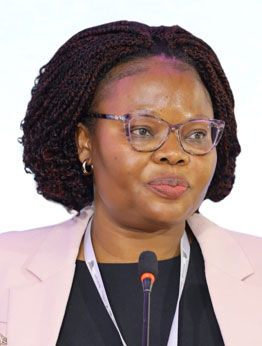 Angela Nalweyiso Semakula is the Manager Cost Monitoring at the Petroleum Authority of Uganda

ANGELA NALWEYISO SEMAKULA