The Independent Uganda: You get the Truth we Pay the Price


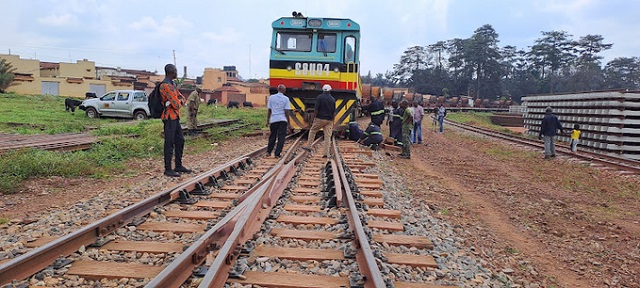
Over the last few days, we have seen media reports about Uganda Railways Corporation but not enough about the contractors behind the attempt to revamp the Railways
COMMENT | STELLA OKETCHO | Consultrans’s relationship with Uganda’s railway sector did not begin with a single contract – it began with groundwork. As early as 2019, Consultrans authored the Kampala–Malaba Feasibility Study, which went on to underpin the wider East African Community Railway Rehabilitation Support Project, financed in part by the African Development Bank and African Development Fund.
That early involvement positioned the firm for the broader Uganda Railways Corporation rehabilitation programme, targeting the 215 km Malaba–Kampala metre-gauge line and associated network (roughly 282 km including the Kampala–Port Bell and Kampala– Nalukolongo–Kyengera branches). Consultrans was formally awarded its Uganda contract by URC on 29 June 2020 (contract URC/CONS/2019-20/00426) and after contract signature and a preparatory phase, operations formally began on 1 February 2022.
The mandate covered three flagship components:
1. Detailed engineering design for refurbishment of the Kampala–Namanve and Tororo–Malaba sections of the line — Uganda’s main link to the Kenyan border and the port of Mombasa.
2. Preliminary design of the Kampala Multimodal Hub, intended to integrate rail with road, urban transport and logistics in the capital.
3. A three-year Capacity Building Project (CBP) for URC staff and the establishment of a project management office, aimed at strengthening the institution’s own ability to plan, execute and eventually operate the rehabilitated network —
4. A feasibility study for a modern national signalling and traffic-control system, to end URC’s dependence on Kenya-based train control.
This is precisely the combination Consultrans is built for: feasibility work, detailed engineering design and institutional capacity building delivered by one organization with continuity across all three. Having authored the original feasibility study, the firm carried institutional memory of the corridor’s technical and economic constraints straight into the detailed design phase — reducing the relearning that often slows down large rail programmes when consultants change between study phases. It also fits the firm’s demonstrated pattern for providing their clients with bilateral development funding as well as using multilateral financing.
In Uganda , the financing was backed by the government of Spain through the Official Spanish Funding- Corporate Internationalisation Fund (FIEM) under very favourably terms to deliver infrastructure programmes in markets where local technical capacity is still being built up alongside the physical works.
So Who is Consultrans?
When Uganda Railways Corporation (URC) went looking for a partner to help pull its meter- gauge network back from decades of neglect, it needed more than a contractor. It needed a firm that had done this before — that had rebuilt railways from the ground up, trained institutions to run them and delivered on schedules and budgets in some of the most demanding environments in the world. That firm is Consultrans SAU.
Consultrans is a Spanish engineering and consultancy firm founded in 1985, built from the outset around a single conviction: that transport infrastructure projects succeed when engineers, economists, lawyers and IT specialists work as one integrated team rather than in silos. That philosophy has shaped the company for close to forty years, growing it from a small transport-focused consultancy into an international engineering house with a clear specialization in railways — from high-speed lines to metre-gauge freight corridors, metros, trams and intermodal logistics hubs.
In 2008, Consultrans became part of Imathia Group,a move that broadened its capabilities to cover the full project lifecycle — from strategic and feasibility studies through detailed design to construction supervision and turnkey delivery. In 2016, the group absorbed engineering firm KV Consultores, adding further depth in transport and infrastructure engineering. Today the group operates internationally, with permanent establishments in markets including Saudi Arabia and Latin America, alongside its home base in Spain. Big markets.
Within the group, Consultrans works alongside Imathia Construcción, a railway construction and manufacturing specialist founded in 2004. Consultrans leads engineering, design and institutional capacity building; Imathia Construcción handles physical works and industrial production. It is this combination — design expertise paired with construction and manufacturing capability — that lets the group take a railway project from feasibility study through to track laid and staff trained, under one roof. By the time it arrived in Uganda, Consultrans carried more than 35 years of international experience in railway engineering, design and capacity building, spanning Europe, Latin America, Africa, the Middle East and Asia.
A track record built on railways
Railways sit at the core of what Consultrans does. Its portfolio spans:
• High-speed rail — including participation in the Haramain High-Speed Rail
line between Mecca and Medina in Saudi Arabia, one of the most demanding high- speed rail projects undertaken outside Europe, requiring rigorous engineering standards, desert-climate adaptation and multinational project coordination.
• Conventional and freight railway networks, including programmes
in Chile connected to the Central Bi-Oceanic Railway Corridor, a strategic multi- country freight corridor across South America, along with station design, workshops, technical maintenance centres and internal port railway networks.
• Urban and light rail — metros and tram systems, plus the transport planning and demand-modelling work needed to justify and design them.
• Cross-border project experience across Mexico, Bolivia, Ecuador, Algeria, Panama and other markets, financed by institutions such as the World Bank, the African Development Bank, the Inter-American Development Bank, CAF and the European Commission.
What distinguishes Consultrans from a pure design house is its breadth of in-house disciplines: civil engineering and site supervision sit alongside legal-economic studies, traffic and demand simulation, public policy evaluation and dedicated technology consulting for the transport sector.
For a railway project, that means the same organization that designs the track alignment can also model freight demand, assess the financial case and help the client’s institution build the internal capacity to operate what gets built – rather than handing over a design and walking away.
The situation in Uganda Consultrans stepped into
When Consultrans began work, it was stepping into a railway in genuine distress. At the start of the programme, only about 21% (265 km) of Uganda’s 1,271 km meter-gauge network was operational — the rest dilapidated, encroached upon, or poorly maintained. URC itself had only resumed direct control of its own network in 2017–2018, after a decade- long private concession (Rift Valley Railways) collapsed and left the corporation to rebuild both its infrastructure and its institutional capacity from a standing start. This is exactly the kind of situation Consultrans has built its reputation on: not simply laying track, but rebuilding a railway’s technical, managerial and operational foundations at the same time.
Consultrans did not run the programme from a distance. It maintained a resident technical team based in Kampala for the full duration of the programme, working day-to-day alongside URC staff, with specialist back-up from Spain called in on specific technical questions — signalling, structural design, rolling-stock engineering — where deeper expertise was needed. That resident-plus-specialist-backup model is the standard way internationally financed rail programmes are delivered and it meant Ugandan staff were working alongside Consultrans engineers every day, not just receiving reports from abroad.
The results, by the close of the Consultrans Contract on 31 January 2025, speak for themselves:
• 1,380 URC staff trained across 55 formal training courses, totalling more than 9,700 training days — covering infrastructure, mechanical and electrical engineering, signalling, operations, commercial and freight management, safety, procurement, finance, audit, HR, IT and senior management, plus extensive on-the-job coaching and benchmarking visits to Spain.
• 12 locomotives recommissioned, with a Consultrans expert embedded at the Nalukolongo workshop to improve maintenance turnaround and locomotive
availability and two dedicated training rooms established there for ongoing technical skills development.
• Further rehabilitation of the Tororo–Gulu section (375 km) now underway, extending the programme’s reach beyond its original scope.
• A resident technical team based in Kampala for the 3-year duration of the programme
• Specialist back-up team from Spain on specific technical questions — signalling, structural design, rolling-stock engineering
• Detailed engineering designs for the Kampala–Namanve and Namanve–Mukono sections.
• Preliminary design for the Kampala Multimodal Hub.
Why this fit makes sense for Uganda’s railway ambitions
A handful of factors point to why Consultrans is a natural technical partner for Uganda’s railway rehabilitation:
• Direct continuity of knowledge. Having authored the original Kampala–Malaba feasibility study, the firm carried institutional memory of the corridor straight into detailed design — reducing the relearning that often slows down large rail programmes when consultants change between phases.
• Multidisciplinary delivery under one roof. Track refurbishment, multimodal hub design and capacity building are usually contracted separately, with the risk of gaps between them. Consultrans delivering all three concurrently, alongside Imathia Construcción’s physical works and manufacturing, supports a more coherent programme.
• Experience with development-bank-financed rail projects. Its work across Latin America and now East Africa under World Bank, AfDB, IDB and CAF-style financing structures means the firm is accustomed to the reporting, procurement and safeguard requirements that accompany this kind of funding — a real constraint on projects like Uganda’s, which blend Spanish government financing with African Development Bank support.
• A specialization, not a sideline. Unlike broader engineering conglomerates for whom rail is one of many verticals, Consultrans has organized itself around transport
— and within transport, heavily around railways — since 1985.
A note on scrutiny in Uganda
It’s worth being transparent that the capacity-building component of this programme has come under significant public and parliamentary scrutiny in Uganda in 2026. Uganda’s Parliament has been examining URC’s spending, including questions raised about payments associated with Consultrans and IMATHIA Construcción Contracts (roughly €29 million) and separately about hundreds of missing railway wagons unrelated to the Consultrans and IMATHIA Cosntruccion contracts.
Key experts named in the programme, including the infrastructure and project management lead, have pushed back on allegations that they personally pocketed large sums, saying the funds in question covered the consultant’s broader three- year operating costs — salaries, logistics and technical support — rather than individual payouts.
All payments made to Consultrans and to IMATHIA Construccion were made in accordance with the Contracts Terms and after having been approved by the competent authorities.
The matter remains under parliamentary review as of this writing, and it’s a relevant caveat for anyone assessing the programme’s governance, even as it sits alongside the firm’s substantial and longer-standing technical track record.
The case for Consultrans on Uganda’s railway
What sets Consultrans apart is not any single project, but the pattern across all of them: a firm that pairs deep rail-engineering credentials with a demonstrated ability to transfer skills and build institutions, not just build infrastructure. The Uganda programme shows this model in action — a network that was barely a fifth operational at the outset, an operator rebuilding its own capacity after years of an underperforming concession and a partner experienced enough to work on both problems simultaneously, with direct continuity from the original feasibility study through to detailed design and institutional capacity building.
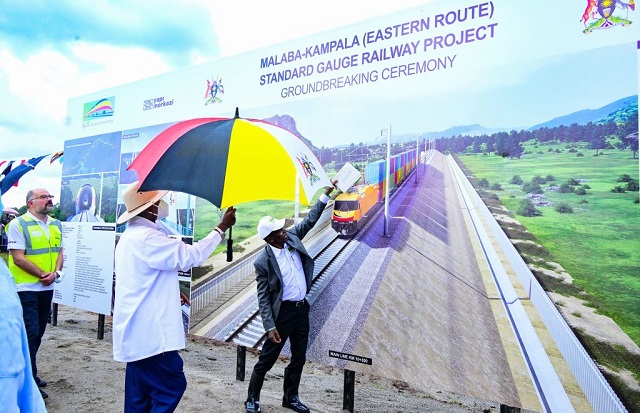
With Uganda now advancing a much larger Standard Gauge Railway programme alongside the ongoing rehabilitation of its existing meter-gauge network, the same qualities that made Consultrans the right partner for the Capacity Building Project — deep technical expertise, a resident delivery team, local skills transfer and a track record on complex international rail projects from Saudi Arabia to Chile — are exactly what large-scale railway construction in Uganda will continue to demand. That combination of technical depth, multidisciplinary delivery and prior hands-on familiarity with the Kampala–Malaba corridor is a strong argument for why the firm has been positioned as a lead technical partner in Uganda’s railway rehabilitation — while the current parliamentary scrutiny of the capacity-building contract remains a live governance question worth watching alongside it.
****
STELLA OKETCHO
Ugandan Researcher with interest in development issues