The Independent Uganda: You get the Truth we Pay the Price


COMMENT | NELSON BWIRE | A few days ago, my six-year-old daughter returned from school with an urgent issue: her teachers needed to speak with me about her endless chatter. She had gathered an unsuspecting group of classmates to inform them how “big and strong” Africa is, adding the bold claim that the President of Africa is Museveni. Her transgressions would have been minimal had she kept it at that, but she went on to say she would call this Museveni to speak to all of them and play tag with them!
The school wanted my help in unpacking this toddler’s manifesto and releasing her peers from the anticipation of playing tag with Museveni. She had clearly laid her gospel on fertile ground.
This incident recalled a video from State House during a ministerial swearing-in, where an elder petitioned President Museveni to become President of Africa and beyond. I was now stuck with public expressions from two cross-generational, loquacious figures.
To understand Museveni, one must first look at Africa. By size, you can fit Russia into Africa twice. India’s population could fit twelve times over. Yet, in the 19th century, European powers sat down and carved up the continent without a single African present – shaving a man’s beard in his absence.
Africa was colonised on account of its inability to organise politically, strategically and economically; this mistake emanating from the self-contained mentality of vainglorious Kings with inflated titles overseeing scattered Kingdoms.
Africa is the origin of man and civilisation; even as the first Europeans arrived here, they were awed by technological advancements, architectural marvels, large populations and massive plantations, HM Stanley avers that Africa was “thickly peopled and industriously cultivated”.
However, Africa’s chronic problem has been political fragmentation. In a space of 40 years (1462-1498), four Portuguese journeymen: Pedro Da Cintra, Diego Gama, Bartholomew Dias and Vasco Da Gama recced Africa almost unnoticed, from Sierra Leone to Mombasa here.
400 years later (1862), Hannington Speke arrived in Uganda; they had obtained medicine for malaria/mosquitoes and firepower machinery. Shortly after (1871), they sat and portioned us like a piece of cake. The question of the day, therefore, is, where were the African leaders all this time? Africa missed the bus of history!
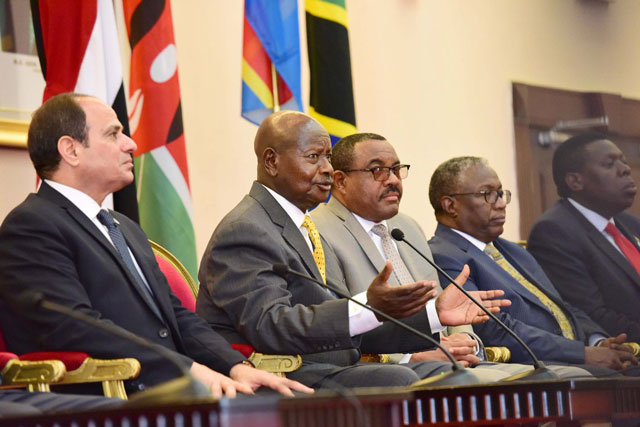
President Museveni has long focused on correcting these historical vulnerabilities through what he calls “historical missions” and intends to do so for the remaining 18 years of his wished life.
Museveni was among the first African leaders to denounce Western military intervention in Libya and call for an African response.
He was the first to deploy troops to Somalia under AMISOM based on Pan-African solidarity rather than shared borders.
He resisted international pressure regarding Sudan’s former President Omar al-Bashir, prioritising African unity over external mandates.
He consistently advocates shared ecological solutions for the Nile Basin, urging nations to look toward regional power integration and alternative water resources like the Congo River.
In four decades, Uganda has maintained open borders for trade, rejecting economic embargoes against neighbouring African states.
Uganda remains one of Africa’s largest hosts of refugees, offering asylum and integration without condition.
Returning to my daughter, I had to clarify a few ideological points. I explained that Museveni is not the President of Africa but a Pan-African leader who firmly believes Uganda needs Africa, Africa needs Uganda, and that our greatest historic blunder has been spending centuries obsessively detailing how different we are rather than focusing on our similarities.
I told her that as she grows up, her job is to join Museveni in a slightly different, high-stakes game of tag: tag-teaming the continent into a self-sustaining powerhouse through united markets, integrated people, and total protection of our heritage and identity.
I have not eavesdropped on her most recent bilateral talks, but I hear she has friend-zoned all African classmates. If that spirit carries forward, it will define Museveni’s true legacy: a continent united in purpose.
****
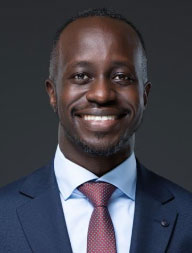 Nelson Bwire is the Online Editor for State House Uganda