The Independent Uganda: You get the Truth we Pay the Price


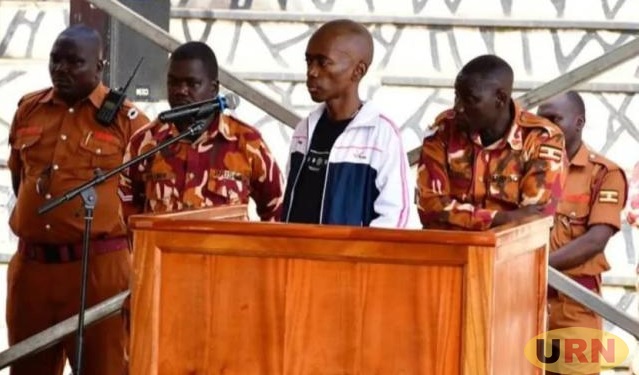
Kampala, Uganda | URN | Mental health experts on Friday testified in the High Court trial of Christopher Okello Onyum, the man suspected of murdering toddlers at the Ggaba Early Childhood Development Centre.
They detailed the suspect’s confession and conflicting mental health history.
Appearing before Justice Alice Komuhangi Khaukha, two psychiatric experts testified that while Onyum had a complex history, he appeared stable and “coherent” following the April 2, 2026, massacre.
Dr. Nwamanya Emmanuel, 52, a Deputy Director of Police Medical Services and a consultant psychiatrist, testified that while Onyum had a history of mental instability, he appeared stable and “coherent” following his arrest.
Dr. Nwamanya, who examined Onyum on April 7, 2026, at Nsambya Police Health Centre, revealed that the suspect was remarkably candid about his reasons for the killings.
According to the doctor’s testimony, Onyum did not attribute the murders to “voices” or hallucinations at the time of the act, but rather to a deliberate quest for riches.
“He was able to explain the reasons for killing the children as fortune hunting or enrichment,” Dr. Nwamanya told a hushed courtroom.
“He got the idea by recalling childhood folk tales of obtaining wealth through sacrificing people.”
When asked by the prosecution whether this motive was influenced by an abnormal mental state, the doctor was firm: “I would answer no. When I assessed him, he was not exhibiting symptoms that influenced the killing of the children.”
The court heard that Onyum disclosed a deeply troubled past during his medical assessment.
He allegedly confessed to Dr. Nwamanya that he had previously killed his own two-year-old brother in 2016 or 2017, claiming he wanted to “redeem him from the troubles of this world.”
The suspect also admitted to a history of mental illness between 2016 and 2025, involving both auditory and visual hallucinations, and a recorded suicide attempt in 2023.
However, Dr. Nwamanya noted that these claims could not be verified as the suspect possessed no formal medical documents to back them up.
The doctor also presented findings from Police Form 24, detailing injuries Onyum sustained during or after his arrest.
These included abrasions on the forehead and bruises above the right eye, an extensive bruising on the abdomen (left and right sides), and an 8 cm by 3 cm bruise across his back.
Dr. Nwamanya noted the injuries were caused by “blunt force” and were approximately three to four days old at the time of the examination.
Despite the history of psychosis, the medical report tendered to the court suggests that Onyum possessed “good judgment” and “intact memory” during the post-arrest evaluation.
The Court heard that Onyum had applied to the Ministry of Internal Affairs seeking Ugandan citizenship.
As part of the application, he was required to present a certificate of sanity, which he sought at C-Care IHK. He was examined by Dr. Rogers Agenda, who gave him a bill of good mental health.
Dr. Rogers Agenda, 41, the psychiatrist at C- Care International Hospital (IHK), the second doctor presented by the prosecution, also denied a mental health history months before the killings.
Dr. Agenda testified that Onyum, the prime suspect in the murder of four toddlers at Ggaba Early Childhood Development Centre, had no history of mental illness just months before the tragedy.
Dr. Agenda, a psychiatrist at C-Care International Hospital (IHK), told Justice Alice Komuhangi Khaukha that he personally examined Onyum on December 30, 2025, roughly four months before the Ggaba massacre.
Contradicting claims of long-term mental instability, Dr. Agenda testified that Onyum’s visit to him in late 2025 was his “index visit”- the first time he had ever seen a mental health professional.
“The client disclosed that this was the first visit to a mental health professional in his life,” Dr. Agenda said, reading from a report he authored.
“He stated he had never taken any psychiatric medications and that there was no history of mental illness in his family.”
The doctor described Onyum, 39, as a “well-nourished, healthy-looking middle-aged man” who appeared “kempt” and exhibited no odd behaviors during their meeting.
At the time, Onyum reportedly told the doctor he was single, living in Bunga, and planning to start commercial farming in Uganda.
Dr. Agenda detailed a rigorous psychiatric interview designed to elicit signs of depression, anxiety, or bipolar disorder.
According to the doctor, Onyum denied experiencing excessive sadness or loss of interest (indicators of depression), excessive fears or worries (indicators of anxiety), or excessive happiness or increased goal-directed activity (indicators of bipolar affective disorder).
“He told me he had no history of traumatic experiences, which helped me rule out Post-Traumatic Stress Disorder (PTSD),” Dr. Agenda added.
While Onyum admitted to occasional alcohol use, he denied using illicit drugs like cannabis.
Consistent with the testimony of the police surgeon, Dr. Nwamanya Emmanuel, Dr. Agenda confirmed that Onyum was a known patient of sickle cell disease and was on regular treatment for the chronic condition.
However, from a psychiatric perspective, the suspect was deemed stable during the December assessment.
The testimony of Dr. Agenda creates a complex profile of the suspect. While the police surgeon earlier testified that Onyum claimed to have been treated for mental illness between 2016 and 2025, Dr. Agenda’s records from December 2025 show the suspect explicitly denied any such history.
The trial, which has gripped the Ggaba community, continues as the prosecution seeks to prove that Onyum was fully aware of his actions when he attacked the defenseless toddlers.