 The Independent Uganda: You get the Truth we Pay the Price


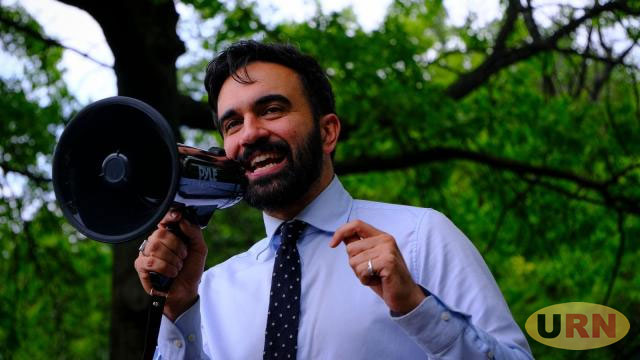
Lessons for Bobi Wine from Zohran Mamdani’s campaign to become New York City mayor
THE LAST WORD | Andrew M. Mwenda | Zohran Mamdani, son of our own Prof. Mahmoud Mamdani of Buziga, Kampala, is poised to win the race for New York City (NYC) mayor. At 34, Zohran has upset the American political establishment, both Democratic and Republican, with a campaign that resembles that of Barrack Obama in 2008. He is offering hope through a new politics that is issue-based and people-centred. Whether he will live up to his campaign promises is yet to be seen. Nonetheless, he has demonstrated that it is possible to challenge an entrenched status quo without running a necessarily negative campaign.
Although he won the Democratic primary, Zohran ran his campaign in opposition to his party’s establishment. Two mistakes have derailed the Democratic Party. First, it has become too elitist, moving its policies towards the rich, thereby losing its historic base among working-class Americans. Second, it has been attacking Donald Trump and pointing out his myriad moral and ethical weaknesses without offering a viable alternative policy agenda. So, it failed to appeal to many Americans whose lives have gotten worse under the different democratic regimes (pun intended).
So, Zohran (I deliberately avoid using the dad’s name in order not to confuse him with the cerebral professor) came up with a grassroots campaign. It addressed the real concerns of the residents of the world’s richest city: childcare, a freeze on city-controlled rental apartments, free buses, affordable groceries, etc. These issues resonated with many New Yorkers who had found the city too expensive to live in. It is a politics he must have learned from his father. Prof. Mamdani believes that politics is most effective when it addresses people’s immediate existential needs, when it organizes the grassroots around things that really matter to people’s lives.
People may have emotive issues such as Trump’s lack of morals, violation of ethics, abuse of human rights, etc. But these are not as powerful as issues such as the cost of transportation, childcare, food and rent. In November last year, Zohran was polling at less than 1% in all major polls. By election time in June, he beat Andrew Cuomo, the former governor of New York State, from a powerful political family, by 13 points. The American political establishment was shocked. A 34-year-old Muslim-Indian from Uganda/Africa identifying himself as a democratic socialist, openly criticizing Israel’s genocide in Gaza and promising to arrest Prime Minister Benjamin Netanyahu, had carried the day.
No one thought this was possible. It is a lesson Uganda’s opposition will ignore. But it is also a lesson they need to learn. NUP and its acolytes always focus on emotive issues such as President Yoweri Museveni’s presumed “dictatorship”, its abuse of human rights, the suppression of democratic freedoms, the corruption in government and its incompetence in delivering public goods and services to citizens. So, we know that they stand against. But it is hard to know what they stand for. How many people can tell what Bobi Wine and NUP intend to do for the people if elected?
Hence, for the most part, we know that Bobi Wine and NUP are against Museveni’s long, corrupt and incompetent management of the state. But we have no idea what they intend to do for young Ugandans who want jobs, who need security in a region ridden with instability. What is their plan for the bad roads that now dominate Kampala City and some of the major national trunk roads: Mbarara-Ibanda, Mbarara-Bushenyi, Lira-Soroti, Lira-Kamudini, Kyegegwa-Kyenjojo, Mityana-Mubende, Jinja-Kampala, Masaka-Mutukula, Karuma-Arua, Ntungamo-Rukungiri, Fort Portal-Bundibugyo, etc.
There is the problem of soldiers living in grass-thatched mud huts, police living in dilapidated barracks, pay disparities between science and arts teachers, poor conditions in hospitals, theft of drugs, etc. There is a need for real policy proposals and actions to address these failures. They also require a convincing policy message. Most Ugandans know, intuitively, that their country is poor and cannot afford to provide a large basket of public goods and services to all citizens in the quantity and quality they desire. What is NUP’s message to convince them that its promises are realisable?
Museveni’s campaign strapline (protecting the gains) does not address people’s existential challenges – that is obvious to all. It is a strapline that promises to hold onto the past instead of providing a blueprint for the future. It speaks to the elderly who have seen how far Museveni has brought this country. But for many young people, over 80% of our poor electorate, this message is misplaced. For them, the gains cannot be seen in bad roads or poor health facilities. I emphasise roads because they are one government good that they use daily. Not everyone goes to hospital every day. Not everyone attends school, especially those above 18 years. But everyone, regardless of age, uses a road at least every single day.
Bobi Wine’s campaign is caught up in the same unthinking campaign Dr Kiza Besigye has always run: a campaign based on highlighting the emotive issues that animate enthusiasm among the most fanatical haters of the president. But it is not a message that resonates with most undecided Ugandans. They may be alienated by Museveni, but they don’t find the opposition attractive. This has meant that the opposition are good at rallying the base, at preaching to the converted. But they are poor at winning over the undecided. Consequently, we are likely to see low election voter turnout.
Now low voter turnout works in favour of Museveni if he can abandon his insistence on biometric voting. Because then NRM can stuff ballot boxes in his strongholds to give him an edge. Low voter turnout also means he can easily get 55% of the 40% who turn out to vote because he has the state and NRM infrastructure to rally his base. The opposition in Uganda miss this point. They assume, and wrongly so, that all those who are disappointed in Museveni are their voters. But it’s rarely the case. Many Ugandans opt not to vote because the opposition does not reflect their interests and values.
It is not always the case that because a man has been beating and abusing his wife or girlfriend, that is enough for her to accept a proposal from another man. The new man must prove to her that he is worthy of her love. This is the message the opposition in Uganda have failed to learn. That even when very many people are disenchanted with Museveni, they are not willing to support the opposition. Instead, they find them angry, virulent and not responsive to their most important needs.
*****

amwenda@ugindependent.co.ug



This article once again follows Mwenda predictable pattern of excusing President Museveni’s authoritarianism while dismissing Uganda’s opposition as incompetent and emotional. His comparison between Uganda an autocracy and the United States a functioning democracy is intellectually dishonest and misleading. The contexts are incomparable: Uganda’s elections are neither free nor fair, and opposition actors operate under state repression, censorship, and violence. To equate opposition strategy in Uganda with U.S. electoral tactics is therefore not only simplistic but also disingenuous.
Mwenda’s claim that the opposition only “complains” about human rights abuses while offering no policy alternatives ignores history. Politicians like Norbert Mao and Mugisha Muntu once presented the very pragmatic, policy-driven approaches Mwenda now idealises. Yet, he cheered them then, only to watch their efforts fail. Mao and Muntu didn’t mean much to Ugandans; but the big concern is
Museveni’s and his son control over security forces, the electoral commission, and state resources makes meaningful competition impossible, rendering Mwenda’s critique hollow. In the end, Mwenda’s article reads less like balanced analysis and more like another attempt to sanitize the regime’s failures by blaming its victims. His recycled arguments offer no fresh insight only the same tired defence of power masquerading as pragmatism.
The other problem on that side is taking offence when advised on what you need to work on to succeed. That’s why many of us choose the devil we know than the one disguised in new skin.
An excellent REBUTTAL, to M9’s usual crap whenever he pens in support of the autocratic Tibuhaburwa’s decayed regime!
But also, what’s that that M9 wants opposition in Uganda to address which is not in their respective manifestoes?
Kindly please, since you’re also a Ugandan by birth suffering the same Tibuhaburwa’s maladministration you can outline some of those policy issues which you think have been missed by both Tibuhaburwa’s and opposition manifestoes!! Unless you’re sailing in a totally different boat!
An excellent REBUTTAL, to M9’s usual crap whenever he pens in support of the autocratic Tibuhaburwa’s decayed regime!
But also, what’s that that M9 wants opposition in Uganda to address which is not in their respective manifestoes?
Kindly please, since you’re also a Ugandan by birth suffering the same Tibuhaburwa’s maladministration you can outline some of those policy issues which you think have been missed by both Tibuhaburwa’s and opposition manifestoes!! Unless you’re sailing in a totally different boat!
You, so called opposition fanatics, are a problem to the opposition. Heckling, picking fights, attacking everyone who raises things to ponder. What kind of government would you install? A fundamentalist autocracy, where all forms of dissent are clamped down on like never witnessed before. NO, thank you! Attitude matters!!