 The Independent Uganda: You get the Truth we Pay the Price


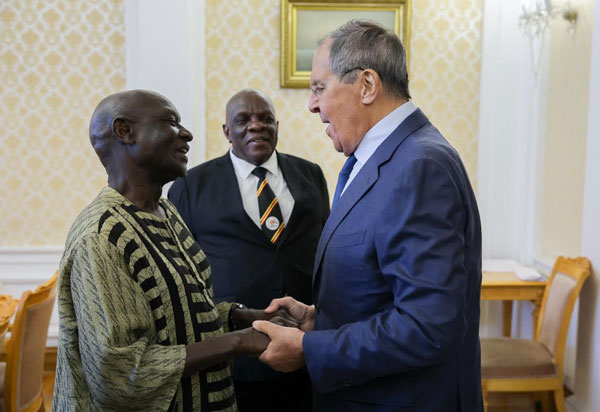
From Kampala to New York, Islamabad, Riyadh, Paris and Moscow, Otunnu has turned his late campaign into a diplomatic roadshow
COVER STORY | RONALD MUSOKE | At 76, Olara Otunnu has embarked on an extraordinary diplomatic odyssey, travelling from capital to capital with former Prime Minister Dr Ruhakana Rugunda, trying to overcome a late start and persuade the governments that will decide who becomes the next United Nations Secretary-General.
In roughly 50 days, Uganda’s candidate for the Secretary-General of the United Nations has been moving from one capital to another, crossing continents in an extraordinary sprint that, based on the itinerary available so far, has already covered more than 30,000 kilometres.
That is an astonishing distance for anyone to cover in such a short period. For a 76-year-old man doing it while simultaneously attending official meetings, preparing for diplomatic engagements, sitting through long flights and then entering rooms to persuade foreign governments to support his candidature, it is an even more remarkable exercise in endurance.
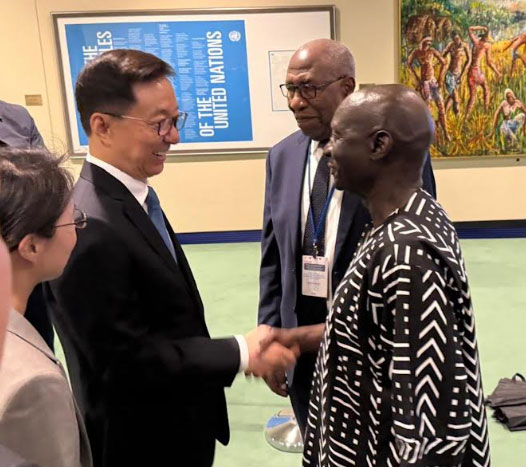
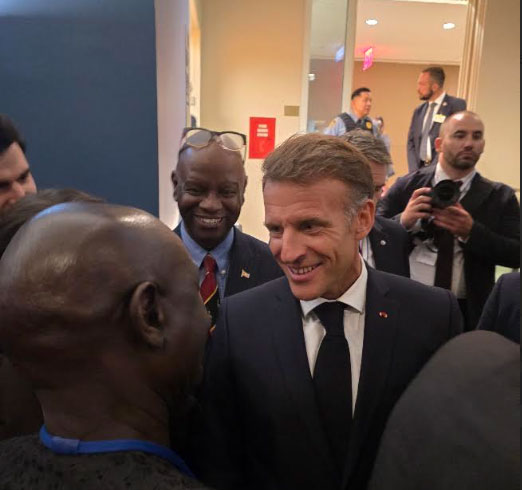
From New York to Islamabad and Riyadh, from Paris and London to Moscow, Athens, Riga and Copenhagen, Otunnu has been putting his case before ministers, ambassadors and senior government officials. At each of the points along the way, he has been accompanied by former Prime Minister Dr Rugunda, President Yoweri Museveni’s Special Envoy who has taken on a central role in Uganda’s campaign.
There have been handshakes and formal photographs, lengthy diplomatic conversations and hurried journeys between capitals. There have also been quieter moments: Otunnu at Notre-Dame in Paris, recalling that the cathedral had once been his place of worship; Otunnu at Westminster Abbey in London, standing near the memorial to Archbishop Janan Luwum; Otunnu in Athens, taking in the Acropolis after an official meeting.
It is a campaign that has become a journey in its own right. But the urgency behind it is political. Otunnu entered the race late. Uganda formally nominated him on July 24, 2026, by which time several of his competitors had spent months campaigning and introducing themselves to the governments that ultimately have the greatest influence over the outcome.
When he spoke to journalists in Kampala on August 5, Otunnu offered a simple explanation for his poor opening showing. “We have not been able to engage the electors,” he said, noting that some of his competitors had been campaigning “for a year and a half.” The problem, therefore, was not that Otunnu lacked experience. It was that he had a great deal of ground to cover. And so, he started moving.
The old diplomat starts a new race
There is a certain symmetry to Otunnu’s return to the UN campaign trail. He knows the organisation from the inside in a way few people alive today can claim. He was Uganda’s Permanent Representative to the United Nations from 1980 to 1985. In December 1981, he became president of the Security Council. He later served as Uganda’s Foreign Affairs Minister and went on to become president of the International Peace Academy, now known as the International Peace Institute.
In 1997, former UN Secretary General, Kofi Annan, appointed him the United Nations’ first Special Representative for Children and Armed Conflict. From 1997 to 2005, he served as a UN Under-Secretary-General. His work helped turn the protection of children in war from a relatively peripheral international concern into an established part of the UN’s peace-and-security agenda. The organisation subsequently developed systems for identifying and monitoring grave violations against children, and the Security Council established the monitoring and reporting mechanism under Resolution 1612.
President Museveni himself has now invoked that record in making the case for Otunnu, telling the UN General Assembly that Otunnu’s work placed the protection of war-affected children firmly on the Security Council agenda. Otunnu therefore comes into the current contest carrying something that cannot be acquired through a few months of campaigning: institutional memory.
He knows the corridors. He knows the diplomats. He knows the language. More unusually, he knows some of the machinery that is now being used to judge him because he helped create it. In December 1981, when the Security Council was deadlocked over the choice of a successor to Secretary-General Kurt Waldheim, Otunnu proposed an informal straw-ballot system that allowed Council members to indicate whether they encouraged or discouraged candidates without immediately forcing governments into an open confrontation.
The device helped break the deadlock and eventually led to the selection of Javier Pérez de Cuéllar. The mechanism became associated with what has come to be called the “Otunnu Formula” and remains part of the Secretary-General selection process. Forty-five years later, the formula is being used on Otunnu himself. There is something almost cinematic about that. The young Ugandan diplomat who once helped devise a way of testing where governments stood on candidates is now travelling the world trying to persuade those same governments to stand behind him.
A campaign launched from behind
The biggest obstacle facing Otunnu has never been his résumé. It has been the clock. By July 24, when Uganda formally put his name forward, the race had already acquired a life of its own. Other candidates had already been through stages of the process and had months in which to introduce themselves to governments, ambassadors and diplomats.
Otunnu was the late entrant. That lateness mattered because the Secretary-General is not chosen through a conventional public election. There is no nationwide campaign, no constituency tour and no day when voters line up at polling stations.
The decisive bargaining happens largely behind closed doors. The Security Council’s 15 members first test the candidates through informal straw polls. Eventually, one candidate must emerge who can secure at least nine votes and avoid being blocked by any of the five permanent members: the United States, China, Russia, France and Britain.
The General Assembly then formally appoints the person recommended by the Council. The UN’s own description of the process confirms that the Secretary-General is appointed by the General Assembly upon the recommendation of the Security Council.
In other words, relationships matter. So does timing. A candidate who has spent a year meeting ambassadors has had a year to establish relationships with governments. A candidate who arrives weeks before the decisive stages has to compress that work into a much shorter period. Otunnu’s answer has been relentless personal diplomacy.
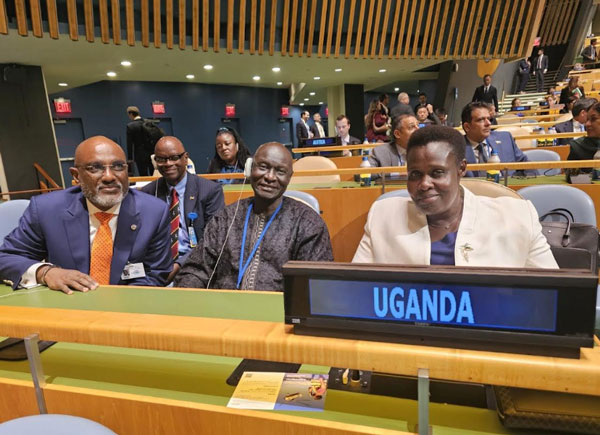
On August 8, Uganda’s then Permanent Representative to the UN, Adonia Ayebare, announced that Otunnu was travelling to New York accompanied by Dr Rugunda for meetings with delegations and engagements with the General Assembly and the UN Security Council.
The next day, President Museveni reaffirmed Uganda’s support for Otunnu and announced that Rugunda would lead a delegation to various capitals to mobilise support. This was not simply a candidate travelling alone and knocking on diplomatic doors. Uganda’s government had decided to put the machinery of the state behind the candidature.
Rugunda joins the roadshow
Rugunda’s role is one of the more interesting features of the campaign. As a former prime minister and senior figure in Museveni’s government, he brings a different political weight to the effort from that of Otunnu, whose international career predates much of the current Ugandan political order.
Together, they have formed an unusual diplomatic pair. One is the veteran international diplomat seeking the world’s highest diplomatic office. The other is a former Ugandan prime minister travelling as the president’s special envoy to help persuade other governments to support him. Their movements have taken them through a string of countries whose positions matter to the campaign.
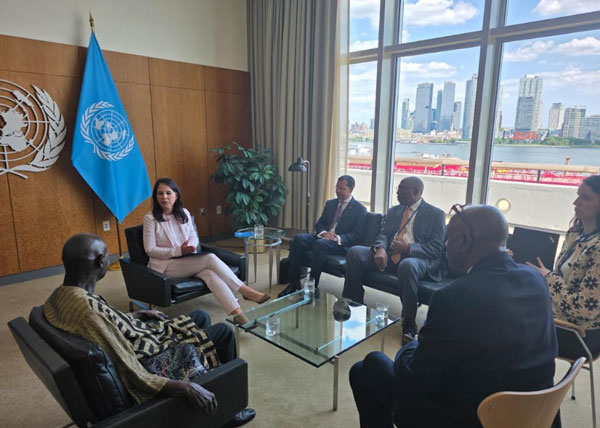
And here the itinerary becomes particularly revealing. After launching his campaign in New York, Otunnu travelled to Riyadh, Saudi Arabia, on September 1, where he met Saudi Arabia’s Deputy Minister for International Multilateral Affairs, Abdulrahman Al-Rassi, with Rugunda leading the Ugandan delegation. On September 4, Otunnu and Rugunda headed to Islamabad, where they met Pakistan’s Prime Minister Shehbaz Sharif and Deputy Prime Minister and Foreign Minister Ishaq Dar, according to Pakistan Television Corporation (PTC). Then came Paris and London, and other European capitals.
The first test was not kind
The first straw poll on July 30 was a difficult beginning. Otunnu received two “encourage” votes, five “discourage” votes and eight “no opinion” votes. On paper, it looked like the campaign was already in trouble. But the second poll, held on August 21, provided the first sign that the frantic diplomatic effort might be producing something.
Otunnu’s “encourage” votes rose from two to five, while the number of “no opinion” votes fell from eight to five. His “discourage” tally remained at five. The increase was significant because Otunnu was the only candidate to increase his number of “encourage” votes in that round, according to an assessment published by the Uganda Media Centre.
For his campaign, it was evidence that personal engagement could change perceptions. For his critics, however, five votes were still five votes. The race remained difficult. The third straw poll on September 18 was another reminder of how hard the climb would be. Costa Rican Rebeca Grynspan emerged with nine “encourage” votes, while Guyanese Carolyn Rodrigues-Birkett remained close behind. Otunnu had five “encourage” votes and seven “discourage” votes.
Seven governments discouraging a candidate is a substantial obstacle. But the selection process is not a simple popularity contest. The ballots do not initially reveal whether a discouraging vote comes from one of the five permanent members or from an elected member of the Council. In other words, a candidate can survive several rounds with a substantial number of discouraging votes if the right governments are supporting him. On the other hand, a candidate who appears strong can be stopped by one permanent member. This is where the real diplomacy begins.
Otunnu’s argument: the UN needs a bridge-builder
When Otunnu appeared before the General Assembly on August 19, he did not present himself simply as another experienced bureaucrat seeking a prestigious job. He presented himself as a diplomat for a world that he believes has become dangerously divided.
His central argument was that the United Nations has lost some of its moral authority and needs to recover it. “That authority does not come from armies or budgets; it flows from the principles of the Charter and the collective will of member States,” he said.
The UN’s record of his interactive dialogue on August 19 provides the primary source for his wider argument about leadership, reform, the Charter and the three pillars of the organisation. It was an argument that fitted neatly with the image he has been constructing throughout the campaign.
Otunnu wants to be seen as a bridge-builder; someone who has spent a career working across political divisions and who understands that the Secretary-General’s most important weapon is persuasion. He invoked the prayer of St Francis of Assisi, calling for peace where there is hatred, hope where there is despair and light where there is darkness.
For a man campaigning to lead an institution whose member states are increasingly divided over wars, power and ideology, the symbolism was deliberate. His programme is nevertheless broader than rhetoric. Otunnu wants the UN to refocus on its three interconnected pillars: peace and security, human rights and sustainable development.
He wants institutional reform to make the organisation more effective and accountable. He wants stronger cooperation between the UN and regional organisations, particularly in responding to conflicts, and he has made artificial intelligence a significant part of his agenda, proposing a special UN body to oversee the technology’s development, safety, governance and social and employment consequences.
The conflicts on his desk
Otunnu’s vision becomes more specific when he talks about the wars consuming international attention. On Ukraine, he proposes a global peace conference and a major international effort towards reconstruction. On Gaza, he wants the UN to mobilise humanitarian intervention and explore whether principles associated with the Oslo Accords could be combined with elements of the Abraham Accords as part of an effort towards lasting peace.
On the Democratic Republic of Congo, he proposes support for the Washington peace framework involving Rwanda and the DRC. On Sudan, he wants the UN to work closely with the African Union and international partners around existing diplomatic frameworks. On Iran, he says the organisation should support diplomatic efforts towards a comprehensive agreement. These proposals place Otunnu firmly in the tradition of a Secretary-General who sees the office as an active diplomatic instrument rather than merely the administrative head of an international bureaucracy.
The Secretary-General cannot order major powers to stop a war. But he can convene. He can mediate. He can put issues before the international community. He can use the moral authority of the office to make governments uncomfortable, and, occasionally, he can create the space in which governments find a way out of conflicts they have been unable to resolve themselves. Otunnu’s career has given him a particular confidence in that kind of diplomacy.
From boardrooms to Notre-Dame
Then there is the other side of the campaign. The travelling. The photographs. The unexpected moments in between official meetings. In Paris, Otunnu and Rugunda were photographed outside Notre-Dame Cathedral, which had been severely damaged by fire in 2019 and later restored.
Otunnu later explained via his official X handle that the cathedral had once been his place of worship when he lived in Paris. The photograph is striking because it is so different from the usual campaign imagery. There is no row of flags behind him, no group of diplomats standing rigidly at attention, no formal conference table. Instead, there is a 76-year-old Ugandan revisiting a place connected to an earlier chapter of his life while trying to secure perhaps the biggest political appointment of his career.
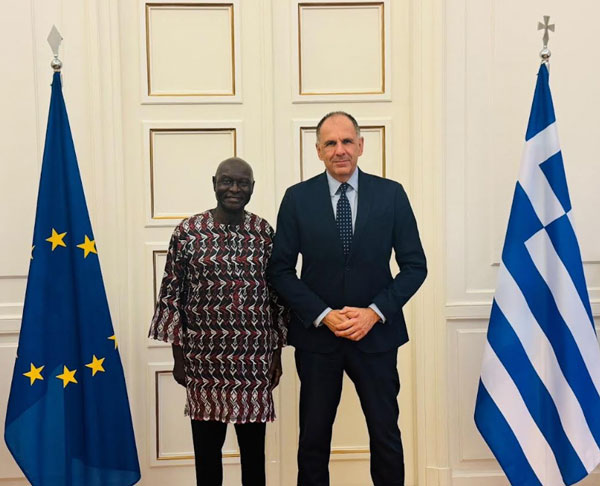
In London, he visited the BBC World Service studios and later Westminster Abbey. There he encountered another piece of Ugandan history: the memorial to Archbishop Janan Luwum, one of the country’s most important religious and human-rights figures, who was murdered during Idi Amin’s rule. In Athens, after meeting Foreign Minister George Gerapetritis, Otunnu took time to see the Acropolis, visit the Holy Metropolitan Church and walk through the Garden of Olives.
It is easy to overlook these moments as campaign photographs. But they help explain the unusual longevity of Otunnu’s public life. He has spent decades moving between worlds; Uganda and the wider international system, politics and diplomacy, war and peace, the UN headquarters and communities affected by conflict. The campaign has simply put all those worlds back on the road at once.
Moscow, Paris, Athens — the real target
By September, the campaign had become increasingly focused on governments with the greatest ability to determine the outcome. Otunnu’s trip to Moscow was particularly important. Russia is one of the five permanent members of the Security Council, and any candidate for Secretary-General ultimately needs to be acceptable to all five.
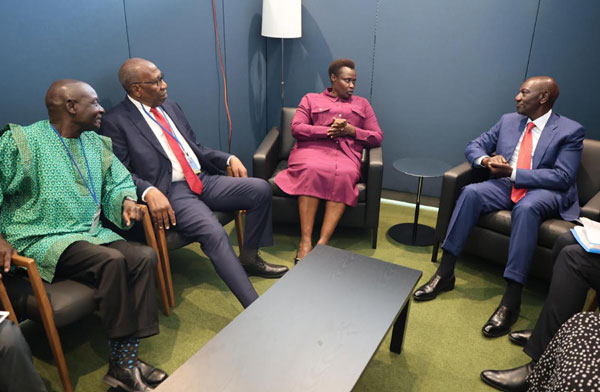
On September 14, Otunnu met Russian Foreign Minister Sergey Lavrov as part of the Ugandan delegation led by Rugunda. The visit came after the campaign had already taken Otunnu to several other strategically important capitals. From Moscow, the campaign continued to Athens and Riga before moving on to Copenhagen. That is not accidental geography. It is campaign arithmetic. Every capital represents another government that can influence the outcome, another opportunity to make an argument and another chance to discover whether the candidate’s message is being heard.
The Otunnu-Museveni paradox
Yet, perhaps the most fascinating political subplot is the relationship between Otunnu and the government now campaigning for him. Otunnu has had a complicated history with Museveni’s political establishment. The two men have not always been on the same side of Uganda’s political divide. Indeed, Otunnu has previously sought Uganda’s backing for the UN Secretary-Generalship without receiving it.
Now, decades later, Museveni is publicly championing him. Uganda’s President used his statement to the 81st UN General Assembly to describe Otunnu as exceptionally qualified, citing his decades of experience, his work on children and armed conflict and his capacity for consensus-building. Rugunda, meanwhile, has become one of the principal figures carrying the campaign abroad. It is one of those political reversals that would have seemed improbable at another point in Uganda’s history.
Otunnu himself has said the endorsement came as a surprise. “This is not something I was plotting to do or angling to be a candidate or working towards,” he told the local media in August. The nomination, he said, unfolded rapidly.
Otunnu’s revelation suggests that the campaign did not begin with years of preparation by himself. Instead, it gathered momentum quickly, leaving the candidate and his government sponsors with a very short window in which to build an international campaign. That helps explain the extraordinary travel schedule. They were not merely campaigning. They were catching up.
The 76-year-old campaigner
There is, finally, the question of the man himself. At 76, Otunnu is the oldest candidate in the field, and his age is both a curiosity and an important part of the story. His campaign has turned what might normally be viewed as a disadvantage into something approaching a demonstration of stamina.
The photographs tell part of it: airports, conference rooms, official residences, hotel lobbies, diplomatic receptions and historic landmarks. But the real measure is the calendar. A meeting in one capital is followed by another flight. Another meeting. Another flight. Another government to persuade.
The journey is physically demanding, but the political burden is perhaps greater. Every capital brings another opportunity to make the case, but also another reminder that the other candidates have been doing this for months. And Otunnu is not pretending otherwise. His argument is that his late start should be judged against the depth of his experience rather than the length of his campaign. The question is whether governments agree.
The fourth test
By the fourth straw poll, the campaign had entered a more consequential phase. Rebeca Grynspan remained in front with 10 “encourage” votes, while Carolyn Rodrigues-Birkett and Rafael Grossi remained competitive. The field is still fragmented, however, and no candidate has established the kind of overwhelming consensus that makes the final outcome inevitable.
For Otunnu, the numbers are neither a breakthrough nor a defeat. The campaign has not propelled him into the lead. But neither has the late start eliminated him. And that is why the race remains fascinating.
The UN Secretary-General is not necessarily the person who leads every straw poll. The winner must eventually be someone the permanent members can accept. That leaves room for candidates who can build enough support, survive the objections of powerful governments and emerge as a compromise when the leading contenders begin to cancel one another out. Otunnu knows this system better than almost anyone. He invented part of it.
What the journey has achieved
Whether the campaign ultimately succeeds is impossible to say. But it has already achieved something that seemed improbable when Uganda announced his candidature in July. Otunnu has forced his way into a race in which he began at a considerable disadvantage. He has met members of the Security Council, appeared before the General Assembly and taken his message into a succession of national capitals.
By the time of the General Assembly high-level week (September 22-26), Uganda was publicly describing him as having met officials from all five permanent members of the Security Council as well as the elected members.
He has presented himself not as a ceremonial elder statesman seeking a final honour, but as a candidate who believes the UN requires a more politically assertive Secretary-General. He has talked about war and peace, children caught in conflict, AI, climate change, migration, development finance and institutional reform.
He has invoked the UN Charter repeatedly. And he has travelled a lot. The journey from Kampala to the diplomatic capitals of the world has been long, exhausting and expensive in human energy. Yet there is something unmistakably determined about it.
At 76, Otunnu could have accepted that entering late meant the odds were too long. Instead, he appears to have reached the opposite conclusion. If the other candidates had a year’s head start, he would try to make up the distance in a matter of weeks. If governments needed to hear from him, he would go to them. If the road ran from Islamabad to Riyadh, Paris to London, Moscow to Athens, Riga to Copenhagen, he would take it. And if the process that would ultimately judge him was the very mechanism he had helped invent 45 years earlier, then so be it. The old diplomat was prepared to step into his own formula and see where it led.
The race is still open
The next Secretary-General will inherit an organisation confronting wars in Gaza, Ukraine and Sudan; tensions between major powers, a crisis of confidence in multilateral institutions, financial pressure and the disruptive rise of artificial intelligence. The job will require more than administrative competence.
It will require the ability to talk to people who do not agree, to persuade governments that do not trust one another and to preserve the credibility of an institution whose authority ultimately depends on the willingness of its members to believe in it. Those are precisely the qualities Otunnu says he has spent his life acquiring.
Whether the governments casting the decisive votes believe him remains the central question. For now, the veteran diplomat is still moving. The kilometres continue to accumulate. So do the meetings. So do the handshakes. So does the uncertainty, and somewhere between the airport lounges, presidential offices, foreign ministries, ancient monuments and meeting rooms of the United Nations, Olara Otunnu is attempting something that is as audacious as it is difficult: to persuade a world that has already begun choosing its next Secretary-General to stop, listen to a late entrant from Uganda, and reconsider who should lead it.
“The next Secretary-General will inherit an organisation confronting wars in Gaza, Ukraine and Sudan” – Agreed.
In 1985-86 Otunnu was the Chief Diplomat of the UNLA Military govt.
He failed to mediate a local conflict – President Museveni knows that.
UNLA govt fell, Otunnu and his uncles Bazilio Olara and Tito Okello fled
The conflict escalated across Uganda spilling into neighbouring countries
From Kampala via Gulu into Sudan – Konyi
Aproxy war ensured between Uganda lasting until Sudan fractured into 2
FRom Kampal via Kigali to KInshahsa
Bodies, skeletons, a genocide and graves >5m
Biggest loss in DR Congo
Secondly Otunnu’s UNLA govt did not uphold teh UN Charter. Thousands of civilians n including children were killed by the Okello Junta.
Fellow Ugandans,
Please help me understand why the NRM/NRA which claims to have “Liberated” Uganda, not sure from who, would nominate the Foreign Minister / Top Diplomat of the UNLA Govt it replaced to become the next UN Secretary General.