The Independent Uganda: You get the Truth we Pay the Price


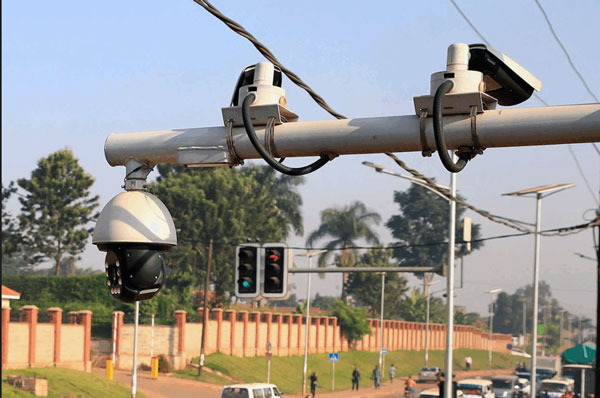
The Ugandan government, just like its peers across Africa, has embraced digital-surveillance to ostensibly improve public safety, but the technology is increasingly being used for political control
COMMENT | WAIRAGALA WAKABI | In June 2025, Uganda switched on the Automated Express Penalty System (EPSAuto), using CCTV cameras, automatic number plate recognition (ANPR), and an intelligent transport monitoring system (ITMS) to fine motorists. But the system, ostensibly aimed at bringing order to the country’s chaotic roads, quickly generated controversy.
Several developments in recent decades made EPSAuto possible. In the early 2000s, Uganda deepened its economic ties with China, which led to the Chinese tech giants Huawei and ZTE building Uganda’s information and communications technology infrastructure. This enabled a rapid shift toward digital surveillance, with the government deploying thousands of CCTV cameras, ANPR, the ITMS, and facial-recognition software. Uganda’s Huawei-supported safe-city programme, launched in 2018, has since expanded to all major towns and municipalities.
The official rationale for Uganda’s full-throttle embrace of digital-surveillance tools was public safety and counterterrorism. But many worried that the government could repurpose this infrastructure for whatever it deemed necessary. EPSAuto was proof of that, and the public backlash to the system was swift: drivers complained about duplicated and wrongly attributed fines, as well as unintentional violations, owing to missing speed-limit signs. People began to question whether cameras installed for national security should be used to issue traffic tickets. If the government was willing to use these tools for revenue extraction, what would stop it from using them for political censorship?
EPSAuto was suspended within days. More than a year later, on October 6, Ugandan Attorney General Sam Mayanja declared that the 2021 contract with a Russian company for the ITMS, including digital number plates and vehicle tracking, was legally void and unenforceable. The experience points to a bigger question confronting countries in Africa and elsewhere: what happens when the technologies introduced to make cities safer also make it easier for the government to identify and track its citizens?
Better Safe Than Sorry?
A recent report that I co-edited, Smart City Surveillance in Africa: Mapping Chinese AI Surveillance Across 11 Countries, considers this question. Our research identified more than US$2 billion in spending on the surveillance of public spaces in Algeria, Egypt, Kenya, Mauritius, Mozambique, Nigeria, Rwanda, Senegal, Uganda, Zambia, and Zimbabwe, although the real amount is likely much higher. And much of this financing came from Chinese companies.
Policymakers tend to trot out public security as the justification for surveillance systems, and they do have a legitimate role to play in the fight against terrorism and crime. But any such use must be lawful, necessary, and proportionate. Moreover, it is incumbent on governments to show that the systems deliver the promised outcomes.
Our research finds no compelling evidence of smart-city surveillance reducing terrorism or serious crime in Africa. Senegal and Zambia have invested heavily in these systems despite facing relatively few security threats. In Mozambique, the technology—which, tellingly, is concentrated in opposition strongholds—has not improved the authorities’ response to serious crimes like kidnappings. Similarly, in Nigeria, heavy spending on surveillance has done little to stem insecurity.
This raises the problem of “function creep.” As the uproar around Uganda’s EPSAuto shows, there are concerns—often valid—that smart-city surveillance tools are being used to identify and monitor activists, opposition figures, critics, and protesters. We documented the same unease in Zimbabwe.
AI-enabled facial recognition is particularly worrying. Once cameras can identify people rather than simply record incidents, surveillance becomes more than a tool for investigating crime after the fact. It can enable authorities to track where people go, who they meet, and which public activities they join. Citizens become highly visible to the state, while the state’s surveillance operations remain opaque. People may not know what data is being collected, how it is used, how long it is retained, or with whom it is shared.
Even the threat of surveillance can have a chilling effect, because people often change their behaviour if there is the possibility of being watched. In many of the authoritarian countries we studied, citizens reported self-censorship of political expression. Activists, journalists, and opposition figures described altering travel routes, communication practices, and patterns of assembly in response to smart-city surveillance tools whose full capabilities remain unknown. This is true not only in more authoritarian countries like Rwanda, Uganda, and Zimbabwe, but also in Kenya, Nigeria, and Zambia, which have more democratic institutions.
Thus, surveillance in Africa has become part of a wider set of tools that can weaken individual rights and democratic participation. Such intrusive monitoring is reinforced by restrictions on online expression, internet shutdowns, and platform controls. Taken together, these measures make it harder for people to speak freely, organize, access information, and participate in public life.
Chinese Financing Meets Postcolonial Governance
Surveillance in Africa is hardly new. Colonial governments used identification systems to control movement and labour. Kenya’s kipande system, for example, required African men to carry identification documents containing personal and employment details, often including fingerprints. Many post-independence governments retained centralized security institutions and continued to use surveillance against political opponents.
Today’s systems can serve similar purposes—preserving the ruling regime’s interests—but they operate on a different scale. These automated digital tools cover much larger areas than human informant networks ever could. Worse, governments can now combine surveillance footage with the wider digital systems they use to collect and process information, ranging from identity and telecommunications data to vehicle records. The ability to monitor people can extend far beyond what any single system appears designed to do. A person does not need to be suspected of a crime to become part of the system’s field of vision.
China’s role in this process, while worthy of scrutiny, is not the whole story. Chinese firms supplied or financed most of the systems examined in our report. But African governments decide what to buy, how systems are configured and deployed, who can access them, and what safeguards apply. Those decisions determine how surveillance technology affects people’s rights.
African governments often buy surveillance systems without disclosing to the public how much they cost, what they can do, who controls them, and what data is collected or who can use it. We found that procurement documents can sometimes provide a clearer picture. A project described publicly as CCTV, for example, may turn out to include facial recognition, vehicle tracking, video analytics, or a centralized data platform. This is how function creep can begin, when a system bought for one purpose creates the capacity to monitor people in ways that were never envisaged or disclosed.
Shining a light
Procurement documents, especially contracts, are crucial to understanding who controls smart-city surveillance systems, who has access to their data, the scope of work, and what happens after deployment or when the contract ends. If journalists, regulators, parliamentarians, and lawyers could review them, the debate would shift from general concerns about surveillance to specific questions about public spending, legality, and accountability.
Uganda’s ITMS shows what can go wrong. Documents reviewed by the Daily Monitor show that the Ministry of Finance found the project’s feasibility study inadequate. It lacked, among other things, a proper value-for-money assessment, risk analysis, financial model, and clear data-protection plan. While the Russian contractor, Joint Stock Company Global Security, disputes the attorney general’s findings, it is clear that the system went ahead before basic questions were addressed. In Uganda, the government should publish the ITMS contract and allow parliament, the auditor general, and the Personal Data Protection Office to assess its costs, capabilities, and safeguards before automated enforcement returns.
Across the continent, governments should make high-risk surveillance procurements far more transparent. Contracts, financing arrangements, technical specifications, and intended uses should be publicly available, subject only to narrowly defined legal exceptions. Governments should also set clear objectives and establish baseline data which independent evaluators can use to determine whether these surveillance systems actually improve public safety. Moreover, before deploying highly intrusive systems, independent human-rights impact assessments must be conducted.
The more powerful the technology, the stronger the safeguards should be. Uses involving facial recognition, persistent tracking, and the integration of multiple databases (including non-surveillance systems and sources of data) should face stricter oversight. This aligns with the Declaration of Principles on Freedom of Expression and Access to Information in Africa, an important regional standard published in 2019 by the African Commission on Human and Peoples’ Rights. Principle 41 requires legal authorization and safeguards for communications surveillance and stipulates that governments shall not engage in or condone indiscriminate and untargeted collection, storage, analysis, or sharing of people’s communications.
But Principle 41 does not apply to the mass monitoring of people in public spaces through cameras, facial recognition, and vehicle tracking. That gap matters as surveillance moves into streets, transport networks, and public squares. Regulation must keep pace with technology, which means applying the same principle to smart-city surveillance tools.
Civil-society organizations, for their part, should continue to document abuses, explain to the public what these smart-city systems can do, and demand accountability. They can support people and communities targeted by surveillance through digital-security training and legal assistance.
Responsibility does not end at Africa’s borders. China and other countries that export these systems—including Israel, South Korea, and the United States—should implement stronger human-rights safeguards to their sales and financing contracts. Donors should support rights-based approaches to digital governance and help fund independent monitoring and advocacy.
Africans do not have to choose between public safety and the right to go about their lives unmonitored. Smart-city surveillance technology can help governments investigate crimes, recover stolen vehicles, and improve public services without giving them carte blanche to track people. Before the next camera goes up, policymakers should be compelled to answer two questions: What problem does it aim to solve, and what safeguards will prevent it from being used as a tool for political control?
*****
 Wairagala Wakabi is the Executive Director of the Collaboration on International ICT Policy for East and Southern Africa (CIPESA)
Source: Project Syndicate, 2026