The Independent Uganda: You get the Truth we Pay the Price


Kampala, Uganda | THE INDEPENDENT | The start of Term One 2026 has been marred by low pupil attendance in schools across Uganda, despite the delayed reopening aimed at easing preparations.
Reports from multiple districts indicate that only a small fraction of enrolled learners turned up on the first day of term, continuing a pattern that headteachers say has become increasingly common in recent years.
While teachers largely reported for duty and schools opened as scheduled, the low turnout of pupils affected the smooth start of the school calendar.
At St Martin Primary School in Mulago, only 250 of last year’s 1,000 learners had reported by the end of the first day. Headteacher John Lwanga said the low turnout is now habitual. Lwanga noted that most learners present on the first day are the newly enrolled pupils, with returning pupils largely absent.
Lwanga added that, aside from turnout, everything else at the school was in order: all teachers had reported, and capitation funds received earlier had been used for quick repairs and instructional materials.
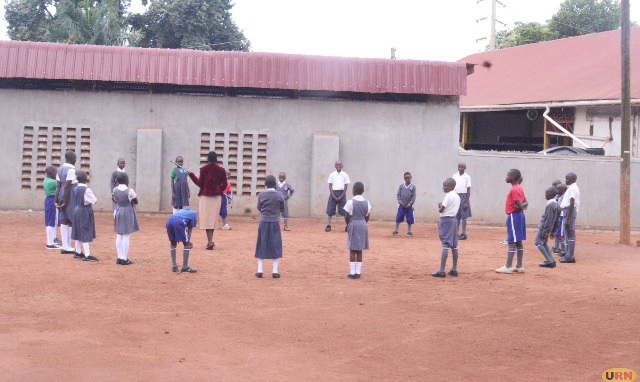
Just a stone’s throw from the school, in the UEB cell, the reporter found children of parents such as Agnes Namutebi playing in the compound.
She had not yet returned them to school. “I don’t have money. They need books, shoes, and other things which I have not yet bought,” she said, explaining that she planned to send only her P.7 child on the second day.
At Kanyange Primary School in Nansana Municipality, only 174 of the expected 800 learners reported on the first day.
Headteacher Joshua Bwiire said that during the recently concluded elections, many parents had taken their children to villages out of fear over the outcome.
He described this year’s turnout as one of the lowest compared to previous years. Observations showed that the lowest attendance was in the lower primary section.
In classes such as Primary One A and B through Primary Three, fewer than 10 pupils attended the first day.
Bwiire also noted that as a UPE school, they charge only 30,000 shillings for school feeding, stressing that teaching is difficult when learners come on empty stomachs.
Some parents fail to pay even this amount, leaving some children to rely on packed food, which he said is not ideal.
At Maganjo UMEA Primary School, only 313 of last year’s 1,569 learners reported. Headteacher Afua Bogere attributed the low turnout to parents not yet obtaining the required scholastic materials.
The school only asks for 10,000 shillings for porridge, and additional fees are requested through parents’ meetings.
Similar patterns were reported in Luwero. Several schools, including Kasana UMEA, Luwero Boys, and Luwero Girls Primary Schools, recorded low first-day attendance.
At Luwero Boys Primary School, fewer than 400 of 1,318 enrolled were present. Headteacher Godfrey Ssendikaddiwa said the trend mirrored previous years.
Some parents who managed to bring children to school decried the lack of school requirements and fees, pleading with headteachers to admit learners while they sorted out finances.
Ruth Namulindwa registered three new learners at Luwero Boys but had only brought books.
She blamed losses in her nursery bed business. Another parent, Sylvia Birabwa, returned three children but could not afford uniforms or full fees.
In Gulu City, education authorities could not conduct school inspections on opening day because monitoring funds had not been released.
City Inspector of Schools Proscovia Aber told Uganda Radio Network: “We haven’t received funds, but it is being processed. When money is not yet ready, it becomes a challenge. Although we start monitoring without funds, it is usually not very vigorous.”
She noted that schools are expected to prepare at least two weeks in advance and confirmed that teachers had reported. However, delayed pupil turnout remains a persistent challenge, particularly in public schools.
“Usually, what we do is prepare two weeks in advance before the opening of the term. Right now, I know all schools are open, and children are reporting.”
Aber appealed to parents to send children early, warning that late reporting disrupts curriculum delivery. At Holy Rosary Primary School in the Laro-Pece Division, pupil turnout was visibly very low early in the morning.
In Mukono, attendance was described as moderate and better than in previous years. At Ngandu Community Primary School, Headteacher Harriet Nabisubi said parents are slowly regaining confidence despite past infrastructure problems.
“We’ve allowed them to bring their kids back, and we’ll sort out the rest as we go.”
At Bishop East and West schools, parents were negotiating fees and requirements. Derrick Kitonsa, a father of three, said tough economic conditions had affected his market sales. “It’s not easy, but at least they’re giving us a chance.”
Francis Malaba, Headteacher of Kichwa Primary School–Kisowera, said learner turnout was moderate but below expectations.
Only about 50 pupils reported, compared to more than 300 enrolled last term. Malaba noted that eight of the eleven teachers on staff were present, with one on maternity leave and another recently retired.
In Kitgum District, some schools faced an additional challenge of desk shortages. At Kitgum Public Primary School, Headteacher Jacob Oyet said four pupils were sharing one desk in upper classes.
“Four pupils per desk is acceptable in upper primary. What we avoid is squeezing five pupils on one desk,” he said.
He reported good teacher attendance and noted that as a UPE school, no tuition is charged, although a PTA contribution of 63,000 shillings per term is expected.
At Kitgum Prison Primary School, only 117 of 700 pupils had reported by mid-morning. Headteacher Patrick Kilama Otika said: “Most parents prefer to send children to secondary or distant schools first, before primary school pupils. Enrollment normally improves after one or two weeks.”
Other districts continued to see sparse attendance. At Oyam Town Council’s Awelobuturyo P.7 School, only 78 of over 1,000 learners were present by 10 am.
In Luuka, most classrooms had fewer than 20 pupils by 9 am. Parent Faridah Naigobe partly blamed election fatigue.
In Soroti City, the situation was particularly worrying. At Soroti Islamic Primary School, last year’s enrollment was 750 pupils, but fewer than 100 returned.
Headteacher Moses Onyara said parents tend to delay bringing children until at least a week into term. Similarly, Soroti Demonstration Primary School had not reached 100 pupils as parents began registration.
At Swaria Primary School, only 50 of 677 pupils reported. Deputy Headteacher Stella Itipe said lessons had begun, but absence was concerning.
“In Primary One, only one pupil has reported, down from 62 last year. In Primary Five, only four of 71 pupils have returned.”
At Akisim Primary School, fewer than 40 of last year’s 430 pupils registered. Headteacher Arego Etwamu said teachers were present, but classes had not started.
“We are still organizing pupils to figure out how to proceed because our school was robbed on December 3, 2025. We lost essential items, including writing materials and student records. However, we hope to start regular lessons tomorrow,” she stated.
Etwamu also mentioned that only one parent had visited to register a child, adding, “Here, we don’t see parents bringing their children; they come by themselves.
” Elvis Akol, a parent, said many families struggle to provide scholastic materials. “I have six children in different classes. Though they do not pay fees in government schools, the costs for books, pens, and development fees are still a burden,” he said.
In contrast, Moroto District saw a heavy early-morning rush of learners. Schools such as Kasimeri, Moroto Municipal Council, and Naitakwae Primary struggled to cope with the sudden influx. Teachers said parents had ignored earlier registration announcements.
In Fort Portal City, Kyebambe Model Primary School had nearly half its pupils present when visited. Headteacher Jovia Ruhweza said parents were eager.
At Kahungabunyonyi Primary School, Headteacher Addai Ahurra reported a strong turnout and expected all pupils back by the end of the week.
****
URN