The Independent Uganda: You get the Truth we Pay the Price


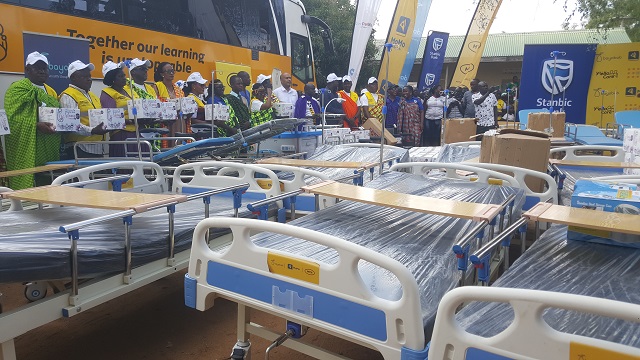
Amudat, Uganda | THE INDEPENDENT | MTN Uganda has ended its 2026 21 Days of Y’ello Care campaign with support for maternal and newborn healthcare at Karita Health Centre IV in Amudat District, one of the country’s most remote areas.
The telecommunications company and its partners provided medical equipment and supplies, solar power systems and information and communications technology equipment.
They also gave bicycles and smartphones to Village Health Teams, trained health workers in digital health and carried out community health activities.
The support provided to four health centres during the campaign was valued at more than Shs600 million, according to MTN Uganda.
Karita was the final stop in the campaign, after similar interventions at Kibiito Health Centre IV in Bunyangabu, Maddu Health Centre IV in Gomba and Kiyunga Health Centre IV in Luuka.
The campaign comes as Uganda continues to make progress in reducing maternal and newborn deaths, although significant challenges remain.
The maternal mortality ratio has fallen to 189 deaths per 100,000 live births, from 336 a decade ago. But this remains well above the Sustainable Development Goal target of fewer than 70 deaths per 100,000 live births by 2030.
Neonatal mortality has also declined from 27 to 22 deaths per 1,000 live births, but remains above the SDG target of 12.
“We at MTN Uganda believe that everyone deserves the benefits of a modern connected life,” said Dennis A. Kakonge, General Manager, Corporate Services and Company Secretary at MTN MoMo.
“It is about connecting people to information, connecting healthcare workers to the tools they need, and connecting communities to services and opportunities.”
Reaching remote communities
Karita Health Centre IV serves more than 40,000 people in Amudat and neighbouring areas, including communities close to the Kenyan border.
For many residents, reaching specialised medical care can be difficult.
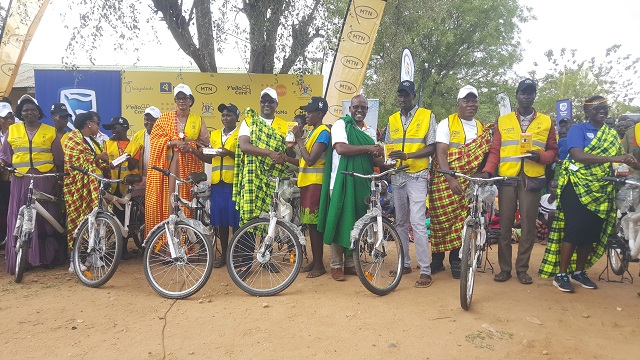
Moroto Regional Referral Hospital is about 200km away, while Amudat Hospital is roughly 90km from Karita. Some residents instead cross the border to seek treatment at Kacheliba Hospital in Kenya, about 20km away.
At Karita, the Y’ello Care programme included medical screening, patient registration, health education and the provision of medical supplies.
Health workers received training in the Electronic Medical Records Information System, while Village Health Teams were trained in digital skills.
MTN MoMo also conducted financial literacy sessions, including information about MoMo Cover.
Dr George Ogwang, the in-charge of Karita Health Centre IV, said the support would improve the facility’s ability to serve its growing catchment population.
“The medical equipment, solar support and other interventions will strengthen our ability to provide quality services and respond to patients more effectively,” he said.
Dr Andrew Munerya, acting District Health Officer for Amudat, said partnerships with the private sector were important in reaching communities that are difficult to serve.
“The investments in equipment, digital health, renewable energy and community health strengthen the health system and complement government efforts to improve maternal and newborn health,” he said.
State Minister for Karamoja Affairs Esther Anyakun, who was chief guest at the handover, said the government was working to improve healthcare services in remote areas.
“Facilities such as Karita Health Centre IV serve communities that are far from regional referral hospitals.
We are working hard as government to ensure that such facilities have the equipment, medicines and skilled personnel needed to provide timely and quality care,” she said.
“We appreciate MTN Uganda and its partners for complementing government efforts to strengthen healthcare services in underserved communities.”
Partnerships
The campaign also brought together organisations from the private sector, government and civil society.
Prof Diana Nandagire Ntamu, Director of the Entrepreneurship Centre at Makerere University Business School, said the initiative showed the importance of working together to tackle social challenges.
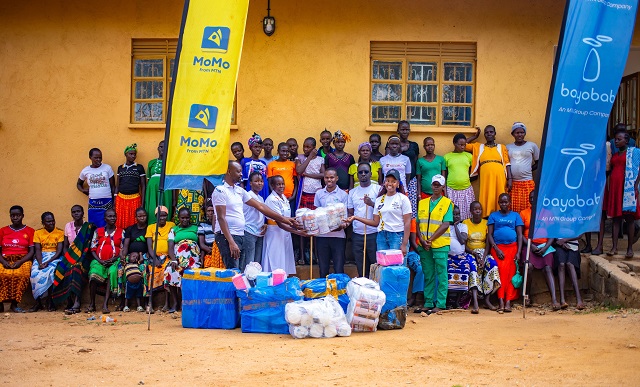
“Government is doing everything it can, but it cannot reach everyone with everything,” she said. “The way we address our social challenges must therefore be through collective action.”
Diana Ondoga, Corporate Social Investment Manager at Stanbic Bank Uganda, said investment in healthcare had wider economic benefits.
“Healthcare is not simply a social service. It is a foundation for human development, productivity and prosperity,” she said.
The campaign was held under the theme “Expand Equitable Health for Every Community” and was moved from June to August following an Ebola outbreak in Uganda and neighbouring Democratic Republic of Congo.
MTN Uganda said the initiative forms part of its Ambition 2030 strategy, which includes using technology, partnerships and its wider network to expand access to essential services.
The company worked with the Ministry of Health, Amudat District Local Government, Stanbic Bank Uganda, Tower of Africa, ATC Uganda, 212 Cooperative Society, S & L Advocates, Buffalo Bicycles, Bayobab, CAUUM, Roofings Group, Mengo Hospital, CORSU Rehabilitation Hospital, Uganda Red Cross Society, Uganda Blood Transfusion Services, UNFPA, Maendeleo Foundation, Zuri Health, MTN MoMo, ClinicPesa, MUBS EIIC, GHE Consulting, Huawei, Ericsson, Exquisite Solutions, ATTA Breastmilk and other partners.