The Independent Uganda: You get the Truth we Pay the Price


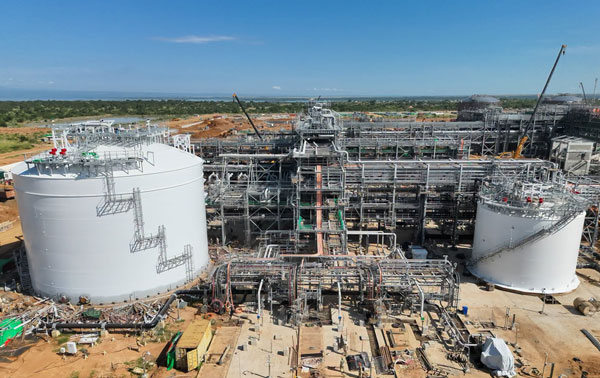
Hoima, Uganda | NEWS CORRESPONDENT | Members of Parliament on the Committee on the Budget have concluded a field oversight visit to Uganda’s key petroleum development projects to assess progress, evaluate preparedness for first oil, and gain a first-hand understanding of investments being undertaken across the sector.
The delegation, led by the Committee Chairperson, Amos Kankunda, visited major oil and gas infrastructure including the East African Crude Oil Pipeline (EACOP) Pump Station One (PS1), the Kabaale Industrial Park, the Kingfisher Development Project in Kikuube District, and the Tilenga Project in Buliisa and Nwoya districts.
The visit, coordinated by the Petroleum Authority of Uganda (PAU), the Ministry of Energy and Mineral Development (MEMD), and the Uganda National Oil Company (UNOC), forms part of Parliament’s oversight mandate to ensure accountability, value for money, and successful implementation of strategic national projects.
At EACOP PS1, Members of Parliament toured the starting point of the 1,443-kilometre heated crude oil export pipeline, which will transport Uganda’s crude oil from Hoima to the Marine Export Terminal in Tanga, Tanzania.
The Committee received updates on the status of Uganda’s petroleum projects, all of which are now in advanced stages of development ahead of first oil.
Project updates indicate that EACOP has reached 92% overall completion, with all line pipe laid and buried. The project has entered the pre-commissioning and testing phase for key facilities and support infrastructure.
The Tilenga Project stands at 78% completion, with 256 wells drilled to date out of the 170 required for First Oil, while the Kingfisher Development Project has achieved 90% completion, with all 22 production wells drilled out of the 19 required for First oil and several facilities undergoing commissioning and pre-commissioning activities.
Members also toured critical facilities associated with the Tilenga Project, including the Industrial Area, Gunya-1 Well Pad and Bugungu Camp, where ongoing construction and operational readiness activities are being undertaken.
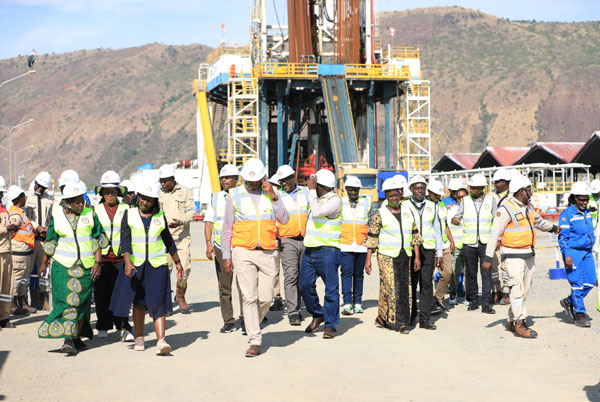
Speaking during the visit, Kankunda said the oversight exercise had enabled the Committee to better understand the progress achieved and the outstanding issues requiring attention ahead of first oil.
“As an oversight committee, we have been concerned about the shifting timelines for first oil. We therefore wanted to understand how we can be of help and ensure the dates do not slip again, especially considering that a number of budget projections have been premised on future petroleum revenues,” Kankunda said.
He commended the progress made across the projects and reaffirmed Parliament’s commitment to supporting interventions necessary to ensure timely delivery of first oil and maximize national benefits from the sector.
The Committee also received technical briefings on the status of petroleum exploration activities and the importance of sustaining investments beyond first oil production.
Addressing Members of Parliament, Joshua Lukaye, Acting Assistant Commissioner for Exploration at MEMD, emphasised the strategic importance of continued exploration to secure Uganda’s long-term production outlook.
“The resources currently discovered are finite and will gradually be depleted once production begins. At peak production of approximately 230,000 barrels per day, the existing discovered resources are expected to support production for about 25 to 30 years. It is therefore critical to continue exploration activities and identify replacement resources to sustain production and maximise the utilisation of petroleum infrastructure,” Lukaye said.
He noted that increasing investment in exploration activities would support resource replacement, attract additional investment into the sector and ensure optimum utilisation of petroleum infrastructure over the long term.
Committee Members engaged project teams on key issues including project schedules, budget requirements, local content implementation, infrastructure readiness and measures being undertaken to ensure a smooth transition from project development to production.
The legislators observed that Uganda’s petroleum sector is entering a critical phase as major infrastructure moves from construction to commissioning and operations and emphasized the importance of continued coordination among government agencies, licensed companies and other stakeholders.
At the conclusion of the visit, the Committee expressed satisfaction with the progress registered across the petroleum value chain and pledged continued parliamentary support for the sector.
“We have witnessed significant progress across the projects and have gained a better appreciation of the investments being made. As Parliament, we remain committed to supporting interventions that will ensure first oil is achieved and that the sector delivers lasting value to the people of Uganda,” Kankunda said.
Allan Rogers Kibaya, the Manager Facilities & Production, said the PAU was establishing a Real Time Monitoring Centre, that will ensure that data from all the operations is captured in real time including information from the meters.
“We have deployed three categories of monitoring systems, technical meters, fiscal meters, and location-tracking systems. All of these are integrated with the Real-Time Monitoring Centre at Petroleum House, allowing us to monitor operations, track crude movement, and ensure the integrity of the pipeline in real time.”
The Committee also discussed the readiness of key government institutions for the transition from project development to oil production. Members were informed that while significant progress has been made across the petroleum value chain, continued investments will be required to strengthen regulatory oversight, environmental monitoring, emergency response capabilities, petroleum revenue management, crude marketing, and inter-agency coordination. Institutions including the PAU, MEMD, UNOC, the National Environment Management Authority (NEMA), the Ministry of Finance, Planning and Economic Development (MoFPED), the Uganda Revenue Authority (URA), and other sector agencies are undertaking measures to ensure the country is fully prepared to manage the operational, commercial, environmental, and fiscal demands associated with the commencement of oil production.