The Independent Uganda: You get the Truth we Pay the Price


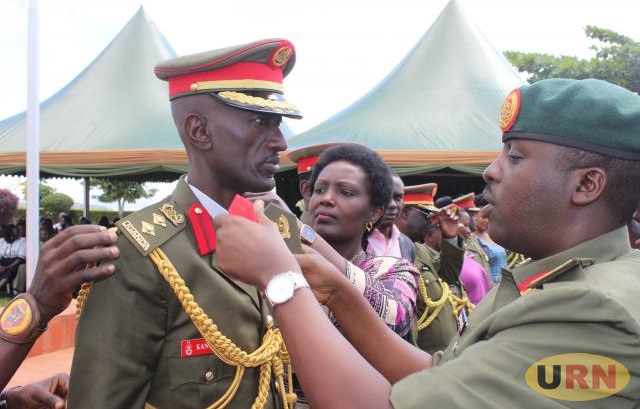
Kampala, Uganda | URN | Maj. Gen. Abel Kandiho, one of Uganda’s most visible and controversial intelligence chiefs of the last decade, formally retires from active military service on Thursday, 20 August 2026.
Kandiho is among 19 senior UPDF Generals due for retirement at a ceremony in State House, Entebbe, presided over by President and Commander-in-Chief Gen. Yoweri Kaguta Museveni; they form part of a wider August 2026 exit of 1,817 personnel.
Born in Gomba District, Kandiho rose through the ranks of the UPDF. In the early 2000s, he served at the Uganda High Commission in Kigali, Rwanda, but his posting ended amid reported disagreements with Rwandan security forces. These disagreements reportedly centered around accusations of interference and mistrust between the two countries’ intelligence services, with each side suspecting the other of covert activities and espionage. Kandiho was subsequently recalled to Uganda. Before May 2014, as a Lieutenant Colonel, he commanded Makindye Military Barracks. On 30 May 2014, he was replaced by Col. Emmanuel Kanyesigye, and he remained Deputy Commander.
His defining chapter began in January 2017 when he was appointed head of the Chieftaincy of Military Intelligence (CMI, currently Defence Intelligence and Security (DIS). Still a Colonel, he was promoted to Brigadier in November 2017 while serving in the same role, and later rose to Major General.
While serving as head of CMI, Kandiho became the public face of military intelligence during a turbulent period that included urban killings, opposition activity, and regional tensions. He was among the senior officers who interrogated former Inspector General of Police Gen. Kale Kayihura after his 2018 arrest.
Kandiho publicly linked a wave of urban killings between roughly 2015 and 2018 to networks he associated with Kayihura, accusing the former police chief of trying to make urban centres ungovernable. This was the same period that included the 2017 assassination of AIGP Andrew Felix Kaweesi and several others.
His tenure at CMI ended abruptly in January 2022 when Maj. Gen. James Birungi replaced him. His replacement came shortly after Lt. Gen. Muhoozi Kainerugaba met Rwandan President Paul Kagame amid efforts to ease bilateral tensions, as Rwanda had long accused CMI under Kandiho of arresting and mistreating its citizens.
Kandiho’s actions, particularly the detention of Rwandan nationals and the reported harassment of Rwandan interests in Uganda, were seen as a major source of mistrust and contributed to the temporary closure of the border between the two countries in 2019.
His removal was widely interpreted as a gesture aimed at restoring diplomatic relations, helping pave the way for renewed engagement and the subsequent reopening of the Gatuna border post.
Kandiho was briefly posted to South Sudan as a Special Envoy, but the assignment was reversed, and on 9 February 2022 he was appointed Chief of Joint Staff of the Uganda Police Force, replacing Maj. Gen. Jack Bakasumba.
In that role, he oversaw directors and brought an intelligence-led approach to police operations. On 17 May 2024, President Museveni recalled him from the police and named him Senior Presidential Advisor, a position he has held until retirement.
The Sanctions That Defined His Public Image
What many Ugandans remember most is the U.S. sanctions imposed on 7 December 2021, when the U.S. Department of the Treasury’s Office of Foreign Assets Control designated Kandiho under Executive Order 13818 for serious human rights abuse during his time as CMI commander.
The Treasury stated that under his leadership, CMI officers had arrested, detained, and physically abused suspects due to their nationality, political views, or critique of the Ugandan government.
The sanctions froze any U.S. assets he holds and barred him from entering the U.S. or any U.S persons from dealing with him, which Kandiho dismissed as politically motivated and inconsequential.
“I am not bothered by the so-called sanctions. I have no business with the US. My focus is on security threats in the region, not politics.” Kandiho said.
Upon leaving CMI in early 2022, he pushed back against speculations that his transfer was related to US sanctions, saying he had left without any bad record.
“I want to clear that this is a normal transfer, and I have left without any bad record. Thank you, President, for the new appointment, and I will perform to the best of my knowledge and ability.” Kandiho said.
Even in the recent weeks leading up to retirement, Kandiho has been in the public eye when his lawyers issued a notice of intention to sue The Independent magazine for defamation, seeking one billion shillings.
The suit relates to articles that allegedly linked him to a man named Stephen Nuwagaba, who was described as a serial fraudster who fabricated military and intelligence credentials.
Kandiho’s side contended that false reporting implied he had introduced and vouched for the individual to the President, damaging his reputation.
To some Ugandans, he represents an era of muscular intelligence operations that prioritised security amid threats including urban crime. To others, he embodies unresolved questions of accountability in security agencies.
Whether viewed as enforcer or scapegoat, his decade at the centre of Uganda’s intelligence architecture ensures he will remain one of the most discussed military figures of his generation even in retirement, with the U.S. sanctions still in force.