The Independent Uganda: You get the Truth we Pay the Price


If We Want Native Languages, Schools Should Stop Punishing Children for Speaking Them
COMMENT | NANTEZA SARAH KYOBE | President Yoweri Museveni raised an important issue about Ugandans learning and preserving their native languages during his address at the coronation of Tooro Kingdom’s new King Edward Rukidi Nyabongo. I agree with the president’s point about learning and preserving local languages.
But how can we do so when children are still discouraged or punished for speaking their native languages?
But before we talk about learning our local languages, let’s confront a contradiction that has existed in our schools for years: we have been taught to be ashamed of speaking our mother tongue.
I know this because I lived it.
During primary school, speaking my mother tongue was treated as a serious offence. The punishment included wearing a sack or a bone. Many years have passed since I left primary school, but I still remember wearing a sack simply because I spoke Luganda at Nalinya Lwantale Girls Primary School.
Secondary school was no different. I cannot remember how many times I was punished for speaking Luganda. My name appeared repeatedly on punishment cards for the dormitories, classrooms, and compound.
Friday was the punishment day — either beatings or digging. My OBs and OGs at St Joseph SSS Naggalama can testify to that experience.
One would think that, decades later, things would have changed. Sadly, not. I witnessed it again with my own child.
One day, the headmistress told me that my child was speaking Luganda. Apparently, some parents whose children spoke English were nervous that my child would teach their children Luganda.
I laughed and jokingly asked the headmistress which Luganda my child was speaking , considering that she had only just started talking.
She told me the words were Ndeeka, Nvaako and Ngenda. I was speechless. I asked her if I could take my child somewhere she would speak Luganda freely; after all, she needed to learn her mother tongue. The headmistress went quiet. That ended the conversation.
I keep referring to Luganda because it is the mother tongue I have noticed most schools prohibit in Central Uganda. But the issue is much bigger than Luganda.
It is about the value we place on our native languages — and the message we want to send to the next generation.
A mother tongue is the first language a child learns at home. It connects children to their families, communities, and culture. It carries stories, traditions, and history from one generation to another.
So, if a child grows up in a home where Luganda, Runyankore, Rutooro, Acholi, Lusoga, Lumasaba, or another Ugandan language is spoken, then why is the child made to feel that speaking it is wrong?
Part of the problem is the status we have given English.
In Uganda, speaking English is often associated with education, superiority, and social status, while speaking a native language is sometimes seen as a sign that someone is less educated. That attitude has consequences and needs to change.
When children are encouraged to speak English and discouraged from speaking their mother tongues, they naturally prioritise English. Eventually, some grow up barely able to speak the language their parents and grandparents speak.
Then we wonder why our languages are disappearing. We cannot have it both ways.
We cannot punish children for speaking their mother tongues today and complain tomorrow that young people no longer speak or value them.
The responsibility for preserving our languages does not belong to cultural institutions alone.
Yes, kingdoms and other cultural institutions can play a major role in promoting native languages, as the president suggested. But language preservation starts much closer to home.
It starts with parents and grandparents speaking these languages to children, telling traditional stories and passing on cultural knowledge. It continues in communities and should be reinforced in schools.
This does not mean abandoning English. English remains important, particularly for education, employment and communication beyond our communities. But learning English should not require a child to lose their mother tongue.
In fact, a strong foundation in a child’s first language can support communication, thinking and learning.
But the argument for native languages goes beyond academics. Language is identity. It is memory. It is culture.
Sometimes the things we feel most deeply are easiest to express in the language we first learned to speak, laugh, argue, comfort, and dream.
If we genuinely want Uganda’s native languages to survive, we must start where language itself starts: at home, in families, in communities, and in our schools.
We cannot punish children for speaking their mother tongue today and expect them to preserve those languages tomorrow.
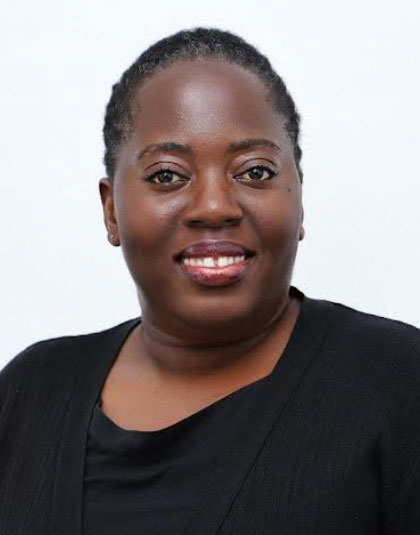 Nanteza Sarah Kyobe works with Uganda Media Centre