The Independent Uganda: You get the Truth we Pay the Price


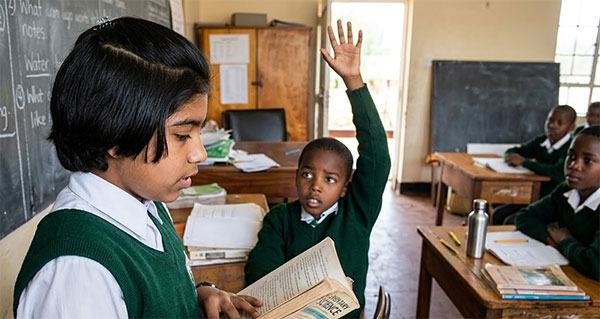
TRIBUTE | UGHISTORY256 | It was 1999. The boy in the green Aga Khan sweater sat at the front of the class, his hand up before his classmate even finished the question.
He knew the answer.
His name, according to the register, was George.
Outside the gate, royal guards waited.
But in here, he was just a boy who loved answering SST questions.
He was seven years old and the world’s youngest king, but right now, none of that mattered.
The teacher had asked a question about yesterday’s homework, and his hand was already in the air, fingers stretched toward the ceiling like he could grab the answer from the air itself.
His green sweater was slightly too big at the sleeves, the way school uniforms always are when you’re still growing into them.
He sat at the front, not because anyone had put him there but because that’s where you sit when you want to be seen, when you want to be called on, when you have something to say.
The other children knew him as George.
Some of them knew about the crown, of course; you can’t exactly hide being the Omukama of Tooro when your guards wait by the gate, but children are practical creatures.
A king who shares his lunch is just a friend.
A king who laughs too loud in the playground is just a boy.
And George laughed loudly.
He ran fast.
He argued about whose turn it was on the swings.
He was, in every way that mattered, exactly like the rest of them.
When the bell rang, he didn’t walk out like a monarch.
He spilled out with the others, bag hanging on one shoulder, green sweater untucked, already talking about what was for lunch.
The guards were there, as they always were, but they kept their distance, and he kept his joy.
At home, the real kingdom awaited: the balcony with the miniature pool table, where his sister Ruth was already waiting.
She was older, watchful in the way sisters are, the keeper of his small secrets and the only person who could beat him at pool without him minding.
Their laughter filled the house.
1999.
The boy in the green Aga Khan sweater sat at the front of the class, his hand up before his classmate even finished the question.
He knew the answer.
His name, according to the register, was George.
Outside the gate, royal guards waited.
But in here, he was just… pic.twitter.com/xu38WmtARK
— UgHistory (@UGHistory256) August 28, 2026
Ruth would straighten his collar or hand him the cue, and he would line up his shot with the concentration of a chess grandmaster, tongue poking out slightly.
The weight of Tooro, the councils, and the ceremonies – it all stayed outside.
In here, it was just the two of them, brother and sister, building their own small world on a balcony in Kampala.
Then the evening came, and with it the dogs.
Three German shepherds who knew nothing of thrones or titles, who only knew that the boy with the smole was their favourite human.
He ran into the garden, and they circled him, barking with delight, and he ran with them, arms wide, laughter spilling into the fading light.
He was not a king in that moment.
He was not the heir of centuries.
He was just George, seven years old, running with his dogs, alive and bright and burning with the simple joy of being alive.
That was 1999.
The boy in the photograph, the one raising his hand, the one in the green sweater, he grew up.
He became the man his people needed him to be.
He carried the weight, wore the crown, and answered the call.
For thirty-one years, he was their king.
But those who loved him best will always remember the other George, the one who sat at the front of the class, who played pool with his sister, who ran with his dogs at dusk.
The kingdom announces that Rukirabasaija is gone.
But George?
George is still there, in the green sweater, hand in the air, ready with the answer.
He always had the answer.
He always will.
The boy in the green sweater.
The hand in the air.
The dogs in the garden.
The sister on the balcony.
These are the things that crowns cannot contain and history books often forget.
But they are the truest things.
They are the things that made him loved.