The Independent Uganda: You get the Truth we Pay the Price


#

COMMENT | HUMPHREY NABIMANYA | It would be interesting if someone conducted research to establish what makes young people respond so strongly to popular youth figures. Is it their age, their personality, their status?
There are several examples that justify this case. The current example is the late King Oyo, who was young and a public figure and presented this kind of influence to young people in almost all styles.
His youthfulness was manifested both in his official capacity as king and in more informal settings, and both styles often drew the attention and excitement of many young people.
He was spontaneous and, conversely, appeared formal when it was required and still wowed the youth, which explains the big turnout of young people to many events where he was present.
He belonged to a generation growing up with social media, music, fashion, and a rapidly changing youth culture. Yet he represented an institution rooted in tradition and history. Somehow, he brought these two worlds together.
Perhaps that is why some of his interactions with young people were so memorable. I remember when he pulled off the crank dance moves to Soulja Boy’s “Crank That”, and the audience went ecstatic. The video trended on social media for a while.
It was not necessarily the kind of royal appearance one would ordinarily associate with a king. But perhaps that was precisely why it resonated. He was not standing apart from young people and speaking to them. He was joining them.
That spontaneity matters because influence is not always created on a stage or through a carefully developed communication strategy. Sometimes it happens in an unexpected moment that makes people stop, watch, share, and talk about it. King Oyo seemed to have a way of creating some of those moments. His willingness to participate, rather than simply preside, made him approachable.
But his influence was not limited to spontaneous moments.
He was also part of organised initiatives that deliberately sought to engage and develop young people. His participation in activities, particularly the Tooro Kingdom Youth Conference, an initiative I have been part of under Reach A Hand Africa, placed him in spaces where young people were brought together around issues affecting their lives, opportunities, and future.
These were structured engagements, yet his presence appeared to add another layer to them. Young people were not simply encountering an institution; they were encountering a young person at the centre of that institution who was willing to interact with them.
While his involvement may have taken different forms, one thing I know for sure is that he was delivering a particular message to young people.
This type of approach is effective. As we wait for research to tell us more, what I know from experience is that this approach to addressing young people’s needs works. I have seen and observed it over the years I have worked with young people.
Young people are often more receptive when they see someone who understands their world, speaks their language, and is willing to engage with them on their own terms.
They may listen differently when the person delivering the message is not simply an authority figure but someone they can identify with. This does not mean popularity automatically translates into influence, but it can create a powerful entry point for conversations, opportunities and programmes intended to reach them.
Therefore, there are many lessons to learn from King Oyo’s approach toward the youth.
For those of us working in youth development, the lesson is: young people do not only need programmes designed for them; they also need people they can identify with, people who can make institutions and opportunities feel accessible. A credible figure can help create the bridge between an initiative and the young people it seeks to serve.
For leaders, the lesson is even broader: if we want young people to become a force for development, we must learn not only how to speak to them but also how to listen to them, involve them and give them room to participate. Young people are more likely to respond when they feel they are part of the process rather than simply being recipients of programmes designed by others.
This is perhaps where the significance of King Oyo’s passing extends beyond the loss of a young king. Uganda has lost a figure who appeared able to mobilise young people while moving comfortably between traditional authority and youth culture. His presence could make youth-focused spaces feel less distant, while his participation demonstrated that leadership and approachability do not have to exist at opposite ends of the spectrum.
King Oyo showed that sometimes the most powerful way to reach young people is not to stand above them, but to stand among them.
Therefore, among other factors, this is one of the reasons why young people will miss you.
Rest in Peace, His Highness Omusinga (King) Oyo Nyimba Kabamba Iguru Rukidi IV. You were, in many ways, a remarkable influencer of young people, a young King for young people.
******
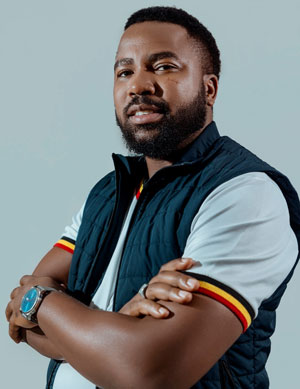 Humphrey Nabimanya, CEO, Reach A Hand, Africa.