The Independent Uganda: You get the Truth we Pay the Price


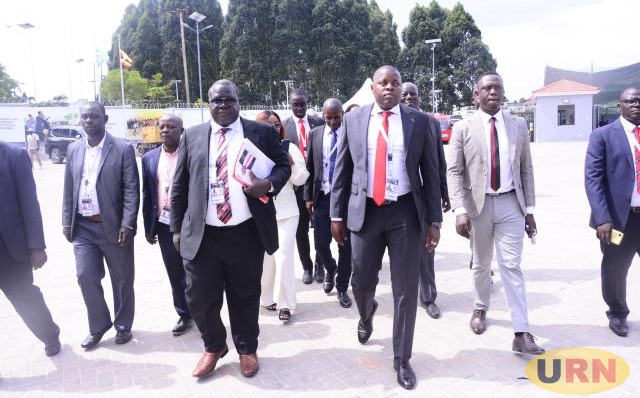
Kampala, Uganda | THE INDEPENDENT | Presidential election petitioner Robert Kasibante has filed an application in the Supreme Court seeking orders compelling the Electoral Commission (EC) and President Yoweri Kaguta Museveni to disclose key electoral documents and grant him access to the electronic voting, transmission, and tallying systems used in the January 15, 2026, presidential elections.
The application arises from Kasibante’s pending presidential election petition challenging the declaration of President Museveni as the winner of the January 15, 2026, polls. It is brought under Article 104(1) of the Constitution, the Presidential Elections Act, the Judicature Act, the Civil Procedure Act, and the Presidential Elections (Election Petitions) Rules.
Through the application, Kasibante is asking the court to order the first respondent, President Museveni, to disclose all documents in his possession relating to the election. These include a complete list of all polling stations where voting took place and certified copies of Declaration of Results (DR) forms from every polling station used in the presidential election.
Kasibante is also seeking access to the backend infrastructure of the Biometric Voter Verification System (BVVS), the Electronic Results Transmission and Dissemination System (ERTDS), and the tallying system used by the Electoral Commission at the National Tally Centre in Lubowa. He is asking the court to allow inspection of these systems and to permit an independent forensic analysis of the electronic transmission and tallying software.
According to Kasibante, access to these documents and systems is essential for the fair determination of his presidential election petition. In an affidavit in support of the application, Kasibante states that the materials sought will enable verification of voter identification, the conduct of polling, vote counting at polling stations, tallying at district and national levels, and the overall integrity of the transmission and declaration of results.
A key issue raised concerns the alleged failure by the Electoral Commission to properly gazette all polling stations used in the elections. Kasibante notes that in December 2025, his party, the National Peasants’ Party, wrote to the Electoral Commission requesting a list of all gazetted polling stations ahead of the presidential nominations. The party also sought access to consultation documents relating to the deployment of the Biometric Voter Verification System, including reports, statutory instruments, legal opinions, and minutes of meetings.
According to the affidavit, the Electoral Commission, headed by Justice Simon Byabakama Mugenyi, did not provide the requested information. Kasibante claims that on polling day, approximately 15,000 additional polling stations were operational without being gazetted in accordance with the law. He argues that voting at these stations was unlawful and that the votes cast there were included in the national tally without adequate monitoring by candidates’ agents.
Kasibante is therefore asking the court to order the Electoral Commission to produce certified copies of records relating to the alleged ungazetted polling stations, including their Declaration of Results forms. He maintains that disclosure is necessary to ensure transparency, accountability, and a fair determination of the petition. The petitioner further seeks permission to conduct a forensic audit of the ERTDS and tallying systems, arguing that without such access, it is impossible to independently verify the accuracy and integrity of the declared results.
In his affidavit, Kasibante notes that the Electoral Commission declared President Museveni the winner on January 17, 2026, with 7,946,772 votes. Opposition leader Robert Kyagulanyi Ssentamu was declared runner-up with 2,741,238 votes. Nathan Nandala Mafabi obtained 209,039 votes, Gen. Gregory Mugisha Muntu garnered 59,276 votes, Frank Buura received 45,959 votes, Mubarak Munyagwa polled 31,666 votes, while Kasibante himself obtained 33,440 votes.
Dissatisfied with the results, Kasibante filed his petition in the Supreme Court on January 19, 2026, challenging both the conduct and outcome of the election. He contends that the electoral process was marred by widespread illegalities, electoral offences, and non-compliance with the law that substantially affected the outcome. Central to the petition is the claim that the Electoral Commission failed to conduct free, fair, and transparent elections, alleging that it acted under undue influence from the incumbent and ruling party, thereby breaching its constitutional obligation of independence.
Kasibante further alleges that the campaign and election period were characterised by violence, intimidation, and harassment of opposition candidates and their supporters. He claims that several candidates, including Robert Kyagulanyi Ssentamu, Nathan Nandala Mafabi, and Mubarak Munyagwa, were subjected to teargas, attacks, and disruption of campaign activities. He also alleges that some opposition supporters lost their lives during the election period.
The petition also raises concerns over the alleged use of state resources to support the incumbent’s campaign, including government vehicles, public institutions, and security personnel. Kasibante further alleges biased media coverage, citing state-owned outlets such as New Vision, and accuses the incumbent of using abusive and inflammatory language during campaigns, which he claims created an uneven political playing field.
Another major ground relates to the alleged establishment and use of approximately 15,000 ungazetted polling stations, which Kasibante argues denied candidates effective oversight. He contends that votes cast at these stations should be excluded from the national tally. He also questions the credibility of the voters’ register and the deployment of biometric systems, alleging they lacked an adequate legal framework and were not subjected to independent scrutiny.
Kasibante is asking the court to nullify President Museveni’s victory, set aside results from ungazetted polling stations, order a comprehensive audit of election returns and electronic systems, and direct the holding of fresh elections conducted in strict compliance with the law. The application names President Museveni as the first respondent, the Electoral Commission as the second respondent, and the Attorney General as the third respondent. Kasibante is also seeking an order that the costs of the application be borne by the respondents.
The Supreme Court has scheduled January 28, 2026, for the hearing of the miscellaneous application. Kasibante is represented by lawyers from Strand Advocates (formerly Galisonga Advocates), Isabirye & Company Advocates, and Nabakiibi, Kanyago & Co. Advocates. Meanwhile, President Museveni has reportedly been served through his lawyers of K&K Advocates. Sources indicate that the National Resistance Movement, through its Director of Legal Services, Enoch Barata, has assembled a legal team of more than 45 lawyers to prepare the President’s response to the petition.
****
URN