The Independent Uganda: You get the Truth we Pay the Price


COMMENT | WALTER AKENA | While growing up in the village, our grandmother always warned us never to sit at the doorway whenever it rained. According to her, sitting at the doorway while it rained was known to bring misfortune, including developing painful boils on the buttocks, commonly known as “odeke” in Acholi.
As children, we could not understand the connection between rain and boils. Anyway, since we feared and writhed the pain and inconvenience that came along with such boils, we expressly obeyed her warning. Whenever it rained, we quickly moved away from the doorway and safely sat in the corners of the house.
What we did not understand at the time was that our grandmother was actually teaching us about a climate risk mitigation and adaptation strategy.
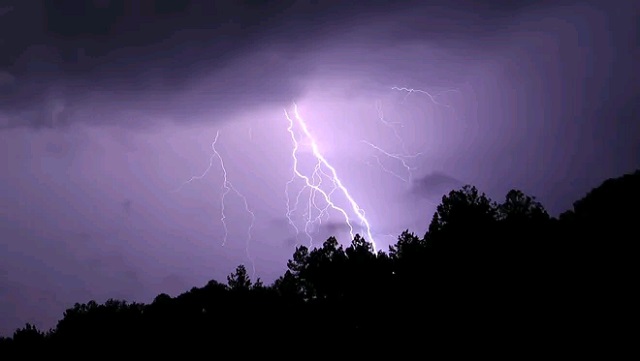
In her wisdom, sitting at the doorway during rain exposed us to several dangers. We could block people seeking shelter from entering the house. We could also get soaked by rainwater blown in-side the house by wind, thereby exposing ourselves to cold-related illnesses. Worse still, we could be vulnerable to lightning strikes/attacks. With the hindsight of old age now, we now know that her warning was not merely superstition, but it was an epitome of practical indigenous knowledge developed through years of observing the environment and understanding risks associated with different weather patterns.
Interestingly, that lesson shaped our belief systems and continues to influence our behavior to this day. Whenever it rains in contemporary times these days; many of us from that generation instinctively avoid sitting at the doorway.
This simple childhood experience demonstrates an important reality that policymakers and local governments should advisedly not ignore. Indigenous knowledge systems have for generations helped communities understand weather patterns, reduce volatile weather-related risks, and adapt to environmental changes. As climate change continues to threaten livelihoods, agriculture, water resources, and human settlements; local governments must intentionally integrate indigenous knowledge into District Climate Change Action Plans.
Under Section 8(1) of the National Climate Change Act, local governments are required to develop district climate change action plans. These plans are expected to provide strategies, policies, and actions for adapting to and mitigating the adverse impacts of climate change. Before developing these plans, districts are also required to conduct climate risk and vulnerability assessments to identify the major climate threats affecting communities.
On May 26th, the Advocates Coalition for Development and Environment (ACODE) participated in the validation meeting of Koboko District Climate Risk and Vulnerability Assessment Report. During the meeting, the day’s consultant acknowledged a challenge of accessing district-specific climate data for Koboko.
However, the report made this vital observation: “communities in Koboko actively rely on indigenous and traditional knowledge systems for climate prediction, both alongside and in the absence of formal meteorological information”.
This instructive observation carries an important lesson. Climate action plans cannot succeed if they ignore the indigenous knowledge and lived experiences of communities; whose protection is the main goal. Recognizing and integrating this knowledge into district climate action plans is, therefore, not only important for adaptation and risk mitigation; it also strengthens climate justice.
Across many rural communities in Uganda, local people still predict weather patterns by observing wind direction, cloud movement, flowering of certain trees, behavior of birds and insects, scents from different vegetation and changes in water levels. These practices may not be written in scientific journals and other document repositories, but they have guided communities for generations.
Yet, many contemporary climate policies continue to lean heavily on scientific and technical approaches, often giving insufficient recognition to indigenous and local knowledge systems. From a climate justice perspective, this creates an imbalance in whose knowledge counts, reinforcing inequalities in how climate information is produced, shared, and acted upon. When local knowledge is sidelined, climate interventions risk becoming abstract and disconnected from the lived realities of the communities they are meant to serve.
In West Nile, for instance, where the illiteracy rate is estimated at 40.9 percent, a large segment of the population may find it difficult to interpret scientific weather forecasts, climate models, and technical environmental reports. This creates an information gap that disproportionately affects those already most vulnerable to climate shocks such as droughts, floods, crop failure, and environmental degradation. In effect, those least responsible for the climate crisis are often the least equipped to access and act on formal climate information.
Indigenous knowledge systems therefore become not just relevant but essential to climate justice. They are rooted in everyday experience, culturally embedded, and widely trusted within local communities. Because they draw on observable environmental indicators, they offer practical, accessible guidance for decision-making. Recognizing and integrating this knowledge helps bridge the climate information gap and ensures that adaptation strategies are both inclusive and responsive to the realities of vulnerable populations.
By no means does this imply that indigenous knowledge should replace scientific knowledge. Rather, it means that the two ‘worlds’ and “systems” should complement each other. Scientific data provides broader climate trends and technical analysis, while indigenous knowledge provides local context, hitherto kept community indigenous knowledge, and practical adaptation strategies grounded in lived experiences.
For District Climate Change Action Plans to be effective, local governments must therefore go beyond conducting community consultations merely as a procedural requirement. Rather, it is important to intentionally observe, document, preserve, and integrate indigenous knowledge into climate adaptation and mitigation strategies.
There is a need to involve the community; elders, cultural leaders, women, and local farmers in climate planning processes because they remain custodians of valuable community knowledge and artefacts. Ignoring the peoples’ lived experiences weakens local climate interventions and disconnects policies from the realities faced by ordinary citizens.
Sometimes, the most effective climate solutions begin with listening to the wisdom of a grandmother sitting quietly in a village hut during a rainy evening.
****
 The Writer is a Research Officer at the Advocates Coalition for Development and Environment (ACODE)