The Independent Uganda: You get the Truth we Pay the Price


COMMENT | OBED K KATUREEBE | When President Yoweri Museveni appointed Justice Naluzze Aisha Batala as Inspector General of Government (IGG) in October 2025, most Ugandans asked, ‘Who is Justice Aisha Naluzze Bataala?’ This was not because she was less qualified, but little was known of her because she was doing her judicial roles without attracting cameras around her work. That is no more. Her new job requires her to come out and boldly face the dangerous thieves and the lazy saboteurs of Ugandan development by not only arresting and prosecuting them but also exposing their sins to the rest of the world to see.
Her philosophy is clearly to ignore the barking of stray dogs and move forward quietly, like an elephant, with grace, dignity, and pride. She chooses that her success speaks louder than empty threats.
As a result, seven months down the road, Justice Naluzze is shaking the tables really hard, especially for those that had made it a habit to steal government monies and deny Ugandans the required services. For some time, the office of IGG lost its pole position and clout as the number one agency of government charged with curtailing all forms of corruption.
The office of the IGG has been continually facing systemic significant budget shortfalls. This made them lose very senior and resourceful staff who were taken by the other institutions that could remunerate them better. High staff turnover—driven by low remuneration—and a severe shortage of personnel at regional offices undermined their capacities to effectively handle the corrupt. At the institutional level, they faced limited staffing and gaps in the specialized skills required to handle complex corruption and maladministration cases.
However, all these seem to be ending with the coming into office of Justice Naluzze. The funding gaps are being sorted, and there is goodwill from government and other development partners to fund this critical agency of government to play its critical roles. For example government of Uganda has given her office an additional Shs 8 billion to support her operations, especially buying vehicles for regional offices and also procuring specialised equipment to aid in forensic investigation. She is currently championing digital transformation to modernize the IG processes. A fly on the wall at the IGG offics says that she is seriously building strong systems and deploying the right persons to work independently. She has equally convinced the government to increase IG funding, and government has agreed with her.
This is a demonstration of the Inspectorate’s commitment to ensuring that oversight leads to tangible corrective action. The IGG has trained more investigators and prosecutors to strengthen their capacity in the investigation and prosecution of financial crimes. There is increased collaboration with the Criminal Investigations Directorate (CID). Despite the achievements noted earlier, the Inspectorate continues to face critical challenges that are affecting the full realization of the priorities set out to achieve.
Corruption in Uganda is evolving into sophisticated, syndicated, and technologically driven forms, with public officials increasingly using digital systems for embezzlement, cybercrime, and impersonation to defraud the state. The country dropped to a 25/100 score in the 2025 Corruption Perception Index, highlighting widespread bribery in health and security services, as well as high-level influence peddling.
To address these challenges, the IGG is making targeted interventions aimed at changing public attitudes and behaviour toward corruption while engaging the Government of Uganda and our development partners.
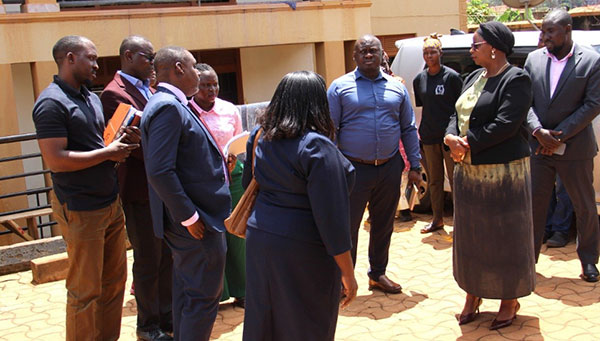
The most impressive thing that has endeared her to Ugandans is her impromptu field visits to government institutions that serve Ugandans and demanding accountability there and then. Field impromptu engagements are truly a game changer because you get real feelings of the communities that suffer the pangs of corruption. Equally, as the ombudsman, you get first-hand feedback from the population. This is because quite often you send some people to investigate some reported mischiefs, only for them to get compromised by the corrupt beneficiaries. This, in equal measures, gives the IGG the real magnitude of the challenge she has to overcome.
Public exposure, or “naming and shaming”, is a highly effective, citizen-driven anti-corruption strategy that increases the risks for corrupt actors and creates public demand for accountability. Through media, whistleblowing, and social campaigns, exposing corruption shines a light on hidden illicit activities and helps shift social norms.
She has made surprise visits to Mbale, Tororo, Masaka and Mbarara referral hospitals and caused the arrest of top administrators whom she found to be the cause of the mess in those referral hospitals.
Seeing her grilling the thieves in the several hospitals that are being rundown gives Ugandans satisfaction that the lady who means business is finally here.
Armchair management without direct, on-the-ground engagement creates significant challenges, including adetachment from operational realities, leading to ineffective, top-down policies and poor decision-making. This approach causes misalignment between leadership goals and stakeholder needs, resulting in low morale, slow crisis response, and missed opportunities for innovation.
****

The writer works with Uganda Media Centre