The Independent Uganda: You get the Truth we Pay the Price


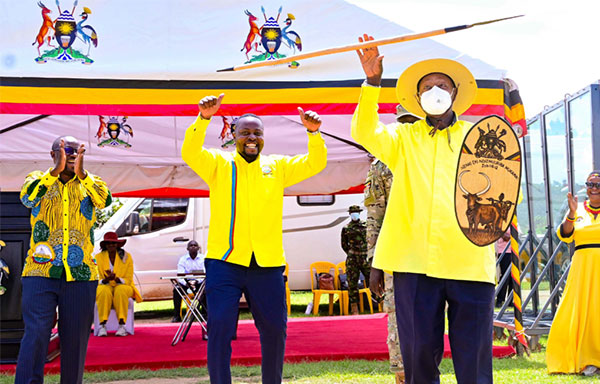
When Loyalty Becomes a Lie: The Hidden Machinery of Political Manipulation Around President Yoweri Kaguta Museveni!
COMMENT | ALEX ATWEMEREIREHO | There is a grave and unsettling tragedy quietly metastasizing within the bloodstream of Ugandan politics, one that threatens not only the legacy of President Yoweri Kaguta Museveni but also the moral and institutional integrity of the Republic he has steered for nearly four decades. It is the tragedy of false affection: a calculated ecosystem of individuals who loudly profess love for the President, yet harbour no genuine loyalty to Uganda or its future. Their devotion is not ideological; it is transactional. Their allegiance is not patriotic; it is parasitic. They thrive on proximity to power while starving the nation of truth, integrity, and principled leadership. They kneel before the man but boldly betray the country.
This is not an indictment of the President himself. It is a sober and necessary critique of the political culture that has grown around him, one that rewards sycophancy over honesty, theatrical praise over rigorous counsel, and personal loyalty over national duty. The individuals who populate this culture have mastered the art of strategic dishonesty. They chant “We love you, Mzee” in daylight but sharpen political knives in the shadows. Their love is merely a convenient mask for self-enrichment, self-preservation, and quiet subversion of the national interest.
True loyalty to a leader is demonstrated through truth-telling, intellectual courage, and the steadfast protection of the leader from political blindness. Yet a large segment of the president’s entourage has instead perfected the craft of manipulative flattery. They curate illusions rather than realities, crafting a sanitized Uganda for the President, one that hides citizen frustration, shields institutional decay, and disguises corruption under the veil of manufactured success. They present rehearsed reports, false intelligence, choreographed crowds, and polished narratives, not because they believe in the revolution, but because they believe in the benefits it provides.
President Museveni’s long tenure has paradoxically produced fewer truth-tellers and more comfort-givers. Many around him fear the consequences of honesty. They drown him in exaggerated progress, declare triumph where failure looms, and blame invisible saboteurs whenever accountability is demanded. Those who attempt to speak candidly are branded disloyal, sidelined, or politically suffocated. Consequently, the President is in my view increasingly surrounded not by patriots but by performers, individuals who supply applause instead of insight, cosmetics instead of candour.
A leader deprived of truth becomes vulnerable not because he is incapable, but because he is insulated. A nation deprived of honest leadership becomes endangered because decisions are made on illusions rather than realities. Uganda today is bearing the consequences of this carefully constructed deception.
Political manipulation around the President manifests in several dangerous forms. One is the emergence of a “praise-industrial complex’’, a network of opportunists who have commercialized allegiance. Their loyalty is not to the NRM, not to any revolutionary ethos, not even to the President as a person, but to the material advantages that come from appearing indispensable. Praise becomes their currency, their survival tool, and their weapon of influence. When elections approach, they fabricate support. When the economy falters, they declare victory. When corruption is exposed, they shield the culprits behind the language of “protecting the system.” These are not patriots; they are political merchants trading in deception.
Equally toxic is the manipulation of access. Those who position themselves as custodians of the President’s trust treat State House as personal property. They determine whose voice reaches the President, which grievances are suppressed, whose innovation is blocked, whose truth is buried, and whose incompetence is protected. By controlling access, they quietly capture the national agenda, redirect public resources, and suffocate reforms that threaten their personal comfort. A nation captured from within does not fall dramatically; it decays quietly.
The most treacherous form of deception, however, is the monetization of the President’s goodwill. Many within the political class shield themselves behind the President’s name to evade accountability, intimidate institutions, mismanage public funds, or justify mediocrity. They present themselves as protectors of his legacy while actively undermining everything he professes. Corruption survives because its architects pose as “the President’s people.” Impunity thrives because it is packaged as loyalty. Mediocrity spreads because it masquerades as obedience. This is not loyalty; it is political cannibalism.
The infantilization of the President is perhaps the most damaging manifestation of false affection. Certain actors deliberately cultivate an environment in which contradicting him is framed as betrayal. They weaponize fear to keep him in a cocoon of curated information, edited, filtered, and strategically arranged to suit their objectives. A statesman deserves fearless minds around him, not trembling messengers. A revolutionary deserves the raw truth, not political cosmetics.
Uganda’s greatest crisis today is not ideological stagnation, economic strain, or generational tension. Its greatest crisis is informational integrity, the quality of truth that reaches the President. If President Museveni consistently heard the country as it truly is, not as it is packaged, his decisions would be sharper, more grounded in reality, and more responsive to citizens’ lived experiences.
Ironically, the President himself has for decades denounced corruption, parasitism, decadence, and indiscipline. Yet some of the most enthusiastic clappers at his speeches are the most committed offenders of the values he upholds. They clap loudly because clapping is cheaper than reform; they applaud because applause costs less than accountability.
Uganda has witnessed countless examples of this treachery: inflated budgets for presidential mobilization; officials pocketing funds meant for service delivery; ministers sanitizing reports; cadres labelling constructive critics as enemies; advisers draining public resources without meaningful contribution; and handlers sidelining genuine patriots while amplifying mediocrity. This ecosystem of deception has slowly suffocated national consciousness and undermined the revolutionary ideals that once defined the Museveni era.
The paradox remains: the man at the centre of this Revolution continues to preach discipline, ideology, and national transformation, while many who profess to love him deploy his name as a shield for self-aggrandisement. They weaponize his legacy while betraying the values on which it stands. Their betrayal is not loud; it is calculated. Their treason is not dramatic; it is subtle. Their devotion is not patriotic; it is opportunistic.
Uganda is bigger than individuals, networks, or political cliques. It deserves leaders loyal to the Republic, not to private interests; advisers loyal to truth, not to performance; cadres loyal to institutions, not individuals; and patriots loyal first and foremost to Uganda.
The President deserves candid counsel, not choreographed praise. Uganda deserves principled leadership, not manufactured devotion. History deserves accuracy, not sanitized narratives. The future will not judge Uganda by how loudly crowds shouted “Museveni oyee!” but by how faithfully leaders served the country he fought to build. Those who truly love the President must love Uganda first. Those who defend him must defend the truth first. Those who praise him must do so with clean hands.
Real love is principled. Real loyalty is corrective. Real patriotism is courageous. Uganda stands at a critical crossroads. The choice is stark and urgent: will this nation be guided by truth, or will it succumb to the sweet poison of deception? Leaders may be misled, but nations must not.
****
 The writer is a lawyer, researcher, and governance analyst.
alexatweme@gmail.com