The Independent Uganda: You get the Truth we Pay the Price


The push for a regional refinery comes at a time when East Africa remains almost entirely dependent on imported refined petroleum products, largely sourced from the Middle East
Nairobi, Kenya | THE INDEPENDENT | East African countries are in discussions to build a joint oil refinery at Tanzania’s port city of Tanga, in a move that leaders say could reduce the region’s heavy reliance on imported fuel and shield economies from global price shocks.
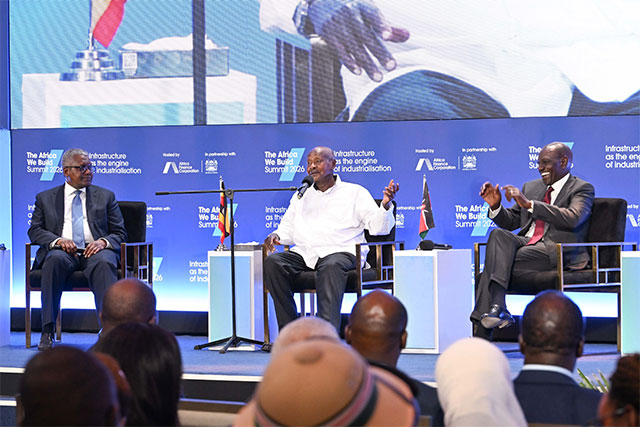
The proposal, which would be modelled in part on Nigeria’s massive Dangote refinery, was outlined during an infrastructure financing conference in Nairobi on April 23, where leaders and investors gathered to explore ways of closing Africa’s infrastructure gap.
Kenya’s President, Dr William Ruto, said the planned facility would be a shared regional investment, designed to process crude oil from multiple countries, including Uganda, South Sudan, and the Democratic Republic of Congo.
“We are going to have a joint refinery in Tanga to benefit all of us,” Dr. Ruto said. “That refinery is going to take on board the oil from DRC, the oil from Kenya, the oil from South Sudan, and the oil from Uganda.”
He added that the project would include a pipeline linking Kenya’s coastal city of Mombasa to Tanga in Tanzania, where the refinery is expected to be located.
The push for a regional refinery comes at a time when East Africa remains almost entirely dependent on imported refined petroleum products, largely sourced from the Middle East. That dependence has left countries exposed to supply disruptions and price volatility, particularly during periods of geopolitical tension.
The recent conflict involving the US and Israel against Iran has heightened those concerns, with global energy markets experiencing sharp fluctuations in fuel supply routes and pricing.
Africa’s richest man, Aliko Dangote, who also attended the Nairobi conference, said he was prepared to replicate the scale of his 650,000-barrel-per-day refinery in Lagos, Nigeria, if regional governments backed the initiative.
“My commitment today is that if we agree with the three or four governments here about the refinery, we will lead,” Dangote said. “We’ll make sure that refinery is built within the next four or five years.”
Dangote’s refinery in Nigeria, which is the largest single-train refinery in the world, has been seen as a potential model for African countries seeking to reduce imports and retain more value from their natural resources.
He said the East African project would only succeed if governments committed to long-term cooperation, investment, and policy stability.
President Ruto echoed that sentiment, urging regional leaders to focus on long-term industrial capacity rather than short-term fuel imports.
“The same way Kenya invested in the Kenya Pipeline Company, Kenya is going to invest in your refinery,” he said. “And hopefully we can bring all the other countries in our region to see the value — not in the short-term benefit you get from something cheap from somewhere else, but in building something for the future.”
60,000-barrel-per-day facility
Uganda, which is preparing to begin commercial oil production, has separately announced plans to construct its own refinery. In 2024, it signed an agreement with UAE-based Alpha MBM Investments to develop a 60,000-barrel-per-day facility.
President Yoweri Museveni has previously said Uganda could supply crude oil to the proposed Tanga refinery as part of a wider regional energy network.
If realised, the Tanga project would sit alongside other major infrastructure efforts in East Africa, including the East African Crude Oil Pipeline (EACOP), which is expected to transport Ugandan crude to international markets via Tanzania’s coast.
Across the continent, governments are increasingly seeking to build domestic refining capacity after decades of decline in the sector. Africa produces about 7% of global crude oil, yet much of it is exported unprocessed, with refined products then imported at higher cost.
Industry data shows that Africa’s refining capacity has fallen significantly over the past two decades due to ageing infrastructure, underinvestment, and the closure of several state-owned refineries.
Countries such as Kenya, South Africa, and Zambia have all seen refinery shutdowns, forcing greater reliance on imported fuel.
In response, other African nations are also pursuing new projects. Mozambique is exploring plans for a 200,000-barrel-per-day refinery backed by private investors, while Nigeria continues to expand its downstream oil sector following the commissioning of the Dangote facility.
The proposed Tanga refinery is expected to be part of a wider strategy to integrate East Africa’s energy infrastructure, reduce import bills, and create regional industrial hubs.
However, significant questions remain over financing, governance, and coordination between participating states — challenges that have slowed similar cross-border infrastructure projects in the past.
Still, with rising fuel demand and continued global uncertainty in energy markets, regional leaders say the case for cooperation is stronger than ever