The Independent Uganda: You get the Truth we Pay the Price


Kampala, Uganda | NEWS ANALYSIS | Every year on May 22, the international community marks the United Nations International Day for Biological Diversity to raise global awareness about the accelerating loss of our planet’s species and ecosystems.
This day unites people worldwide to protect nature. It serves as a reminder that conserving habitats is crucial for our own food security, clean water, and climate stability.
This year, the global celebration centers on the official theme, “Acting locally for global impact,” which highlights the profound truth that global plans to protect life on earth, such as the Kunming-Montreal Global Biodiversity Framework, live or die based on small-scale execution.
Real, lasting change does not happen in isolated conference rooms, it happens on the frontlines where local groups actively restore their natural surroundings.
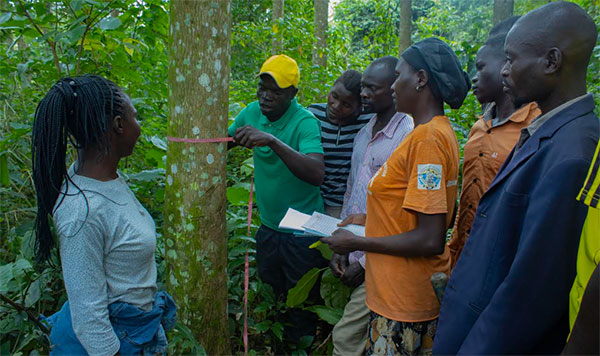
Embodying this spirit for 27 years, the Environmental Conservation Trust of Uganda (ECOTRUST) has proven that the most effective way to protect regional biodiversity is to empower the people who live alongside it.
Operating as a trusted intermediary that funnels international climate finance and capital directly into the hands of Ugandan smallholder farmers, the organization stands as a living example of this year’s theme, proving that localized grassroots efforts can successfully scale to meet global ecological targets.
ECOTRUST’s Trees for Global Benefits (TGB) program directly operationalizes the core message of the International Day for Biological Diversity by proving that global targets are met through local ownership.
By aggregating the small-scale restoration efforts of individual families, the program translates localized actions into massive, landscape-level impacts. This performance-based payment model has successfully decentralized conservation efforts, distributing funds directly to rural households and improving their livelihoods.
Today, over 51,000 households across 26 districts in Uganda have been positively impacted. By integrating native trees into family farming plots, these smallholders have placed over 34,000 hectares under active restoration, creating a woodland network projected to sequester 7.518 million tonnes of atmospheric carbon dioxide.
On the other hand, true biodiversity protection cannot exist without socioeconomic resilience. If a family is struggling to put food on the table or access clean water, asking them to prioritize forest preservation seems impossible.
Supported by ECOTRUST, these smallholder farmers are empowered to launch and manage sustainable businesses like beekeeping and shea nut production, generating a reliable income while actively conserving the environment.
These regional interventions offer concrete evidence of how local actions fulfill the mandate of the International Day for Biological Diversity on the ground.
In the Murchison-Semliki landscape, for instance, ECOTRUST incentivizes private landholders to map and restore fragmented forest corridors. This targeted intervention reconnects isolated habitats and secures safe migratory paths for endangered wild chimpanzees, directly mitigating human-wildlife conflict along agricultural borders.
Moving northward, the organization’s newly launched Transformative Approach to Sustainable Landscapes and Livelihoods (TASLL) project further mirrors this year’s global theme in the climate-stressed Agoro-Agu region.
Backed by the UK’s Foreign, Commonwealth and Development Office, this ambitious initiative aims to conserve 65,000 hectares of natural forest by planting six million mixed native trees, intentionally integrating marginalized groups within the Palobek Refugee Settlement to ensure that biodiversity protection actively advances social inclusion.
To sustain this widespread network of local actions, ECOTRUST continues to redefine environmental market structures by steering the conservation industry beyond carbon metrics alone.
During this year’s Uganda Water and Environment Week, the organization introduced its pioneering Nature Credit Solutions, a framework designed to incentivize holistic ecosystem health by rewarding local communities for safeguarding critical watersheds and establishing nature-positive green enterprises like sustainable wild beekeeping.
ECOTRUST’s 27-year legacy provides a powerful blueprint for the financial, environmental, and conservation sector, proving that when local communities are trusted to protect their own environments, the ecological benefits ripple outward to create global impact.