The Independent Uganda: You get the Truth we Pay the Price


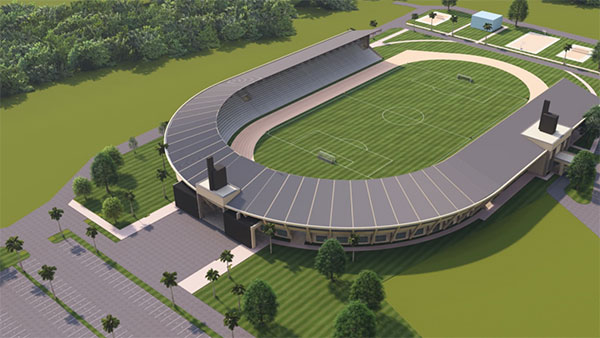
COMMENT | ALI SSEKATAWA | The year is 2029. Location: Masaka City. Venue: Ssekabaka Daudi Chwa II EACOP Stadium. On a wet November afternoon as the rain beats a gentle rhythm, the Kabaka of Buganda, Ronald Muwenda Mutebi, makes a grand entrance for the finale of the Masaza Cup, the annual Buganda Kingdom football tournament featuring teams from the 18 counties, as the packed stadium thunders with loud cheers. Picture the scene!
As the Kabaka of Buganda from 1897 to 1939, Kabaka Chwa II contributed immensely to the development and promotion of the football sport in what is known today as Uganda. From 1924 he captained the Kabaka’s XI, one of the earliest football teams; co-founded Kampala Football Association, the precursor to the Federation of Uganda Football Associations (FUFA), and donated the land on which Nakivubo Stadium, later renamed Nakivubo War Memorial Grounds, was built.
More than 100 years later, on July 23, the Buganda Kingdom, in partnership with the East African Crude Oil Pipeline (EACOP) Ltd, broke ground for the construction of the Kabaka Daudi Chwa II EACOP Stadium in Masaka City, the heartland of Buddu, one of the historic counties [Ssazas] of Buganda. The 10,000-seater arena will also be called Buddu Ssaza Stadium.
EACOP Ltd is the holding company of the 1,445km oil pipeline that will transport Uganda’s crude oil from the pumping station in Hoima to the Indian Ocean Port of Tanga. The pipeline does not necessarily cut from Masaka but rather in the backyard districts of Lwengo, Kyotera and Rakai. However, that is in itself immaterial.
The anecdote here is the answer to what industry experts call a “social licence to operate”—the frequently asked question: what will remain post the transition from construction of the oil and gas installations to commercial oil production and the subsequent operation and maintenance phase? Never mind that a lot of infrastructure, from roads to an airport and a mega industrial park, is in place.
The trust and acceptance communities grant to major development projects. Unlike licences issued by the government, a social licence is earned through actions that create lasting value for the people most directly affected by development. As Uganda moves closer to First Oil, we look at some of these social licences.
Agriculture and Livelihoods
One area where this is most visible is agriculture. Recognising that farming remains the backbone of local livelihoods, the three project developers have invested heavily in livelihood restoration and agricultural improvement programmes. Under the Tilenga Project, TotalEnergies EP Uganda (TEPU) has supported more than 10,000 households with improved agricultural inputs, farmer training, post-harvest handling support and market linkages.
At the Kingfisher Project, CNOOC Uganda’s livelihood restoration programme has promoted fish farming, rice, millet and livestock enterprises. In 2025 alone, 394 farmers received agronomic training, while beneficiaries were provided with improved seed varieties and modern farming practices aimed at increasing productivity and household incomes. Along the pipeline corridor, over 3,000 households had benefited from the EACOP agricultural training, improved seeds, seedlings and climate-smart farming support by late 2024. These interventions are intended not merely to restore livelihoods affected by project activities but to strengthen long-term household resilience and economic opportunity.
Education and Skills Development
Education has become another important pillar of community investment. TEPU reports nearly 3,000 young people have benefited from its education and youth programmes, including secondary-school scholarships, vocational training, internships and graduate development initiatives.
Around the Kingfisher Project, CNOOC’s Best Performers Awards have supported more than 900 outstanding learners at PLE, UCE and UACE levels since the programme began, while also recognising learners living with disabilities. EACOP and its contractor, China Petroleum Pipeline Engineering Ltd (CPP), recently introduced engineering scholarships for students at Makerere and Kyambogo universities, helping build skills required for Uganda’s future workforce. Beyond scholarships, EACOP’s Keep a Girl in School initiative has provided reusable sanitary products to more than 1,500 schoolgirls in districts along the pipeline corridor, helping address a practical but often overlooked barrier to education.
Health and Water Access
The industry’s contribution has extended beyond classrooms. In health and water access, all three projects have supported interventions addressing longstanding community needs. In Kikuube District, CNOOC rehabilitated and expanded the Buhuka Gravity Water Flow Scheme, providing safe water to more than 13,000 residents, and complemented this with medical outreach programmes that have delivered free health services to local communities.
In Buliisa, TEPU-financed boreholes and water infrastructure have improved access to safe drinking water for more than 4,000 people while also supporting livestock farmers, in addition to investments in facilities such as Avogera Health Centre III. Along the pipeline corridor, EACOP has invested in boreholes, rainwater-harvesting systems and piped-water extensions serving hundreds of households in water-stressed areas. Beyond statistics, these interventions reduce the burden of water collection, improve sanitation and strengthen local health systems.
Roads and Safety
Infrastructure improvements are equally visible. Roads constructed to support petroleum operations have also improved access to markets, schools and health facilities for surrounding communities. CNOOC’s construction of the Buhuka-Kingfisher access road transformed connectivity to an area that was once difficult to reach and opened up opportunities for trade and movement. More recently, EACOP handed over the 7.5-kilometre Nyamasoga-Katooke Community Access Road in Hoima, benefiting thousands of residents.
At the same time, companies have combined infrastructure development with road-safety interventions. Through the VIA Road Safety Programme, TEPU and its partners have reached more than 27,000 pupils in over 130 schools with road-safety education, helping communities manage some of the risks associated with increased traffic linked to project activity.
Sports Development and Community Cohesion
Sport has emerged as another avenue through which the industry is building relationships with host communities, particularly young people. Since 2015, TotalEnergies’ community football programme has engaged more than 100,000 youth and women annually across the Tilenga districts while supporting teams, competitions and sports infrastructure.
CNOOC Uganda has similarly supported sports-based community engagement in the Bunyoro region through football tournaments organised in partnership with the Bunyoro Kitara Kingdom, promoting youth participation, cultural pride and community cohesion. Meanwhile, EACOP’s partnership with the Buganda Kingdom to develop the Ssekabaka Daudi Chwa II EACOP Stadium in Buddu may become one of the sector’s most enduring social investments. Long after construction activity ends, such facilities can continue creating value through sport, recreation, talent development and cultural events.
Grievance Management and Building Trust
Community trust has been strengthened through grievance management systems that provide structured channels for raising and resolving concerns. Alongside conservation and livelihood initiatives, these efforts have helped sustain dialogue while promoting environmental stewardship and community well-being.
None of this suggests that the journey has been flawless. The #StopEACOP activists have continued to seek ways to remain relevant, but large-scale infrastructure projects inevitably involve disruption, difficult trade-offs, and legitimate debates about environmental management, community expectations, and the long-term distribution of benefits.
Aluta continua!
*****

Ali Ssekatawa is the Director Legal and Corporate Affairs at the Petroleum Authority of Uganda (PAU)
Email: ali.ssekatawa@pau.go.ug