The Independent Uganda: You get the Truth we Pay the Price



Kampala, Uganda | PATRICIA AKANKWATSA | Uganda has marked World Blood Donor Day 2026 with renewed calls for voluntary blood donation and stronger partnerships to ensure a safe and reliable blood supply, particularly for mothers facing life-threatening childbirth complications.
The commemoration, held under the global slogan “One Drop of Humanity. Give Blood. Save Lives.” and the national theme “From Donor to Delivery: Blood Availability for Postpartum Hemorrhage (PPH) Deaths Elimination,” brought together government officials, health professionals, development partners, private sector representatives and voluntary blood donors.
The event highlighted the critical role of blood donation in addressing postpartum hemorrhage (PPH), one of the leading causes of maternal mortality in Uganda.
Speaking at the event, Dr Dorothy Kyeyune Byabazaire, Executive Director of the Uganda Blood Transfusion Service (UBTS), said the focus this year extends beyond blood donation to strengthening the entire blood supply chain.
“Every unit of blood donated represents hope for a patient in need. Strengthening the entire system from donor recruitment to safe delivery ensures that mothers, children, accident victims, and other patients receive timely care. Safe blood availability is central to reducing preventable deaths, especially those linked to postpartum hemorrhage,” she says.
World Blood Donor Day is commemorated annually on June 14 to recognize voluntary blood donors whose contributions save millions of lives globally. In Uganda, the day also serves as a platform to raise awareness about the importance of maintaining adequate blood stocks for emergency care, maternal health services, surgery and treatment of severe illnesses.
Dr Byabazaire noted that blood availability remains central to maternal survival, particularly during obstetric emergencies such as postpartum hemorrhage, which can occur suddenly and require immediate transfusion.
She cited a recent emergency involving a mother suffering severe bleeding from a cervical tear who urgently required O-negative blood, illustrating the life-or-death importance of having blood readily available within the health system.
UBTS is responsible for collecting, testing, processing and distributing blood products to accredited health facilities across Uganda. The service says maintaining a reliable blood supply depends on sustained donor recruitment, laboratory testing, transportation networks and close coordination with health facilities.
The private sector has also continued to support national blood donation efforts.
Speaking on the significance of the partnership, Joanita Mukasa Menya, the Managing Director of Vivo Energy Uganda, said, “At Vivo Energy Uganda, we believe in powering progress beyond energy. Our partnership with UBTS reflects our commitment to supporting initiatives that save lives”.
“Through World Blood Donor Day activities and our continued support under the Fuelling Hope initiative, we are helping to raise awareness and encourage more Ugandans to become voluntary blood donors,” she said.
Vivo Energy Uganda’s support builds on the Fuelling Hope campaign, implemented with UBTS to increase awareness and mobilize communities to donate blood voluntarily.
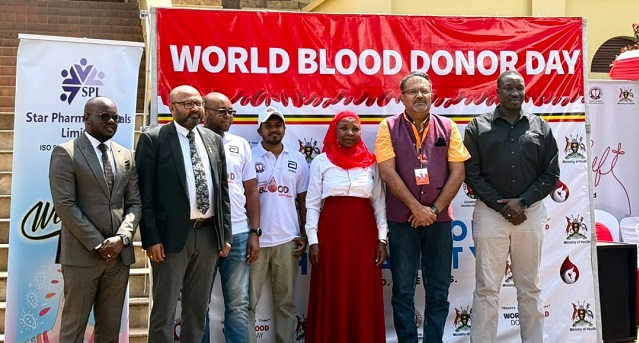
The Chief Guest, Charlotte Kainerugaba, Uganda’s PPH Champion, called on more Ugandans to embrace blood donation as a civic responsibility and a means of protecting mothers and other patients requiring emergency care.
“Blood donation is one of the highest forms of service to humanity. Today, as we commemorate World Blood Donor Day, I encourage all eligible Ugandans to embrace voluntary blood donation as an act of compassion, solidarity, and responsibility. Together, we can save lives and strengthen our healthcare system,” she says.
In her remarks, Kainerugaba emphasized that postpartum hemorrhage remains one of the most urgent maternal health emergencies and that timely access to safe blood can mean the difference between life and death for mothers during childbirth.
She also paid tribute to Uganda’s voluntary blood donors, describing their contributions as a powerful expression of compassion, while recognizing the work of health workers, laboratories, blood banks and emergency care teams involved in ensuring blood reaches patients in need.
Kainerugaba called for stronger coordination among blood services, maternal health programmes, health facilities, emergency responders and development partners to improve maternal survival outcomes.
Health experts say eliminating preventable maternal deaths requires investments not only in skilled birth attendance and emergency obstetric care, but also in systems that ensure safe blood is available when emergencies occur.
As Uganda commemorates World Blood Donor Day nationwide, UBTS and its partners have renewed their commitment to building a safe, sufficient and sustainable blood supply system capable of meeting the country’s growing healthcare needs.
The agency is urging eligible Ugandans to become regular voluntary blood donors, noting that every donation has the potential to save multiple lives, including mothers experiencing childbirth complications, children with severe anemia, accident victims and surgical patients.