The Independent Uganda: You get the Truth we Pay the Price


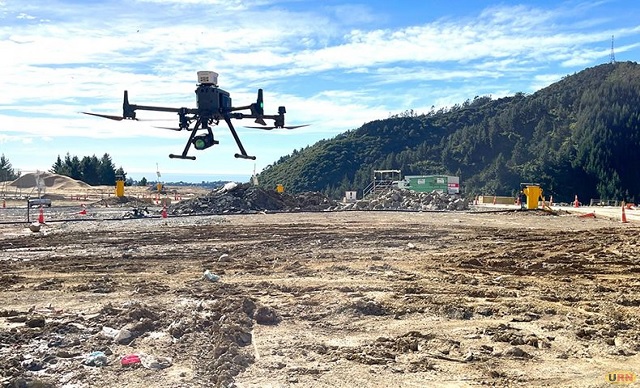
Kikuube, Uganda | THE INDEPENDENT | In the Albertine Graben, where commercial oil production is poised to begin, drones are taking flight, not to deliver packages or capture aerial photos, but to fight climate change.
These high-tech eyes in the sky are at the forefront of the country’s strategy to detect and reduce methane emissions in the oil and gas sector.
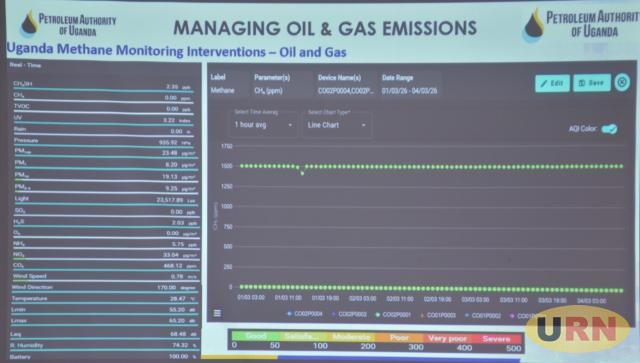
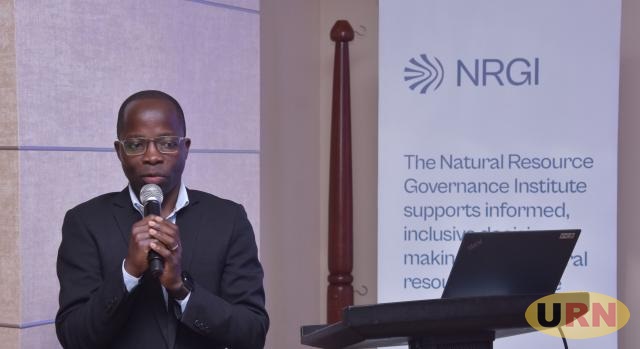
“You can’t manage what you don’t know,” says Owor Domisiano, Environment Officer at the Petroleum Authority of Uganda. “That’s why we are monitoring methane in real time, even during drilling. With drones and sensors, we can detect leaks and act before emissions escalate.”
He was speaking at a learning on Enhancing Uganda’s Oil Sector Methane Emission Abatement Ambitions. The evening organized by the Natural Resources Governance Institute -NRGI and ACCODE’s Civil Society Coalition on Oil and Gas (CSCO) brought together the civil society, government officials, and academia to raise debate and awareness on Uganda’s oil and gas emission abatement ambitions.
Methane may be colorless and odorless, but it packs a punch. Over 20 years, it is 84 times more potent than carbon dioxide in trapping heat.
In Uganda’s oil and gas operations, methane is among the biggest contributors to emissions, accounting for roughly 40% of the sector’s greenhouse gases.
“Addressing methane is a climate priority,“ explained Derek Senyonga from the Ministry of Water and Environment.
“Even though oil and gas contribute a smaller share compared to livestock or waste, the gas is so potent that managing it effectively makes a major difference.”
Traditionally, methane detection at landfills and oil and gas operations involves stationary systems and human beings walking with handheld sensors.
A Science Direct paper recently found that the approach is costly, yet the identification of these leaks is crucial.
He said. Globally, conventional detection methods have fallen short. Landfill studies suggest that only 12% of methane emissions are captured, and some sources are underestimated by over 200%.
In the Albertine, where oil and gas infrastructure stretches across difficult terrain, relying on stationary monitors or manual inspections is neither safe nor efficient. Uganda has embraced drone-based methane detection as a game-changer.
These unmanned aerial systems (UAS) are equipped with high-sensitivity methane and carbon dioxide sensors, capable of surveying large areas quickly and delivering real-time data.
“Drones allow us to reach well pads, pipelines, and processing facilities that are otherwise hard to access,” Owor explains.
“They fly over our sites, scan for leaks, and help us establish a baseline of emissions before production even starts.”
It has recently been documented in studies that the use of drone-based systems for methane leak detection appears to be an attractive solution, even compared to traditional methods, due to the numerous advantages that this technology offers.
The speed of the system, understood as the speed of both the UAS and the data acquisition and processing by the sensor, guarantees the immediacy of the survey results.
This feature allows for monitoring large surfaces in short periods of time, achieving not only greater productivity but also the possibility of immediately tracking potentially dangerous situations.
According to Owor, the drones are complemented by infrared cameras at central processing facilities and along pipelines.
These cameras visualize methane emissions that are invisible to the naked eye, allowing rapid identification of leaks and “hotspots” across extensive infrastructure.
“Even before a single barrel of oil is produced, we are already identifying and documenting methane sources,” Owor adds. “This proactive approach ensures that when we start production, we are ready to manage emissions effectively.”
Uganda’s technology-driven approach is not theoretical. It is being applied across the Tilenga Project (TotalEnergies, Kingfisher under CNOOC, East African Crude Oil Project.
Tilenga is operated by TotalEnergies (56.67%), in partnership with CNOOC (28.33%) and the Uganda National Oil Company (15%). Alongside the Kingfisher project, Tilenga is expected to produce 230,000 barrels of oil per day at plateau, yielding an estimated 1.4 billion barrels of crude oil over at least 20 years.
“At Tilenga, we are developing six fields and drilling around 400 wells from 31 locations,” says Owor. “Each well pad and processing facility is monitored with real-time methane sensors and drones to ensure we detect and address emissions immediately.”
Thermal desorption units and gas utilization systems at Tilenga ensure that drilling waste and excess gas are treated responsibly.
“By converting gas into LPG and using excess for power, we are cutting emissions and providing cleaner energy for local communities,” Owor adds. “We are optimizing our operations from day one to minimize our carbon footprint.”
At the Kingfisher project, drones monitor facilities operated by CNOOC, with joint venture partners including TotalEnergies and Uganda National Oil Company-UNOC.
“For Kingfisher, we also have two thermal desorption units handling drilling waste,” Owor explains. “Our subsidiary, Luwero Industries, has developed landfills, labs, and treatment systems to make this possible. We are treating the waste and capturing gases that would otherwise contribute to methane emissions.”
Stretching across Uganda and Tanzania, the EACOP project is equipped with monitoring systems along its route.
Drones and infrared cameras complement pipeline inspections, ensuring rapid identification of leaks. “EACOP is almost ready to carry oil, and our monitoring infrastructure ensures that methane emissions along the route are kept under control,” Owor says. “Even mobile units can detect leaks in remote areas where manual inspection would be difficult and risky.”
Owor emphasizes that detection alone is not enough, revealing PAU’s approach couples technology with practical abatement strategies like leak detection and repair (LDAR), where drones and infrared cameras identify and document leaks, enabling immediate repair.
He explained that the policies provide for gas utilization through methane capture during operations. The gas is then converted into LPG for domestic use and powers operations onsite, reducing flaring. The facilities were strategically designed to minimize emissions, including careful planning of flow lines, storage tanks, and processing units. “At Tilenga, we found that power generation was responsible for 97% of projected emissions during commissioning,” Owor notes.
“Instead of burning crude for electricity, we are using excess gas to generate power and produce LPG. That decision alone reduces the carbon footprint significantly.”
One of the most controversial practices in oil and gas development globally is flaring, the burning of natural gas that cannot be immediately processed or sold.
In countries like Nigeria, flaring has historically been a major source of methane and carbon emissions. Uganda, however, is taking a different path.
“We are very clear: Uganda will not burn gas unnecessarily,” Owor emphasizes. “Unlike in some other oil-producing countries, our strategy is to utilize all gas, either converting it into LPG for households or using it to power our facilities. Only in rare, unavoidable circumstances will flaring occur, and even then, it will be closely monitored for efficiency.”
He said that the approach is more than a domestic policy, rather a signal to the international community. Uganda has long been under scrutiny for its greenhouse gas emissions from oil and gas projects, with critics watching every stage of development.
By investing in drones, infrared sensors, leak detection, and gas utilization systems, the country is demonstrating a proactive approach to emissions management.
“We are aware that the world is watching,” Owor notes. “Our goal is to prove that responsible oil and gas production is possible. Technology, science, and good governance are enabling us to meet that challenge.” Uganda’s high-tech monitoring is underpinned by robust laws and institutional frameworks.
The Climate Change Act is the cornerstone of emissions regulation, complemented by the National Environment Act, Air Quality Regulations, and the Energy Transition Plan, which sets limits for oil and gas sector emissions.
“We don’t operate in isolation,” Owor says. “The Petroleum Authority collaborates with NEMA, the Ministry of Energy, UNOC, and other agencies. Everyone is accountable, and our monitoring systems feed data to multiple stakeholders.”
” The government is also updating its Nationally Determined Contribution (NDC) to include methane abatement. Modeling exercises guide strategies for both short-lived climate pollutants and long-lived greenhouse gases. “Understanding methane’s dual role is critical,” Senyonga explains. “It’s a short-lived climate pollutant with immediate warming effects and a long-term greenhouse gas. Our strategies address both.”
While drones and sensors are impressive, people make the system work. Environmental officers, engineers, and scientists coordinate flights, analyze data, and act on findings. “Drones are tools, but people make the difference,” Owor emphasizes.
“Our teams interpret readings, respond to alerts, and ensure that monitoring translates into meaningful emission reduction.”
At drilling sites, operators track air quality using color-coded indicators: green for safe, yellow for caution, and red for immediate attention.
The integration of technology and human expertise allows Uganda to act swiftly, even in remote or challenging environments. Beyond emissions reduction, methane capture is creating energy opportunities for Uganda.
By converting gas into LPG and using excess for power, the oil sector is supplying cleaner alternatives to charcoal and firewood. “We are reducing emissions while providing energy for our communities,” Owor says.
“This is a practical example of responsible development that benefits both the environment and the people.” As Uganda moves toward full-scale oil production, its combination of drones, real-time sensors, and innovative abatement technologies positions the country at the forefront of responsible oil development in Africa.
“We are committed to producing oil while protecting our environment,” Owor says. “Technology, science, and human expertise are helping us detect, quantify, and reduce methane emissions effectively.” Senyonga adds, “By linking our monitoring systems with policy and climate commitments, Uganda is showing that oil production and environmental stewardship can coexist.”
***
URN