The Independent Uganda: You get the Truth we Pay the Price


Gulu, Uganda | URN | The Uganda People’s Defence Forces (UPDF) have warned that trucks repeatedly used to transport charcoal in Northern Uganda risk being auctioned as authorities intensify a crackdown on the illicit trade blamed for accelerating forest destruction and threatening agricultural production.
The warning was issued on Tuesday at Lira Military Barracks when the UPDF Fifth Infantry Division handed back 16 trucks impounded for allegedly transporting charcoal and other forest products within its area of responsibility covering the Acholi and Lango sub-regions.
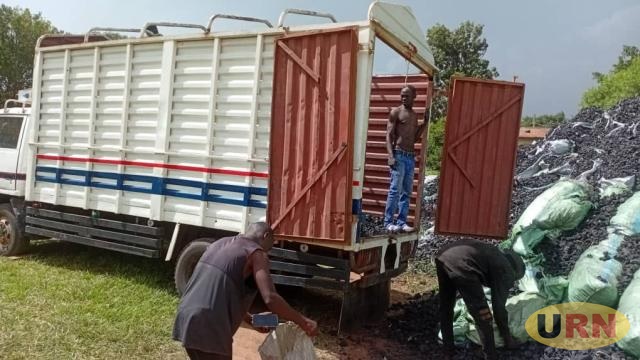
Five of the trucks had been intercepted carrying firewood, while 11 were loaded with about 900 bags of charcoal destined for markets in Central Uganda.
The trucks were released to their owners after authorities determined that they were first-time offenders, but the owners were warned against engaging in charcoal transportation again.
Col. Gai Fraser Mpadwa, the Deputy Commander of the Fifth Infantry Division, said authorities were considering auctioning trucks repeatedly used to transport charcoal to deter dealers from continuing the illegal trade.
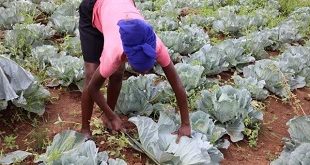
Mpadwa said continued destruction of forests could worsen drought, food insecurity and land degradation in Northern Uganda.
“In Pader, people planted crops last season but did not get enough food because there was no rain to support their growth. This season, people have planted again, but there is still no rain. We are now looking at a situation of drought and famine in this area,” he said.
Mpadwa urged residents and charcoal dealers to consider the long-term consequences of forest destruction, warning that the pursuit of quick financial gains could undermine food production and livelihoods.
Lira Resident City Commissioner Lawrence Egole said the trucks were released because their owners were considered first-time offenders, but warned that repeat offenders would face tougher action.
“We have given them their trucks back this time, but if they are caught again transporting charcoal, their vehicles will be auctioned,” Egole warned.
The enforcement comes three years after President Yoweri Museveni issued Executive Order No. 3 banning commercial charcoal production, trade and transportation in Northern Uganda.
Despite the ban, security agencies continue to intercept trucks carrying charcoal, highlighting the difficulty of stopping a trade that remains an important source of income for dealers and a major source of household energy.
Recent operations in Nwoya District illustrate the scale of the continuing trade. Security forces there impounded more than 2,000 bags of charcoal at checkpoints in Purongo Sub-county and Anaka Town Council.
More than 800 bags were subsequently distributed to residents on the orders of the then UPDF Fourth Infantry Division Commander, Maj Gen Felix Busizoori.
Busizoori, now the Land Forces Commander, had earlier warned charcoal traders that, from August 11, 2026, any charcoal impounded in Northern Uganda would be distributed to local communities rather than returned to dealers.
He said the measure was intended to deny illegal dealers the proceeds from their trade while benefiting communities affected by deforestation.
“You are receiving this charcoal because your livelihoods and surroundings have been severely impacted by deforestation driven by illegal dealers,” Busizoori told residents.
The Nwoya operation also resulted in the interception of at least three box-bodied trucks, registration numbers UBL 273K, UBM 450B and UAY 3204, which were transporting charcoal towards Karuma.
Nwoya Resident District Commissioner Christopher Omara said some of the trucks were reportedly coming from Amuru District and the Oraba border point in Koboko District, West Nile Sub-region.
Seven suspects were arrested during the operation and were being held at Nwoya Central Police Station pending investigations. Omara said they would be taken to court after investigations into their alleged involvement in the illegal trade.
Security and environmental officials have also reported that some charcoal dealers have shifted their operations to the West Nile Sub-region, including areas across the border in South Sudan.
Officials said some dealers produce charcoal in South Sudan and transport it into Uganda, presenting it as imported charcoal and arguing that it is therefore not covered by the ban on commercial charcoal production in Northern Uganda.
The development points to a wider charcoal trade linking Northern Uganda and South Sudan, with the commodity moving through border areas and into markets in Uganda.
The latest enforcement measures follow other efforts by the UPDF to frustrate charcoal dealers. In August, the Fourth Infantry Division began distributing impounded charcoal to members of the public, saying the move was intended to deny dealers the proceeds from their illegal trade.
Back in Lira, some of the truck owners who received their vehicles pledged to comply with the directive. Ogwang Alani Martine Kenneth, 64, a resident of Lira City West Division, said he deals in dry firewood supplied to primary and secondary schools and would not use his truck to transport charcoal again.
Another truck owner, Opio Jolly Bob, 40, from Odoko-Mit in Agago District, appealed to charcoal dealers and transporters to comply with the government directive.
Mpadwa urged communities and traders involved in the charcoal business to instead pursue lawful and sustainable economic activities, including tree planting.
He warned that continued forest destruction would have consequences beyond the immediate loss of trees, affecting land productivity, water sources, food security and the livelihoods of communities across Northern Uganda.
Eriya Ssenyonyi, the National Chairperson of the Uganda Charcoal Traders Association, has previously accused some law enforcement officers of facilitating the illegal trade by allegedly taking bribes from charcoal dealers.
The allegations have not been independently verified. Col. Gai Fraser Mpadwa, the Deputy Commander of the UPDF Fifth Infantry Division, said the continued destruction of forests for charcoal threatens agriculture and food security in Northern Uganda.
“You may make money today by cutting down trees, but when trees are gone, the consequences are degraded land, declining agricultural productivity, loss of water points or water sources, and increased environmental problems,” Mpadwa said.
Mpadwa said security agencies had continued to intercept charcoal dealers despite repeated warnings and had resorted to retaining some impounded trucks for longer periods to disrupt the businesses of repeat offenders.
He urged charcoal traders and communities to shift to lawful and sustainable economic activities, including tree planting.
“I would encourage you and the community to pursue lawful and sustainable economic activities. We should not only stop at destroying our environment, but we must actively restore what has already been degraded,” Mpadwa said.
The continued enforcement comes against a backdrop of concern over forest loss in Northern Uganda and neighbouring South Sudan, where charcoal remains an important source of income and energy but is also driving pressure on natural forests.
Data from Global Forest Watch shows that Yumbe District had about 55,000 hectares of natural forest in 2020, covering approximately 24 percent of its land area.
The district lost about 250 hectares of tree cover between 2020 and 2025. The authorities now say repeated violations of the charcoal ban will attract increasingly severe penalties, including the possible auctioning of vehicles used by repeat offenders