The Independent Uganda: You get the Truth we Pay the Price



The Bank of Uganda cut its growth forecast for the 2026/27 financial year to between 6% and 6.5%, from an earlier projection of 7% to 7.5%
Kampala, Uganda | AGENCIES | Uganda’s central bank has raised its benchmark interest rate to 12% for the first time in two years, tightening monetary policy as a weakening shilling and rising fuel prices threaten to push inflation higher across the economy.
The Bank of Uganda increased its Central Bank Rate by 2.25 percentage points on Wednesday, from 9.75%, citing higher energy costs, pressure on the local currency and uncertainty linked to conflict in the Middle East.
The move marks the first change in the benchmark rate since October 2024, when the central bank cut it as the inflation outlook improved. The latest increase comes as households face rising living costs and businesses contend with more expensive imports, transport and production.
The shilling has lost more than 11% of its value against the dollar this year. Commercial banks quoted the US currency at about Shs4,100 in early October, compared with around Shs3,605 in March, increasing the local currency cost of imports and foreign payments.
Fuel prices have also risen sharply, with petrol selling at between Shs6,800 and Shs7,000 a litre in some markets and diesel exceeding Shs7,000. The increases reflect higher international oil prices, supply disruptions, the weaker shilling and a Shs200-per-litre increase in excise duty on petrol and diesel introduced in July.
The combination is raising costs across the economy, from transport and manufacturing to food distribution and retail. The central bank’s challenge is to contain inflation without further weakening growth at a time when businesses and consumers are already under pressure.
Businesses and households feel the strain
For traders, the effects of higher fuel prices are feeding through to the cost of restocking goods.
Faridah Nantongo, a shopkeeper in Kampala’s Katwe neighbourhood, told the Daily Monitor that rising transport costs were increasing the prices she paid for merchandise.
“Experience teaches us that when fuel prices go up, the price we pay for merchandise also goes up, especially for small traders,” she said.
She warned that continued increases could force her to stop stocking some goods or close her shop.
Manufacturers face higher distribution costs and additional expenses when they run generators during electricity interruptions. Some businesses have absorbed the increases rather than pass them on to customers, but say that may not be sustainable.
The pressure has also reached Parliament, where lawmakers have demanded explanations for the higher fuel prices and the shilling’s depreciation.
On October 6, Leader of the Opposition Joel Ssenyonyi warned that the weaker currency was increasing the cost of doing business, particularly for importers who rely on foreign exchange to pay suppliers.
“It is important that government tells us what they are doing about this situation because it is biting hard,” he told Parliament.
Ssenyonyi also questioned why fuel prices remained high despite the Uganda National Oil Company’s role as the country’s sole bulk importer of petroleum products.
“Government said Uganda National Oil Company is the sole importer of bulk petroleum products, and it would stabilise the prices of petroleum products,” he said, adding that the situation needed attention as retail prices became problematic.
Deputy Speaker Thomas Tayebwa subsequently demanded a breakdown of the prices at which the state-owned company supplies fuel to oil marketing companies, saying lawmakers wanted to establish how much was added before the product reached consumers.
The government has attributed the increases to several factors, including the weaker shilling, international supply disruptions and the new fuel excise duty.
Energy Minister Monica Musenero described the price increase as “multifactorial”, while defending the state-owned company’s role in cushioning Uganda against international supply shocks.
Some lawmakers have called for temporary tax relief on petroleum products to ease the pressure on consumers.
Currency movements are also complicating tax calculations for importers. Karim Masaba, a member of parliament representing Mbale City’s Industrial Division, said traders were concerned that the Uganda Revenue Authority would calculate taxes using the current exchange rate even for goods purchased when the dollar was cheaper.
“Some of these goods have just arrived and some others are still in transit. The prayer of these traders is that URA and the Ministry of Finance hold on to the previous rate, because their goods were purchased at the older lower rate,” he said.
The complaints underline the pressure on businesses from rising import bills, fuel costs and the prospect of more expensive credit.
Museveni rejects intervention in the currency market
The rate increase follows a disagreement over how to respond to the shilling’s depreciation. President Yoweri Museveni has rejected a proposal by the central bank to use foreign exchange reserves to support the currency.
“The governor was suggesting that he spends our dollar reserves to bring the dollar price down and I don’t agree with it. It is not correct to squander our dollars,” Museveni said during Uganda’s Independence Day celebrations on October 9.
He urged Ugandans to reduce dependence on imports and buy more locally produced goods, arguing that the country should preserve its foreign currency reserves rather than use them to support the exchange rate.
“Please minimise the imports. This is the answer. Import less, and buy more local goods,” he said.
The position highlights the competing priorities facing policymakers: conserving foreign currency reserves and encouraging domestic production while limiting the immediate impact of depreciation on the cost of living.
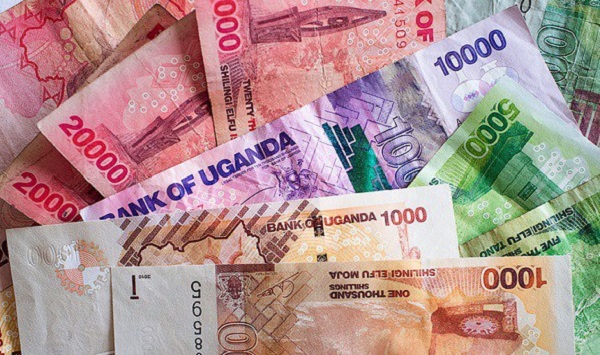
A weaker shilling raises the cost of imported fuel, machinery and raw materials. Businesses may pass some of those increases on to consumers, adding to inflation. Higher interest rates, meanwhile, can make credit more expensive for companies seeking working capital or financing for expansion.
For households with variable-rate loans, the increase could mean higher repayments if commercial banks adjust their lending rates. Prospective borrowers may also face higher financing costs, potentially curbing spending and investment.
Inflation outlook drives central bank action
The Bank of Uganda is raising rates to prevent temporary increases in fuel and import costs from spreading into broader prices and becoming entrenched.
Annual inflation rose to 4.6% in September from 4.1% in August, driven mainly by higher food crop prices and fuel costs, according to the central bank.
The outlook has deteriorated amid higher international oil prices, disruptions to shipping routes and energy infrastructure in the Middle East, and the weaker shilling. Rising transport and insurance costs could add to the cost of imported goods.
In its monetary policy statement, the central bank said the rate increase was intended “to contain inflationary pressures, limit second-round effects from higher energy prices and exchange rate depreciation, and anchor inflation expectations around the medium-term target”.
It expects core inflation, which excludes some of the more volatile price changes, to average between 5.5% and 6% over the next 12 months. Headline inflation is forecast to reach between 7% and 7.5%.
Both projections point to inflation exceeding the central bank’s medium-term target of 5% for core inflation.
The bank has also tightened monetary conditions through a higher cash reserve requirement. Last month, it raised the Cash Reserve Requirement from 11% to 13.5%, forcing commercial banks to hold a larger share of eligible deposits at the central bank instead of making the funds available for lending.
The Bank of Uganda said the measure was intended “to prevent excess liquidity from becoming a destabilising factor and to strengthen monetary policy transmission”.
Together, the higher benchmark rate and reserve requirement are designed to constrain liquidity, moderate borrowing and spending, and reduce the risk of persistent price increases. Their effects, however, may take time to filter through the economy.
Growth faces a fresh test
The tightening comes as the central bank has lowered its outlook for economic expansion.
The Bank of Uganda cut its growth forecast for the 2026/27 financial year to between 6% and 6.5%, from an earlier projection of 7% to 7.5%.
It estimates that economic growth slowed to 6.4% in the quarter ending September, compared with 6.8% in the quarter ending June, according to official data from the Uganda Bureau of Statistics.
Higher borrowing costs could add to the pressure by discouraging investment and reducing demand for credit. Businesses reliant on imported machinery, fuel and raw materials face a double squeeze from currency depreciation and potentially more expensive loans.
Households may experience the impact through higher transport fares, rising prices for goods and services, and costlier borrowing. Although tighter monetary policy can help contain inflation over time, it will not immediately reverse increases in fuel prices or other living costs.
The central bank expects growth to strengthen over the medium term, supported by private investment, exports and developments in the oil sector.
The immediate outlook will depend partly on the path of global energy prices, movements in the shilling and domestic food prices. The bank has said it will continue monitoring economic conditions and take further action if necessary to keep inflation under control.