The Independent Uganda: You get the Truth we Pay the Price


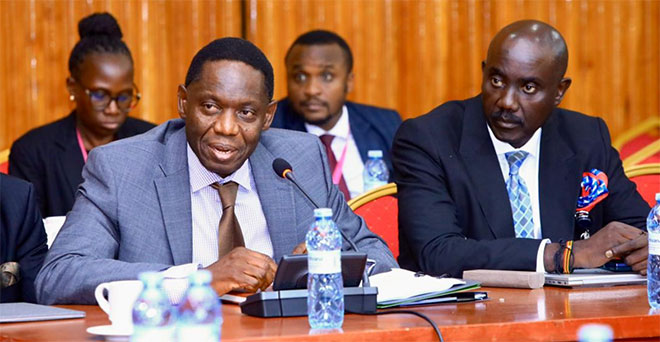
Kampala, Uganda | THE INDEPENDENT | Bank of Uganda (BOU) Governor Michael Atingi-Ego has warned of an “economic disaster” if the Protection of Sovereignty Bill, 2026 is passed.
He today told the Joint Committee on Defence and Internal Affairs and Legal and Parliamentary Affairs that the Protection of Sovereignty Bill, 2026 could risk weakening Uganda’s economy, currency and financial independence.
BOU Governor Atingi-Ego warned that the Bill, in its current state, would restrict cross-border inflows, such as foreign investment, remittances and portfolio capital.
“A country without reserves is not sovereign,” Atingi said, adding the country would experience a substantial depreciation of the currency if inflows fall, resulting in an economic disaster. He said the bill also risks creating parallel oversight that could undermine the constitutional independence of the central bank.
His statements imply BOU was not consulted before the bill was drafted.
****
BOU GOVERNOR STATEMENT IN FULL
Chairman, a country without reserves is not sovereign.
The potential of this Bill to destabilize Uganda’s balance of payments is our primary concern as a central bank. For example, last financial year, the overall balance of payment surplus was USD 1.5 billion. That’s how we were able to increase our reserve coverage by USD 1.5 billion.
Today as we speak, our reserves are close to USD 6 billion. Why? Because these inflows have been coming in. The moment you tamper with these inflows here, we risk running down our reserves, and that is economic disaster for a country.
The mandate of BoU is to promote price stability and a sound financial system. What is the impact of this Bill on price stability if it is passed the way it is?
Because of the depreciation of the currency that is likely to occur as an unintended consequence of this Bill, we are likely to have a depreciated currency and the pass-through of imported items into domestic prices is going to raise prices significantly. So, our inflation is going to increase via the depreciation of the exchange rate.
That means that we will need to either tighten monetary policy further if we are going to contain inflation, or we allow inflation to go beyond the 5% target if we don’t want to raise interest rates. That’s what we will have to grapple with. This inflation of 3% we have been enjoying is likely to be compromised through currency depreciation.