The Independent Uganda: You get the Truth we Pay the Price


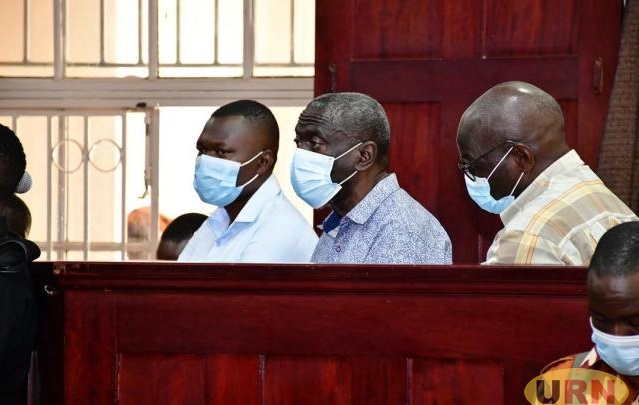
Kampala, Uganda | THE INDEPENDENT | A dispute over delayed evidence disclosure and an application by the prosecution to conceal the identities of key witnesses dominated proceedings in the treason case involving jailed opposition politician Dr. Kizza Besigye at the High Court Criminal Division on Thursday. During the session before Justice Emmanuel Baguma, the prosecution sought to immediately hear an application to conceal the identities of six witnesses, identified only as A, B, C, D, E, and F.
The request triggered strong protests from the defence, who argued that the application had been scheduled and fixed for hearing within hours of filing, while their own applications had remained pending for months. Dr. Kizza Besigye, who is jointly charged with Obeid Lutale and Captain Denis Oola, told the court he considered the process unfair and suggested he could opt to remain at home and allow the judge to proceed with the matter as he wished.
Besigye complained that applications filed by the prosecution were being scheduled and heard quickly while those filed by the defence had taken months without being fixed. He also told the court that he had not yet seen a copy of the application the court intended to hear, despite it having been scheduled for hearing just hours after it was filed on Wednesday. The court session was largely dominated by disputes over the delayed and incomplete disclosure of evidence by the prosecution.
Besigye’s lawyer, Erias Lukwago, told the court that the prosecution had failed to comply with earlier disclosure orders requiring them to share all intended evidence with the defence. According to Lukwago, the court had initially ordered disclosure to be completed by January 21, but the prosecution later said the materials would be served by March 3. He said nothing had been received by the close of business on that date. The defence only received what prosecutors described as volume two of their intended evidence a day later, and the documents contained references to several materials that were missing from the file.
Lukwago further told the court that on March 11 at about 6:30 p.m., prosecutors served the defence with statements of six witnesses. However, he said the statements did not contain the witnesses’ names and instead referred to them only as A, B, C, D, E, and F, without key identifying particulars such as their places of residence. Assistant Director of Public Prosecutions Thomas Jatiko confirmed that the state had filed witness statements on March 11 and said the prosecution had also lodged an application seeking permission for the delayed disclosure of six witnesses they consider crucial to the case.
Jatiko explained that the prosecution was asking the court to allow concealment of the witnesses’ identities, adding that although their names and some details had been withheld, the statements still contained information such as their age and occupation. During the proceedings, Justice Baguma asked the prosecution to explain the delayed disclosure. Lukwago insisted that the prosecution had still not fully complied with disclosure obligations, pointing to forensic evidence which he said had also been filed outside the court-ordered timelines.
These included a forensic analysis report dated September 2, an addendum dated September 3, and a flash disk containing evidence, which he said was delivered after the deadline. He told the court that such actions amounted to ineffective service and that the prosecution had not offered any explanation for the delays. Lukwago also complained that the prosecution had earlier assured the court that all materials would be served by March 3, but had not disclosed that it intended to file an application to conceal witnesses.
Other defence lawyers also raised concerns about the manner in which the application had been served. Lawyer Ernest Kalibala of AF Mpanga Advocates told the court that his firm had not been served with the application and that they were hearing about it for the first time during the proceedings. He said any disclosure that may have been made had not been served on all defence lawyers and therefore did not amount to full disclosure. Kalibala said the defence had come to court expecting the matter to proceed to scheduling rather than the hearing of a new application.
Lawyer Eron Kiiza also complained about what he described as unequal treatment in the handling of applications, arguing that those filed by the state were expedited while those filed by the defence took months to be fixed for hearing. He added that several law firms involved in the case had not yet been served with the evidence the prosecution intends to rely on. According to Kiiza, the defence would not allow concealment of witnesses, arguing that it would undermine their ability to properly cross-examine them and determine whether they had personal grievances against Besigye.
Kenyan lawyer Martha Karua also told the court that Besigye was protesting what she described as preferential treatment for the Director of Public Prosecutions, noting that his bail applications had never been scheduled with similar speed. Questions were also raised about the manner in which the application had been served, with one defence lawyer saying it had been delivered by the judge’s clerk rather than the applicant, which he said was the usual practice.
Lawyer Hanifa Namakula, representing co-accused Denis Oola, said she had been served with the application at about 11 a.m. on Thursday and had not yet had time to consult her client. She asked the court for time to discuss the matter with Oola and determine whether they would file a reply. When the judge asked whether the defence needed time to respond, Karua said they had not yet received instructions from their client on how to proceed.
Justice Baguma initially issued timelines extending beyond mid-April 2026, but Lukwago objected, arguing that the court was not being fair. The judge subsequently vacated those timelines. In his ruling, Baguma ordered that the respondents be given up to March 26 to file their responses. He directed that the respondents and their lawyers be personally served before the close of business on Thursday. The prosecution was ordered to file any rejoinder by March 30, and the matter will return to court on March 31 for mention.
Dr. Kizza Besigye is jointly charged with Obeid Lutale and Captain Denis Oola with treason for allegedly plotting to overthrow the government. Prosecutors claim the trio held meetings in Geneva, Athens, Nairobi, and Kampala to solicit funds, acquire weapons, and organise paramilitary operations. According to the state, Besigye allegedly met a Kurdish intelligence agent identified as Andrew Wilson (AW) and received $5,000 to facilitate the transport of 36 Ugandan recruits to Kisumu, Kenya, for military training.
The recruits were reportedly intercepted and deported before the training began. The prosecution also alleges that Besigye sought surface-to-air missiles, ricin poison, counterfeit currency, and planned to use drone technology to assassinate President Yoweri Museveni. The state says it has audio and video recordings, social media messages, immigration records, and phone logs linking the accused to the alleged plot.
****
URN