The Independent Uganda: You get the Truth we Pay the Price


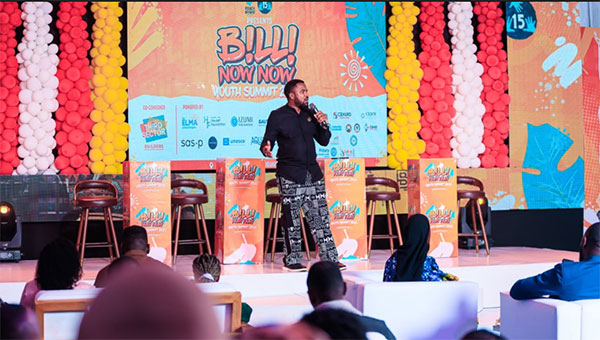
Kampala, Uganda | NEWS CORRESPONDENT | The fourth edition of the B!LL!Now Now (BNN) Youth Summit, convened by Reach A Hand Africa (RAHA) and Third Sector Builders, has officially kicked off under the theme “Africa Recharged: Youth Power. Bold Voices. Real Change.”
Held from 5–7 August 2026 at Reach A Hand Africa’s headquarters in Lungujja Avenue, the three-day Summit is part of the organisation’s activities marking International Youth Day 2026.
The Summit has brought together more than 1,000 young people, policymakers, civil society organisations, development partners, innovators, and private sector leaders from over eight African countries, including Uganda, Kenya, South Sudan, Burundi, Tanzania, Eritrea, Ethiopia, and the Democratic Republic of Congo.
Discussions throughout the Summit are centred on six priority areas: sexual and reproductive health (SRH), mental health, entrepreneurship and trade, education and skills, climate and the green economy, and responsible technology and artificial intelligence (AI), all geared towards contributing to the aspirations of Agenda 2063: The Africa We Want.
Beyond Conversations
Opening the Summit, Humphrey Nabimanya, Founder and CEO of Reach A Hand Africa, said this year’s edition intentionally shifts from symbolic youth engagement to measurable action.
“There are too many young people’s engagements which are symbolic in nature, but this year’s edition is meaningful because of its action-oriented approach. We are here to develop resolutions that can drive the implementation of young people’s priorities by governments and other stakeholders,” he said.
From Kenya, Rasheed Mutaha, Strategy, Markets and Movements Growth Lead at Development Dynamics, described the Summit as a platform for transforming conversations into collective action.
He noted that achieving the aspirations of Agenda 2063 requires sustained investment in young people through responsive policies, financing, partnerships, and systems that enable them to contribute to Africa’s development meaningfully.
Responding to Africa’s Youth Realities
Africa remains the world’s youngest continent, presenting immense opportunities for growth and innovation. Yet millions of young people continue to face barriers that limit their participation in social, economic, and political development.
Mental health challenges continue to rise as unemployment, economic uncertainty, conflict, displacement, and social pressures affect young people’s wellbeing across the continent.
Youth unemployment also remains a significant concern, with many young Africans struggling to access decent work, financing, markets, mentorship, and business development opportunities despite growing entrepreneurial potential.
At the same time, advances in artificial intelligence are reshaping education, healthcare, agriculture, and employment. While these technologies present significant opportunities, young people require greater access to digital skills, infrastructure, and responsible innovation frameworks to fully benefit from the digital economy.
Access to comprehensive sexual and reproductive health information and youth-friendly services also remains essential in enabling young people to make informed decisions while addressing persistent challenges such as teenage pregnancy, HIV, gender inequality, and limited access to healthcare.
Through the BNN Youth Summit, participants are exploring practical solutions to these interconnected challenges through innovation, partnerships, policy engagement, and youth-led action.
From Youth Voices to Policy Action
Throughout the Summit, participants are exploring one central question:
What will it take to build an Africa where young people are not merely beneficiaries of development, but active drivers of progress?
Discussions on day one have highlighted the importance of designing policies, programmes, and public investments that reflect young people’s lived realities rather than assumptions about their needs.
“Sometimes young people ask for pizza, but they are given chapati,” Mutaha remarked, underscoring the importance of listening to young people and designing interventions that respond to their actual priorities.
Participants also stressed the need for stronger accountability, meaningful youth participation in decision-making, and sustained investment in youth-led initiatives beyond conferences and consultations.
Young Leaders Share Country Perspectives
Representing South Sudan, youth advocate Esther Keji highlighted insecurity as one of the greatest barriers facing young people across her country.
She noted that conflict continues to disrupt education, livelihoods, and civic participation, calling for greater investment in peacebuilding and inclusive opportunities that enable young people to thrive.
In Uganda, Mukiibi Sharif from UNESCO’s O3 Plus Programme emphasised the importance of investing in young people’s creativity, innovation, and skills development to unlock opportunities within Africa’s growing creative and digital economies.
He called for stronger partnerships that connect young people to mentorship, financing, networks, and markets capable of transforming innovative ideas into sustainable solutions.
The Summit concluded with a set of youth-led commitments, policy recommendations, and practical actions that will feed into the BNN Champions Network, the Policy Playbook, Country Briefs, and the BNN Insights Room, ensuring that conversations held in Kampala continue to shape action long after the event.