The Independent Uganda: You get the Truth we Pay the Price


The continent loses between 2% and 5% of its gross domestic product each year due to climate-related shocks
Kampala, Uganda | THE INDEPENDENT | A new push to finance climate-resilient infrastructure in Africa has gained momentum, after a major development bank committed funding to a continent-wide investment vehicle.
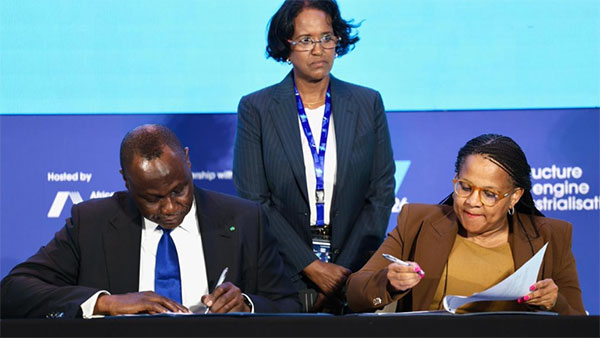
The Development Bank of Southern Africa (DBSA) joined the African Finance Corporation’s $750 million Infrastructure Climate Resilient Fund (ICRF) in a move aimed at scaling climate adaptation efforts across the continent.
The agreement was signed at the Africa We Build Summit in Nairobi on April 23, where policymakers and investors were meeting to discuss infrastructure and development financing.
The fund, managed by AFC Capital Partners, is designed to ensure that infrastructure projects across Africa are built to withstand the effects of climate change, from extreme weather to shifting environmental conditions.
It aims to integrate climate resilience at every stage of a project, from planning and design through to construction and long-term operation.
This development comes at a time when Africa is considered one of the regions most vulnerable to climate change, despite contributing relatively little to global emissions.
According to the AFC, the continent loses between 2% and 5% of its gross domestic product each year due to climate-related shocks. At the same time, adaptation needs are estimated at up to $50 billion annually.
Against that backdrop, the fund is part of a broader effort to treat climate-resilient infrastructure as a distinct investment opportunity.
DBSA’s commitment adds to a group of institutional investors that have already backed the fund. These include the Green Climate Fund, which has pledged $253 million in what is described as its largest equity investment in Africa, as well as the European Investment Bank, the Nigeria Sovereign Investment Authority and several African pension funds.
Together, they reflect a growing alignment among both African and international institutions around the need to invest in infrastructure that can cope with climate risks.
Blending public and private capital
The fund is structured to attract both public and private investment, using a model known as blended finance.
This approach combines concessional funding with commercial capital to reduce risks and make projects more attractive to private investors.
It is intended to address long-standing challenges that have limited investment in climate adaptation across Africa, particularly the high upfront costs and uncertain returns associated with resilience measures.
By incorporating risk-sharing mechanisms and technical support, the fund aims to unlock larger volumes of private capital for infrastructure projects.
Samaila Zubairu, President & CEO of Africa Finance Corporation commented: ” ICRF is our response to a defining challenge—ensuring Africa’s infrastructure is built to withstand the growing impacts of climate change. With the continent losing an estimated 2% to 5% of GDP annually to climate shocks and adaptation needs reaching up to $50 billion each year, the urgency is clear. We are therefore pleased to welcome DBSA as a key partner for the Fund. Their participation reflects strong African institutional alignment and marks a significant milestone in a partnership we look forward to deepening in the years ahead”
Boitumelo Mosako, Chief Executive Officer of the Development Bank of Southern Africa, said: “Africa does not have the luxury of waiting. Climate shocks are outpacing adaptation finance, and vulnerable communities continue to bear the greatest burden. This partnership with the Africa Finance Corporation sends a clear signal that development finance institutions are pooling their mandates, capital, and risk appetite to achieve what neither institution can accomplish alone.”
Targeting key sectors
The fund will focus on sectors seen as critical to both economic growth and climate resilience. These include renewable energy, transport and logistics, digital infrastructure and industrial development.
It is expected to support between 10 and 12 projects across the continent, with the aim of building more resilient and better-connected economies.
Each investment will undergo climate risk assessments, looking at factors such as exposure to extreme weather, emissions pathways and governance standards.
The Green Climate Fund is playing a key role by providing so-called first-loss capital, which absorbs initial risks and helps attract additional investors.
Through this structure, AFC Capital Partners expects to mobilise up to $3.7 billion in total financing, far beyond the fund’s initial size.
The initiative reflects a broader shift in how infrastructure is financed in Africa, with increasing emphasis on resilience, sustainability and long-term impact.
As climate risks intensify, the success of such funds may prove critical in determining whether the continent’s infrastructure can keep pace with both environmental and economic pressures.